
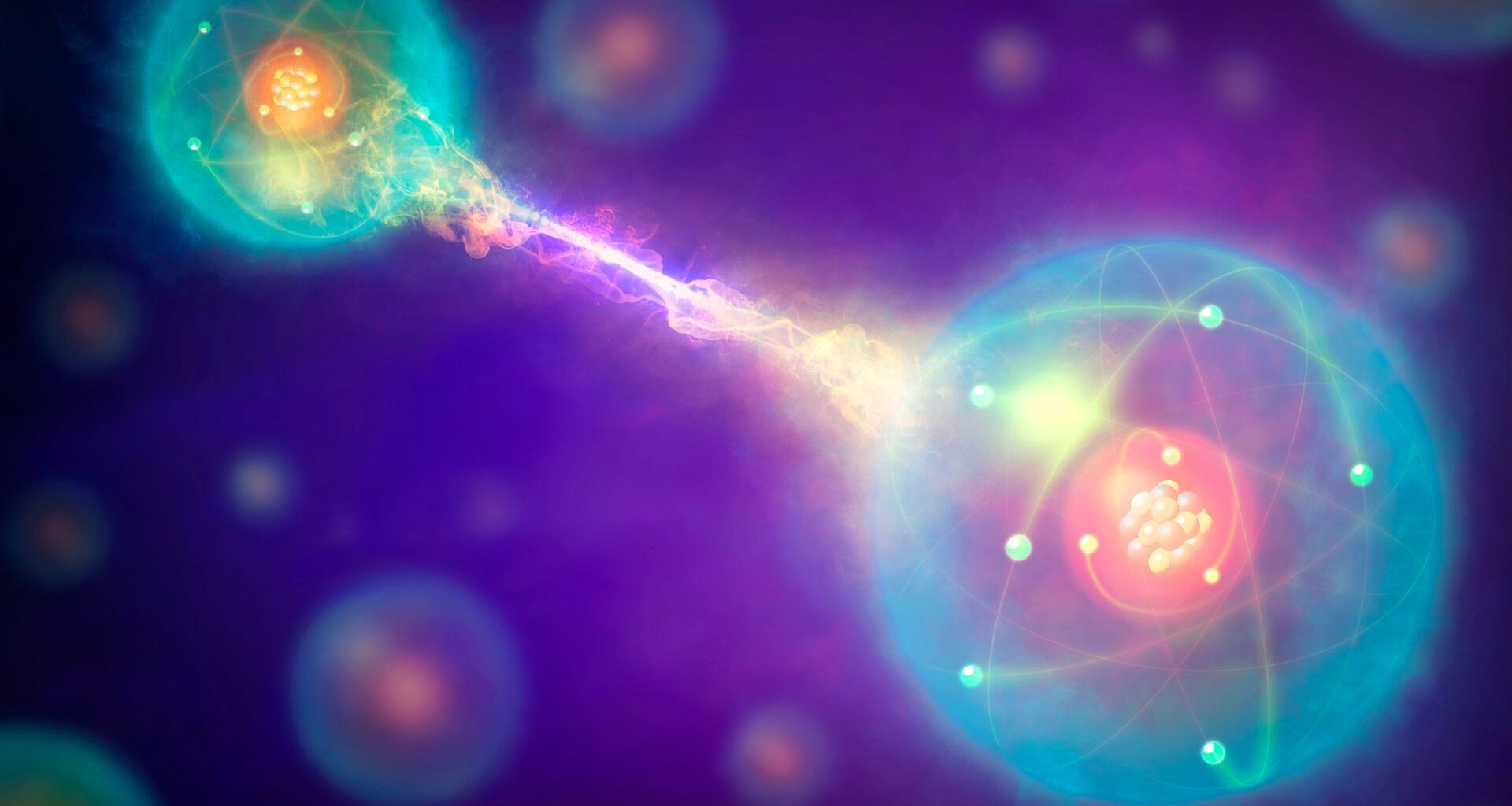
Researchers at the Vienna University of Technology (TU Wien) and the Okinawa Institute of Science and Technology (OIST) teamed up to demonstrate the first example of self-induced superradiant masing generated without external drivers. Quantum particles teamed up to generate stable, precise microwave signals, opening the door to myriad applications.
Superradiance is a phenomenon in quantum optics in which atoms or quantum dots collectively emit light in single, short pulses. The emission intensity is much stronger than the individual components due to constructive interference.
Superradiance occurs when quantum particles interact with a common light field, and the light’s wavelength is greater than the separation between the emitters. Superradiance is associated with the loss of energy of quantum systems.
So, researchers at TU Wien and OIST were surprised to observe particles that could self-sustain superradiance in the form of microwave signals that persist for long periods.
Self-driving reaction
“What’s remarkable is that the seemingly messy interactions between spins actually fuel the emission,” explained Wenzel Kersten, postdoctoral researcher at TU Wien, who was involved in the study. “The system organizes itself, producing an extremely coherent microwave signal from the very disorder that usually destroys it.”
To better understand how spin systems behave collectively, the researchers coupled tiny atomic defects to a microwave cavity. The team used a dense ensemble of diamonds containing nitrogen-vacancy (NV) centers, each hosting electron spins that can be flipped to represent quantum states.
“We observed the expected initial superradiant burst—but then a surprising train of narrow, long-lived microwave pulses appeared,” said William Munro, professor at OIST’s Quantum Engineering and Design Unit, the research partner for this finding.
To identify the source of this pulsing, the researchers carried out large-scale computational simulations. They found that the self-induced spin interactions repopulate energy levels and self-sustain the reaction.
“These spin–spin interactions continually trigger new transitions, revealing a fundamentally new mode of collective quantum behavior,” added Munro in a press release.
Potential quantum applications
“This discovery changes how we think about the quantum world,” added Kae Nemoto, professor and Center Director of the OIST Center for Quantum Technologies.
“We’ve shown that the very interactions once thought to disrupt quantum behavior can instead be harnessed to create it. That shift opens entirely new directions for quantum technologies.”
Scientists have been looking at quantum physics to improve further the accuracy of everyday technologies, ranging from telecommunications to medicine, radars to satellite networks.
“The principles we observe here could also enhance quantum sensors capable of detecting minute changes in magnetic or electric fields,” added Jörg Schmiedmayer, professor at TU Wien.
“Such advances could benefit medical imaging, materials science, and environmental monitoring. More broadly, this work shows how deep insights into quantum behavior can translate into new tools and technologies to shape the next generation of scientific and industrial innovation,” concluded Schmiedmayer in the press release.
The research findings were published in the journal Nature Physics.