

Listen to this article
Estimated 3 minutes
The audio version of this article is generated by AI-based technology. Mispronunciations can occur. We are working with our partners to continually review and improve the results.
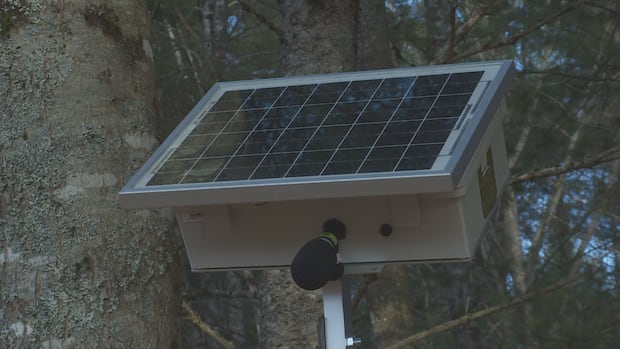
The Nature Trust of New Brunswick is collecting the chirps and songs of birds around the province with the help of 10 solar-powered machines from Australia.
The non-profit’s soundscape project began a year ago, with the goal of identifying rare species and shifts in migratory patterns without the need to have crew on sight.
So far, the device, known as autonomous recording units, have helped identify five species at risk, including the common nighthawk, olive-sided flycatcher, American bittern and bobolink.
It also identified unusual activity from bald eagles that were nesting near one of the devices and allowed bird experts to confirm species that were breeding on site.
“It lets us get a pretty accurate picture of the different wildlife that are present at some of our more remote nature preserves,” said Jon MacNeill, communications and engagement manager for the trust.
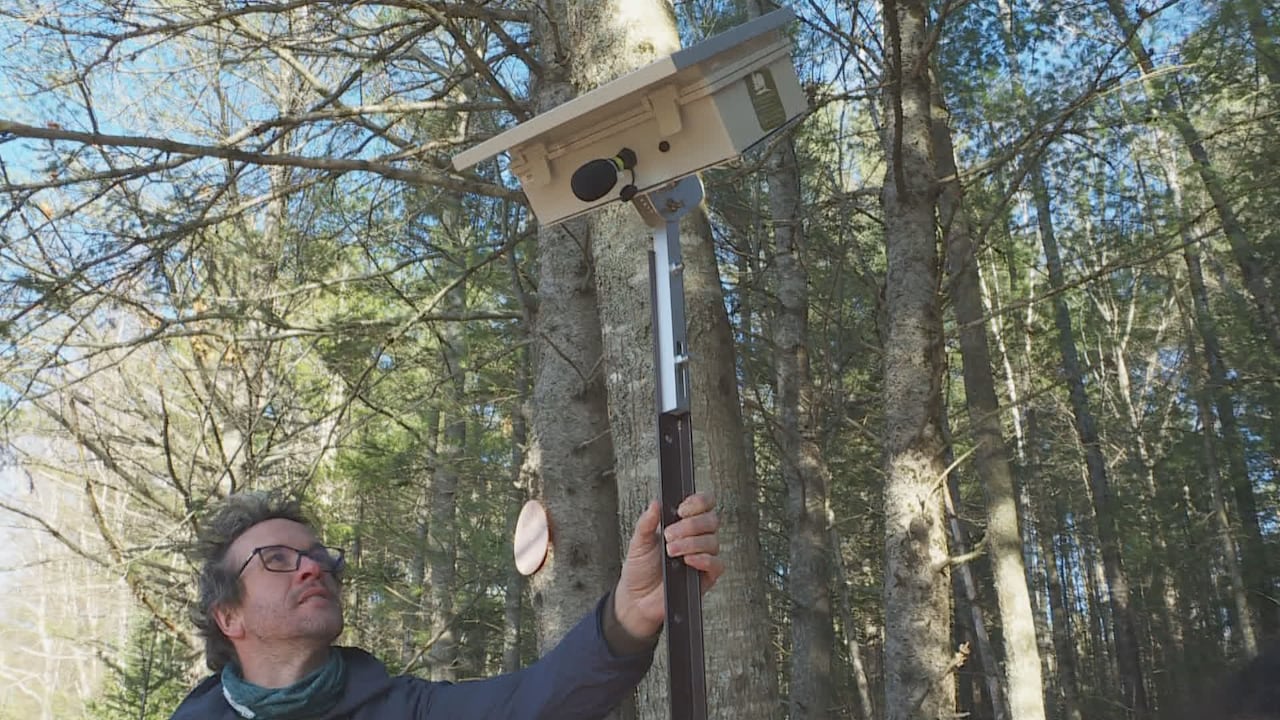 Jon MacNeill of the Nature Trust of New Brunswick says the goal of using the autonomous recording devices is to identify species at risk. (Benjamin Ford/CBC)
MacNeill said these devices are especially useful for the trust’s coastal sites that act as migratory stopover locations for birds passing through on their global journeys.
“On some of those island sites, [birds] go to breed or to nest and we don’t want to disturb the birds while they’re doing those important activities,” he said.
It’s also complicated to send crew to those remote islands.
“We could just take [a device to a site and leave it and let it collect sound through all of the different seasons and go pick it up and then have a lot of audio files to sift through.”
Shraddha Vadgama, stewardship co-ordinator for the Nature Trust of New Brunswick, said having this information is critical because it helps the trust understand areas within preserves that might need additional protection.
WATCH | How solar-powered devices are installed in N.B. nature preserves: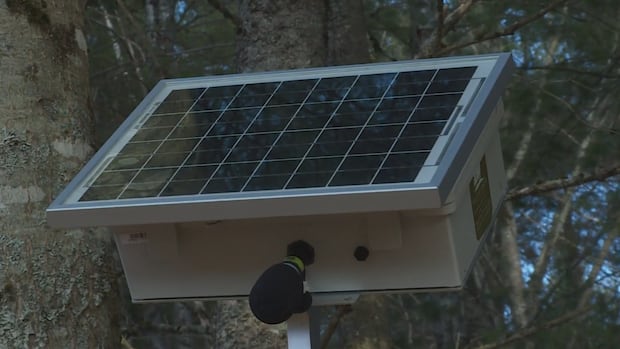
Soundscape project uses solar-powered devices to detect birds from afar
The Nature Trust of New Brunswick has acquired 10 solar-powered recording devices to collect the chirps and songs of birds without anyone there.
“We can protect breeding habitats, specifically if, you know, there is a trail ,and a bald eagle is nesting nearby. We need to protect it and divert that trail system.”
The data is public and is also shared with the Atlantic Canada Conservation Data Centre, which can influence government decisions around preservation.
A device has four terabytes worth of data storage, which means it can last a year when only collecting 10 minutes of data every hour from sunrise to sunset.
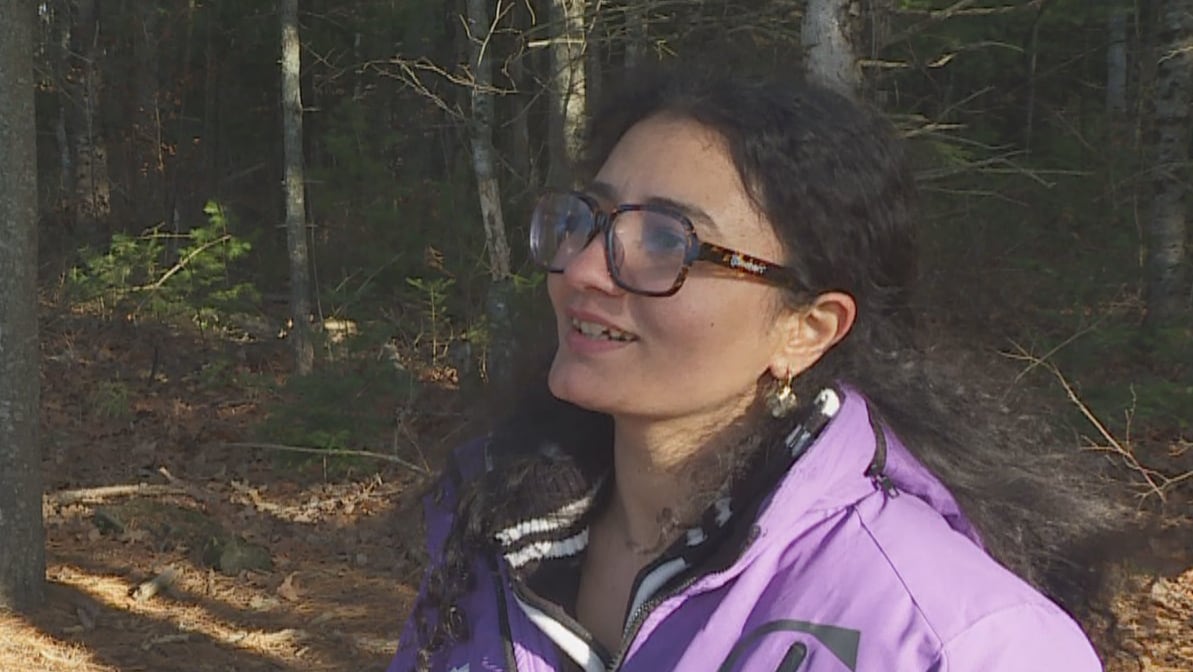 Shraddha Vadgama of the Nature Trust of New Brunswick says data collected from the autonomous recording units allows the trust to direct the public away from critical habitats and nesting spots. (Benjamin Ford/CBC)
Vadgama said once the data is collected, it’s run through a software called BirdNET, which detects and identifies bird sounds using artificial intelligence.
Those identified recordings are then confirmed by local bird experts.
MacNeill said the devices can also identify human disturbances that could disrupt the integrity of preserves.
“Like if somebody were to come on the preserve operating a chainsaw … if somebody was travelling on an ATV, if there’s building construction happening nearby,” he said.
Funding has already been secured to keep the $10,000 machines operating into next year, and the hope is for this to be a long-term monitoring project.