
Garnet Lee shakes his head slowly, in disbelief, as the door buzzes again, signalling the arrival of another customer.
“We just thought it was a noodle factory,” he said. “We never knew the effect we had on people.”
Now he knows. Since announcing in November that Wing Noodles, the nearly 80-year-old Chinese food manufacturer in Montreal most famous for its fortune cookies, would be closing its doors, Mr. Lee has been treated like a famous athlete who just announced his retirement. People ask for his autograph and take his picture in the street. The phone rings constantly with interview requests and clients begging for one last order.
Garnet Lee, pictured, and his brother Gilbert took over Wing Noodles from their father.Clara Lacasse/The Globe and Mail
Mr. Lee should not be surprised to learn his products mean so much to people. “Food is sex,” proclaimed one of the company’s long-running fortunes, an irreverent provocation written by his father that contains a kernel of truth. Food evokes emotion. Wing Noodles is no exception.
His great-grandfather, who previously worked in a laundromat, joined an import-export company called Wing Lung in 1905. Racist immigration laws meant the elder Mr. Lee could bring his wife and children over from China if he was registered as a merchant, Garnet said.
At its peak, the factory made about 40,000 fortune cookies a day.Clara Lacasse/The Globe and Mail
The firm flourished in a centuries-old compound of brick buildings until the outbreak of the Second World War closed shipping lanes. In peacetime, grandfather Lee and two of his sons pivoted to making noodles to satisfy a booming demand for Chinese food, at a time when “chop suey” joints were one of the few reliable restaurant options in Canada.
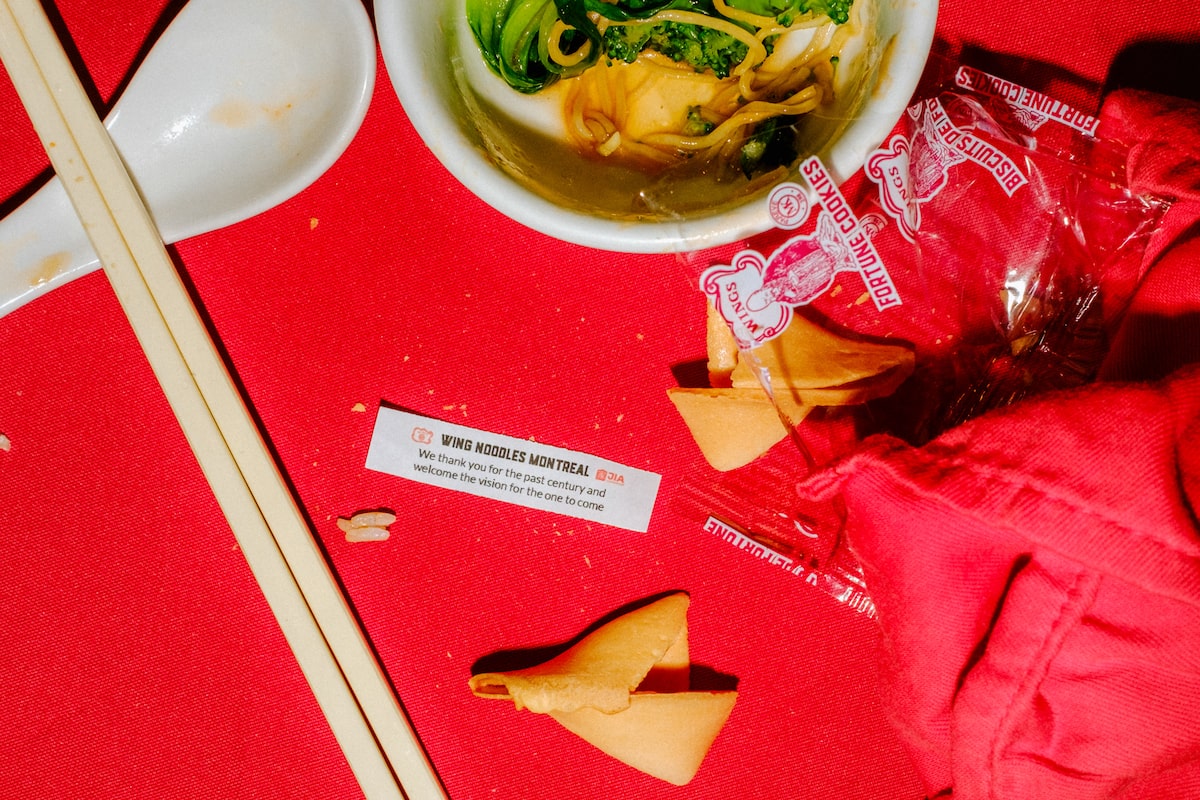
Soon came fortune cookies, which had been pioneered by Japanese-owned restaurants in North America before wartime internment closed many such establishments. Garnet’s father, Arthur, wrote most of the aphorisms himself, some 500 in all. If he was in a good mood, he might write an uplifting, “Nobody does it better than you.” Gloomier messages such as “Beware of the person around the corner” likely meant someone had wronged him, his son said.
Garnet started packaging egg roll covers when he was 8. He and his older brother Gilbert grew up in the factory, playing hide-and-seek in its maze-like collection of freight elevators and ancient machinery, its vats of soy sauce and tubs of bubbling dough. At the company’s peak, in the 1960s and 70s, it was cranking out 40,000 fortune cookies a day.
They were printed with English on one side and French on the other – the first of their kind, and a welcome homage to Wing’s majority francophone hometown. Arthur also invited a rabbi up from New York to certify his factory kosher.
The less harmonious side of Montreal politics soon shaped the company’s fortunes as well. When mayor Jean Drapeau launched a massive “urban renewal” project in the 1960s and 70s, he tore down huge swathes of Chinatown to do it. Wing survived, but the election of the sovereigntist Parti Québécois in 1976 brought a long period of economic malaise – and a language watchdog that forced the company to change its name to Nouilles Wing.
A worker places fortune cookies on an assembly line at Wing Noodles on Nov. 18. The factory closed at the end of that month.
Christinne Muschi/The Canadian Press
The Lees adapted to the changing times. “You will get good news through the mail” became “You will get good news through e-mail.” Enough scandalized parents complained that the family had to drop “Food is sex.” Wing started making Japanese-style noodles to keep up with the ramen craze.
Brothers Garnet and Gilbert took over from their father and worked as hard as the other Lee patriarchs, between 80 and 100 hours a week. The COVID-19 pandemic was a blow anyway. Diners fled Chinatowns because of the virus’s link to China. The brothers were nearing retirement age, with children who didn’t want to succeed them, so they put the building up for sale. In 2021, a local developer bought the property with a plan to replace it with condos, although the factory stayed open in the meantime.
Guests at the Dec. 5 banquet at Ruby Rouge, a fundraiser to preserve the historic building, posted suggestions for its future.Clara Lacasse/The Globe and Mail
Community activists saw red. Wing was an institution with meaning beyond its ramshackle brick walls. It had given generations of immigrants a foothold in Canada, including the great-grandfather of Montreal filmmaker Karen Cho, who was a partner in the original import-export company.
“The factory helped keep our Chinatown alive through the Exclusion Act and the head tax,” she said. “It’s part of our identity. Everyone has cracked open a Wing’s fortune cookie or gotten their soy sauce packets in their takeout.”
Garnet Lee signs the last batches of packaged noodles from the factory. At the banquet, people lined up for his autograph.Clara Lacasse/The Globe and Mail
Soon, a group of concerned citizens began lobbying to secure Chinatown heritage protection, so that its historic core of walkable streets and family restaurants wouldn’t turn into a forest of glass towers. In July, 2023, the activists won. The sale of Wing Noodles was the “linchpin” of that victory, Ms. Cho said.
Now, the non-profit JIA Foundation is convening community discussions about the building’s future. One idea is to turn part of the factory into a museum.
Garnet Lee is ambivalent about all the organizing on his behalf. He thought a condo was a perfectly good idea: more foot traffic to support nearby restaurants. Either way, he and Gilbert need to move on. Hundred-hour weeks aren’t sustainable at the ages of 67 and 73, and his older brother needs double knee-replacement surgery.
About a month ago, Garnet happened to crack open a fortune cookie containing the message, “You will go on a long extended trip.” As it happened, he hadn’t taken a vacation in seven years. It was time to close up shop; he needed to be spending more time with his family. Some of the unique noodle-making machinery will go a sister factory, Wing’s Food Products, run by cousins in Toronto.
Garnet will miss the factory all the same, now that it is officially closed. It helped raise him, and its roughly 25 workers make up a kind of surrogate family.
“They constantly bring us food,” he said. “And the Chinese mentality is, you feed people to show your love.”