
“You can have it send you a text message, you can have it send you an email, you can have it trigger a flashing light. You can even have it trigger potentially what we’d call a remote deterrent. So it could trigger a strobe light, it could trigger a certain noise that might startle a bear, all remotely,” said York.
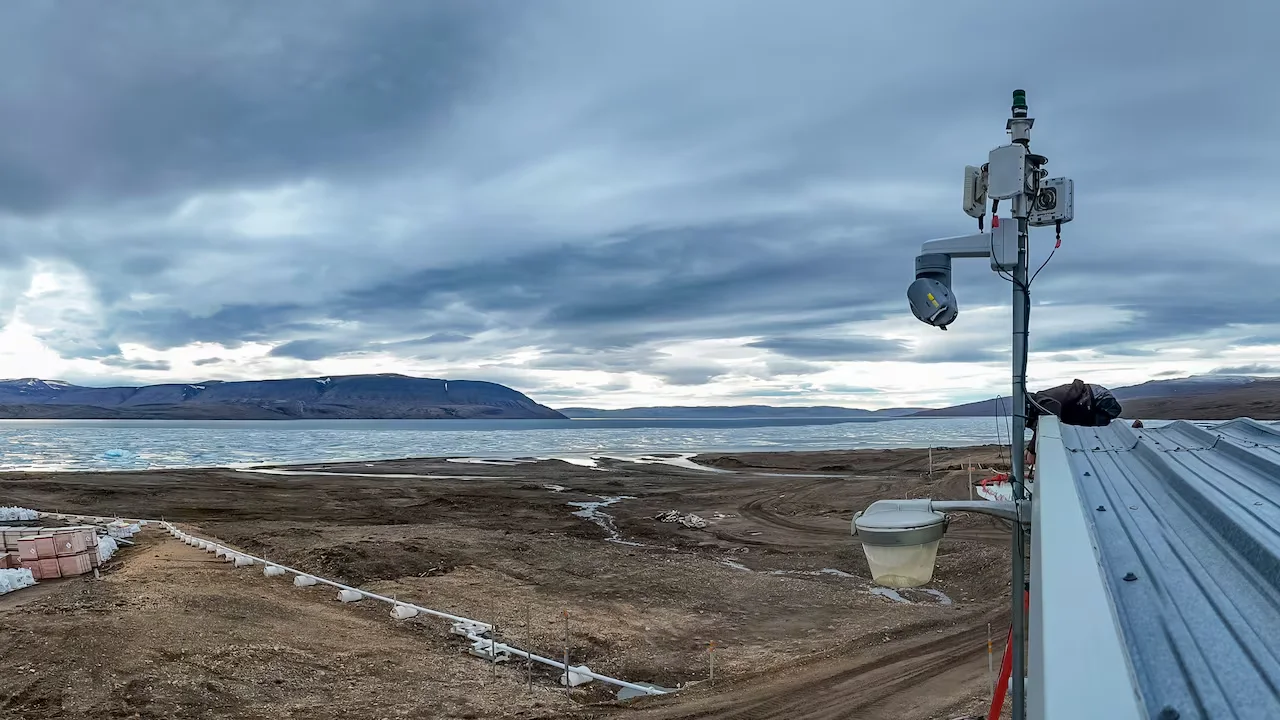
This ‘bear-dar’ system was installed at Eureka’s weather station in the Qikiqtaaluk region of Nunavut in August 2025. Environment and Climate Change Canada says it’s a tool they could use to potentially improve staff safety. (Submitted to CBC News by Polar Bear International)
Polar Bear International, alongside a military technology developer called Spotter Global, have spent years fine-tuning the technology in Churchill, Man., where polar bear sightings are frequent.
It included teaching the artificial intelligence-powered system what’s a polar bear, and what’s just another big, moving object. The system is continuously being trained.
Increased polar bear presence at Eureka
The system was installed in August 2025 at the Eureka weather station in the Qikiqtaaluk region of Nunavut, where Environment and Climate Change Canada (ECCC) has nine staff and contractors positioned. ECCC has reported an increased polar bear presence there in recent years.
“It is early days when it comes to evaluation. For ECCC, (bear-dar) is potentially a tool to support the safety of staff by alerting them to the presence of polar bears or other wildlife, like wolves, notably during the months of low light and polar darkness,” ECCC wrote in an email.