
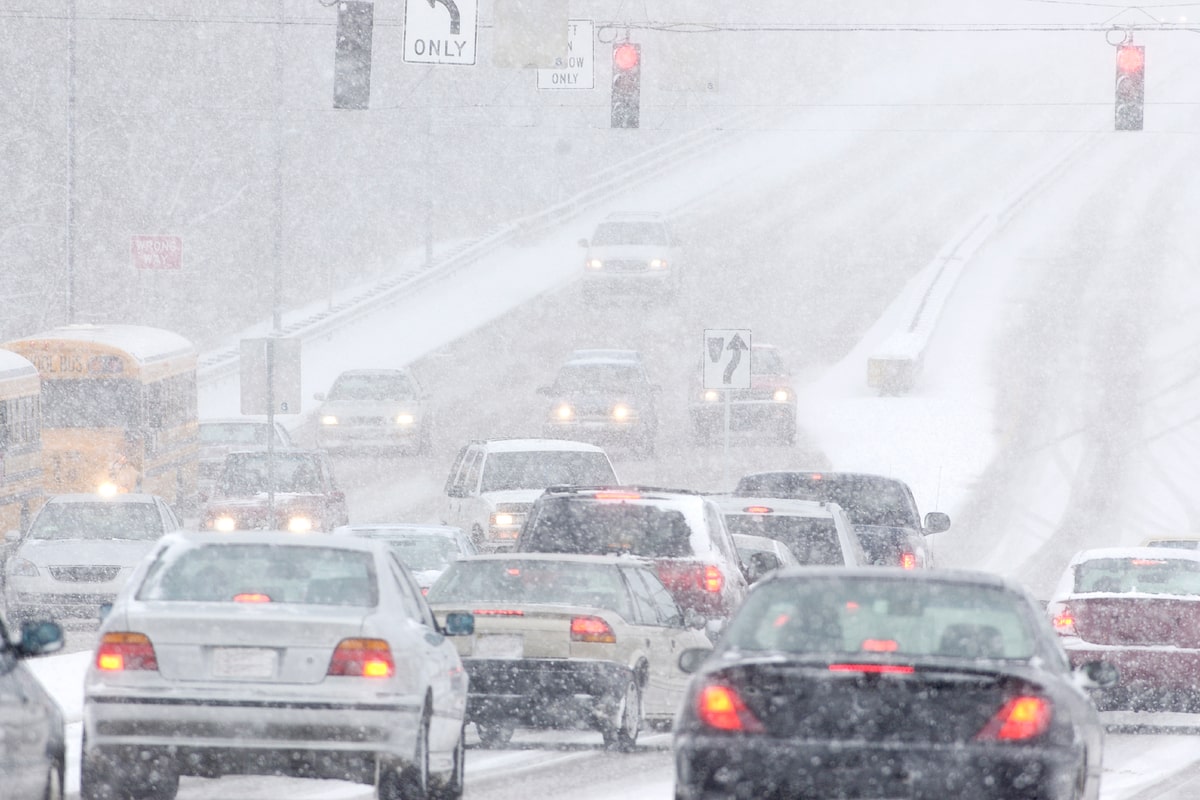
Do people forget how to drive on winter roads every year? Everyone just needs to slow down and stop tailgating. Or am I missing something? – Gene, Calgary
Most drivers don’t forget how to drive in winter – but too many choose to drive as if it’s not winter at all, driving experts said.
“People underestimate how the roads have changed because of the weather,” said Sean Shapiro, a road safety consultant. “They [assume] the road is the same as it was a month ago or even a day ago. If it’s colder than it was yesterday, your tires respond differently. It will take longer to stop. Your handling will [be worse].”
Why do we need winter tires now, but we didn’t a few decades ago?
The ABCs of winter driving are all about doing one thing at a time
While some drivers might be a little “rusty” during the first cold snap or big snowfall of the season, others go too fast and follow too closely all winter long, said Dennis Porter, a senior driving instructor with the Alberta Motor Association (AMA).
“It really comes down to speed and space when you think about driving in winter,” Porter said. “Just because the speed limit says 80 or 110 [kilometres an hour] doesn’t mean [you should go] 80 or 110 in winter.”
How much slower should you go? As slow as you need to stay in control, Shapiro said.
“It should be a minimum of 10 kilometres an hour [below the limit],” he said, adding that speed limits are set for ideal road conditions. “But when you’re talking about true winter driving conditions, with snow accumulation on the road, doing 20 [kilometres an hour below the limit] is not unreasonable.”
When road conditions are lousy, you could be charged for speeding even if you’re going the speed limit, he said.
Shapiro also warned against overconfidence when driving all-wheel- or four-wheel-drive vehicles. While they can help a vehicle get moving in heavy snow, they don’t help you handle icy roads or stop any better.
“That’s why we see so many four-by-fours in the ditch,” Shapiro said. “[The drivers] think that they’re somehow super vehicles that can go through anything.”
While you should be driving on winter tires because they stop and handle better than all-seasons on winter roads, remember that they don’t make you “bulletproof,” Shapiro said.
During a winter storm last month, Calgary police logged 192 crashes in a single day – and a traffic pileup involving 80 to 100 vehicles trapped dozens of drivers on the Queen Elizabeth II Highway between Calgary and Airdrie, Alta.
That same week, the Alberta government announced it would raise the speed limit to 120 kilometres an hour from 110 on a section of the QEII as part of a trial this year.
Space saver?
So how far should you be from the car in front of you?
“In summer, we teach three seconds‚” Porter said. “But in winter, it’s five, seven, even 10 seconds, depending on the road conditions.”
To figure out that distance, pick a landmark – a street light, for instance – and start counting when the back of the car in front of you passes it.
If cars pull in front of you from other lanes into that space you left, try to keep distance from them, he said.
Also, you should be slowing down earlier when you’re approaching a red light or a light that’s been green for a while, Porter said.
“If you normally start slowing about four car lengths away [from a traffic light], then double it in winter,” he said. “Start slowing half a block away, a block away … and just be prepared to stop.”
Once you do stop, keep enough space from the car in front of you to provide “an escape route” in case the car behind you can’t stop or another car slides into your lane, Shapiro said.
“I try to leave two car lengths minimum until the person behind me has come to a stop and then I might reduce that down to one,” Shapiro said.
When driving, you should be looking ahead to the horizon to make sure you spot cars slowing down far ahead of you – and, when you’re stopped, you should be checking your rear view mirror to make sure nobody’s sliding into you, Shapiro said.
”Even if [you’re] stopped at a red light,” he said, “You need to be able to take evasive action” such as moving ahead or into the next lane.
Have a driving question? Send it to globedrive@globeandmail.com and put ‘Driving Concerns’ in your subject line. E-mails without the correct subject line may not be answered. Canada’s a big place, so let us know where you are so we can find the answer for your city and province.