
Rob Wipond is a journalist and author of Your Consent Is Not Required: The Rise in Psychiatric Detentions, Forced Treatment, and Abusive Guardianships, and produces the newsletter PsychForce Report.
New laws to expand involuntary commitment have recently been implemented, or are under discussion in Manitoba, Alberta, British Columbia, Ontario, Quebec, New Brunswick and elsewhere. These initiatives are driven by the belief that too few people get committed to psychiatric hospitals, and that this has contributed to rising homelessness, street violence and overdoses across the country. Critics counter by pointing to the housing affordability crisis amid declining community services and supports.
Absent reliable research and data, opinions remain polarized. Some people strongly believe in coercive psychiatric interventions. But the lack of scientific evidence supporting forced treatment for substance use is acknowledged by most clinicians. Meanwhile, there are few studies of effectiveness outcomes for coercive treatment of mental disorders, either, and no evidence civil commitment helps people or protects public safety.
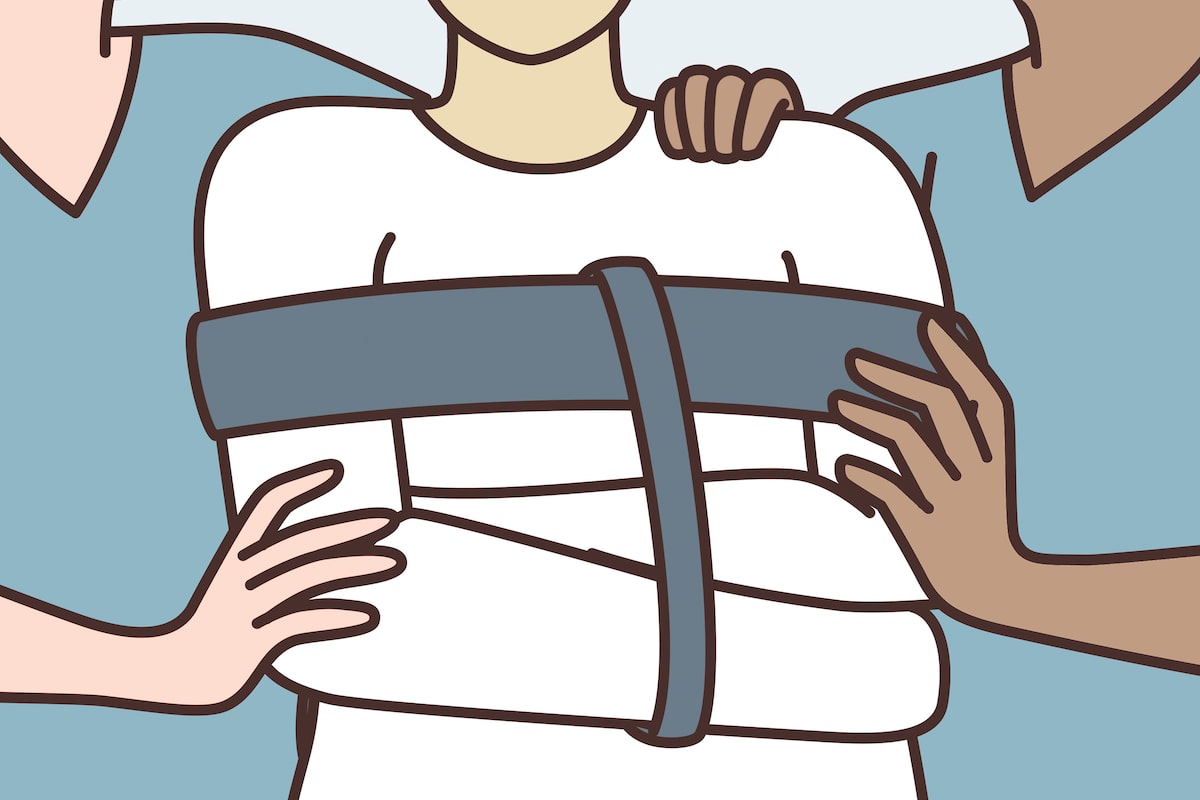
Conversely, the harms of subjecting people to locked wards, restraints, seclusion and forced drugging are well-documented. A forthcoming study from British Columbia, for example, was led by researchers at the interinstitutional Centre for Advancing Health Outcomes, and notably involved interviews with dozens of former patients and current medical staff at the researchers’ own hospitals. They found involuntary commitment “is a stressful experience for both people receiving and providing treatment and can lead to harm, trauma, and distrust.”
Opinion: Forced psychiatry is expanding – at society’s peril
It’s vital to better understand what’s going on. Yet whenever I’ve tried to get data from governments, I’ve instead usually gotten futile struggles. However, the non-profit Canadian Institute for Health Information (CIHI) is working with governments and, for the first time, a nationwide “data picture” has started to emerge.
Calculating from CIHI’s data, in 2023-24, the average rate of forced hospitalizations in Canada under civil commitment laws was 317 detentions annually per 100,000 people. In perspective: Canada holds people against their will – not for criminal acts but ostensibly to help them with their mental health – at a rate that’s 40 per cent higher than Australia, 80 per cent higher than Germany, twice the rate in Finland and the Netherlands, and triple the rate in England.
Basically, we force psychiatric hospitalizations on people at higher rates per capita than any other country with comparable standards of living and health systems. Only the infamously carceral United States had an annual psychiatric detention rate slightly higher than Canada’s before a more recent study put the U.S. rate lower.
Most telling, Canada detains people a staggering 22 times more often than Italy does – a nation that years ago made a policy decision to shift away from hospital incarcerations towards non-coercive, community-based treatment and support systems.
So, Canada now stands internationally alone with its dubious top ranking.
“We’ve waited a long time to have this [national data]; it’s really important,” said Emmanuelle Bernheim, University of Ottawa Canada Research Chair on Mental Health and Access to Justice, after I shared the numbers. “It’s a lot of people! It’s concerning.”
The rates vary considerably across Canada. Compared to Newfoundland and Labrador at 101 detentions annually per 100,000 people, New Brunswick has twice as many detentions, and Prince Edward Island more than three times as many. Ontario’s rate is above the national average at 332 detentions per 100,000 people, yet neighbouring Manitoba is barely half that. British Columbia, with the most aggressive mental health laws in the country, enacts 406 detentions annually per 100,000 people; however, B.C. is surpassed by Yukon with 422, Nunavut with 525, and Northwest Territories with 613.
What accounts for such large numbers and variances?
In nearly all jurisdictions, criteria for detentions have broadened far beyond only “danger to self or others.” Ms. Bernheim also pointed to heightened sensitivities across our society about mitigating “risk,” and speculated that other influences could involve differing “institutional practices,” availability of in-patient beds versus community supports, and prevalence of poverty. The conspicuously higher detention rates in places with larger percentages of Indigenous populations suggest racism might be a factor, too.
Opinion: A crisis of neglect: How society can help those with mental illness
UCLA social welfare professor David Cohen, who co-authored both U.S. studies of psychiatric detention rates, emphasized that every country’s data must be interrogated. There can be differences in how thoroughly data is collected and what exactly the numbers reflect in different jurisdictions. For example, while it’s possible to extrapolate from CIHI and other data that about 100,000 Canadians get detained annually, some psychiatric detentions may last hours or days, and others weeks or months.
“But on the face of it,” said Mr. Cohen, “Canada appears to be the country with the highest average rate of involuntary psychiatric detentions in the western world.” And for him, this raises even more important questions than it answers. Most “pressing,” he said, is getting sociodemographic and outcomes data. Who are these people? Why are they held? What happens afterwards? “All these questions have no answers right now,” said Mr. Cohen.
“We need a lot more data,” concurred Ms. Bernheim, wondering also about rates of restraints, seclusion, electroconvulsive shock therapy, and more.
Many pro-force advocates lobby for more commitments. But a recent groundbreaking study from Pittsburgh, led by a policy and research economist and a chief data statistician at the county government, followed such “judgment call” cases – people in emergency rooms whom some doctors would commit while other doctors would not. The people who got committed, compared to the similar people not committed, were more likely within months afterwards to become homeless, be charged with violent crimes, and kill themselves. Basically, involuntary commitment backfired on every policy goal commonly used to rationalize expanding it.
The researchers explained that forced hospitalization “causes destabilization” – while committed, many people lost rental accommodations, income, jobs, social connections, and placements with community supports, and felt betrayed by treatment providers.
Opinion: We can’t ignore the fact that some mentally ill people do need to be in institutions
Notably, despite Pittsburgh’s homelessness crisis, only 3 per cent of the patients had been in homeless shelters in the previous year. Recent data from New York City and Montreal also showed homeless people were minorities among detained patients.
If rising numbers of so-called psychotic, addicted homeless people aren’t driving the high rates, Mr. Cohen suggested that people undergoing more ordinary distresses or “misbehaviour” could be.
Indeed, in my journalism work, I’ve seen psychiatric detention powers used as much for social policing as for allegedly helping people get treatment – to control or punish people in group homes, dysfunctional families, public housing, universities, overburdened emergency rooms, and so on. Investigations in Florida and British Columbia show large numbers of children transported from schools and foster care to psychiatric hospitals. Many people seeking voluntary mental health care at hospitals get involuntarily committed if they decline a recommended treatment or mention suicidal feelings. Every year, help lines like Canada’s 988 contact police to take thousands of callers to psychiatric hospitals.
But is this a balanced picture? Mr. Cohen commented that, because the harsh realities of involuntary commitment conflict with how the practice is “sold” to the public as caring and compassionate, “there is a tendency in every country to minimize, downplay, disregard, neglect, ignore” the need for better information tracking and transparency.
So, whether for or against coercion, we should all push our governments to better report on who’s being involuntarily committed and why, and if they’re more often helped or seriously harmed.
In the meantime, we do at least now know that, far from being rare, psychiatric detentions happen in Canada more than anywhere else – let’s not ignore that reality any more.