
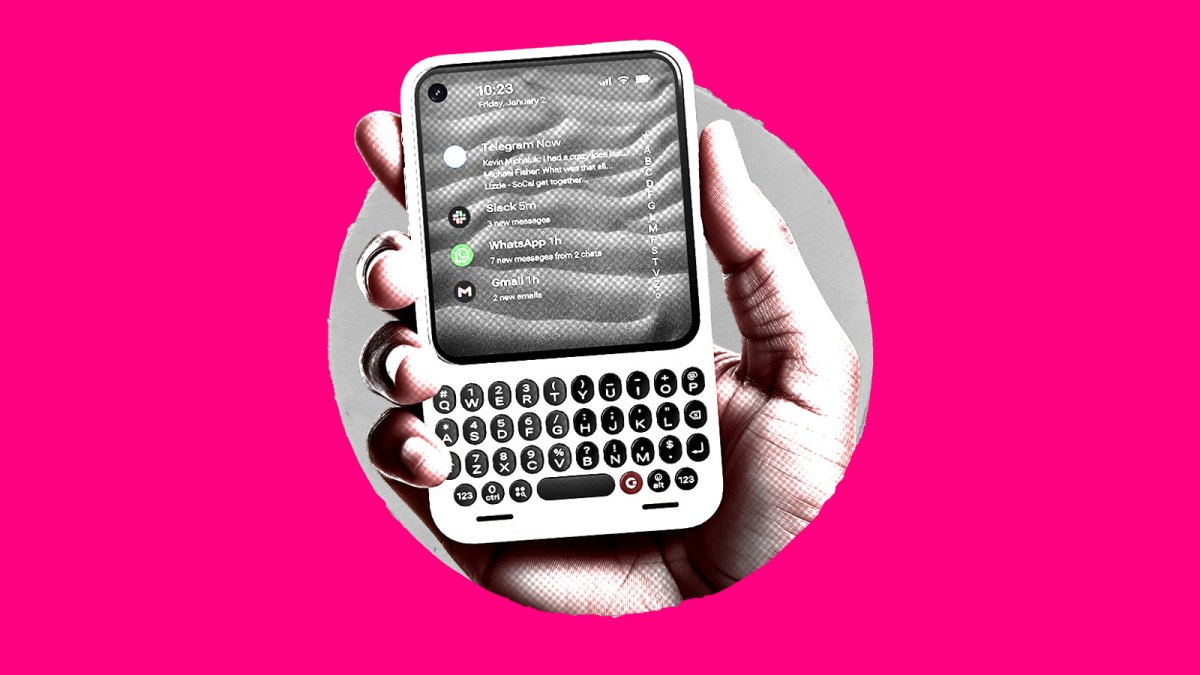
Madonna slept with one under a pillow. Barack Obama bucked White House protocol to keep hold of his when he became president. Now, a decade after it was made redundant by the iPhone, the BlackBerry is back.
The Clicks Communicator, inspired by the once-ubiquitous gadget, is an Android phone with all the usual features, including apps, camera and voice control, but also a retro headphone jack and keyboard.
Whereas the original was nicknamed the “CrackBerry” due to its addictive nature, the Communicator is being marketed as a healthy alternative to screen use under the catchline “designed for doing, not doomscrolling”.
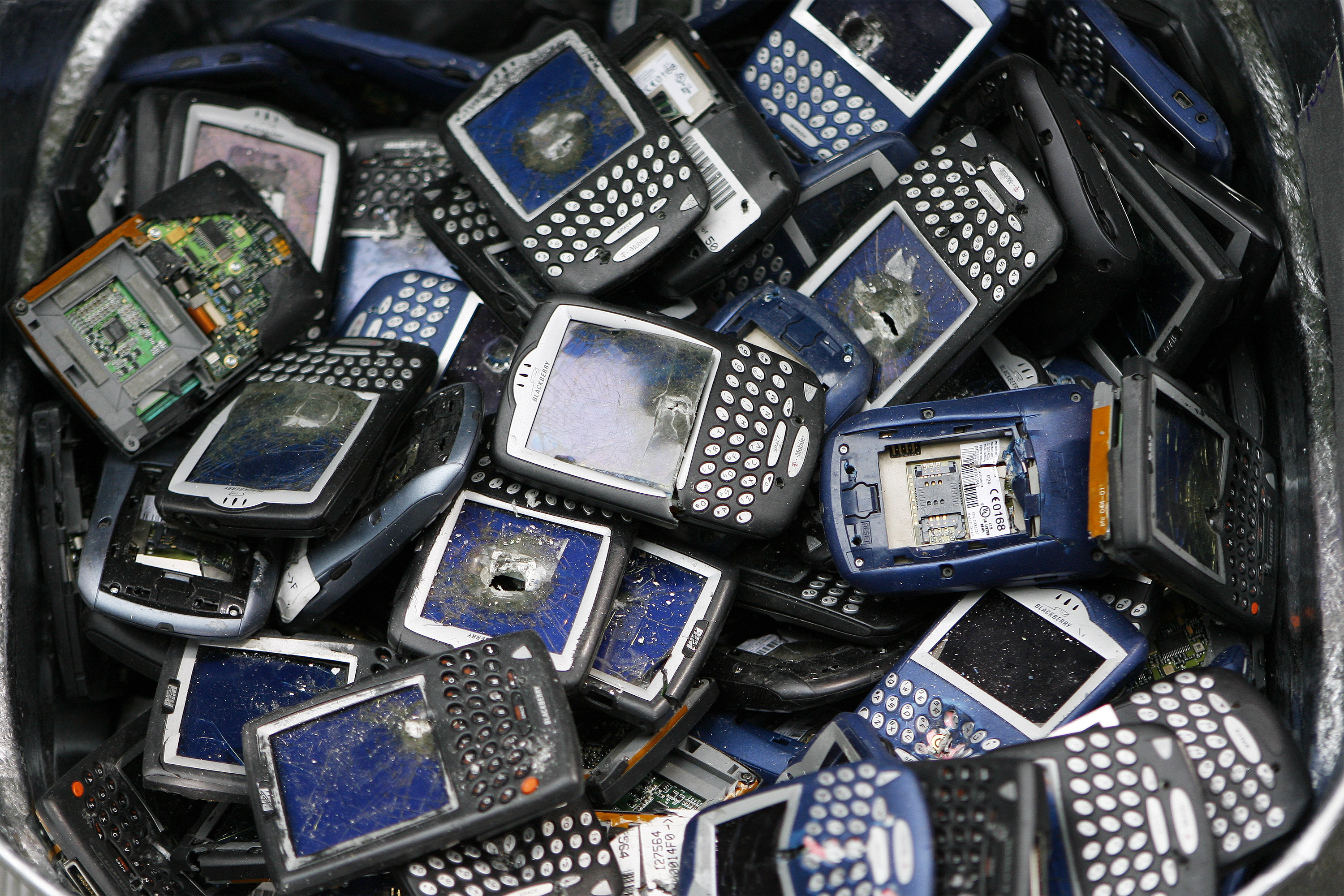
Trashed Blackberry phones used by students in an art piece
LUCAS JACKSON/REUTERS
Its creators, three BlackBerry superfans who started making snap-on keyboards for smartphones, believe there is a healthy market for people having second phones: up to 250 million people worldwide have another device either for work or to manage their screentime.
“Clicks Communicator is to a smartphone what the Kindle is to an iPad,” Jeff Gadway, the chief marketing officer and co-founder of Clicks, said. He readily admits that the screen and form of the Communicator are not as suited to content consumption and creation as an iPhone or Pixel.
Instead of a “firehose of notifications”, users of the Communicator are alerted to new messages via a signal light on the side that can be customised with different colours to indicate whether it is a VIP message, group chat or specific app. It can also be switched off.

The homescreen is not a list of apps, but a curated feed of emails and messages driven by software from Niagara Launcher. “It separates the signal from the noise by showing messages across apps, at a glance,” Michael Fisher, aka MrMobile, the co-founder of Clicks and a tech influencer, said.
The idea is that by responding to the message, the user does not get “sucked in” to the app. Gadway said: “If you think about what BlackBerry really did, it was about helping people communicate in an email-centric world efficiently, swiftly, confidently.” Unlike the BlackBerry, this device has a voice control button that allows users to dictate responses.
• Doomscrolling, texting at dinner… Have we reached peak phone?
“Think of it going beyond BlackBerry,” Kevin Michaluk, the president of Clicks, said. Describing it as the “most fan-service device, ever”, he said it is the culmination of all the things BlackBerry devotees complained about not having.
Launched in the late 1990s, BlackBerry controlled 43 per cent of the global smartphone market at its peak and RIM, the company behind the phone, was worth $75 billion. By 2016, it had stopped being sold on British shelves after losing out to smarter, touch-screen competitors. BlackBerry’s rise and fall was recently popularised in the eponymous 2023 film, which became a sleeper hit.
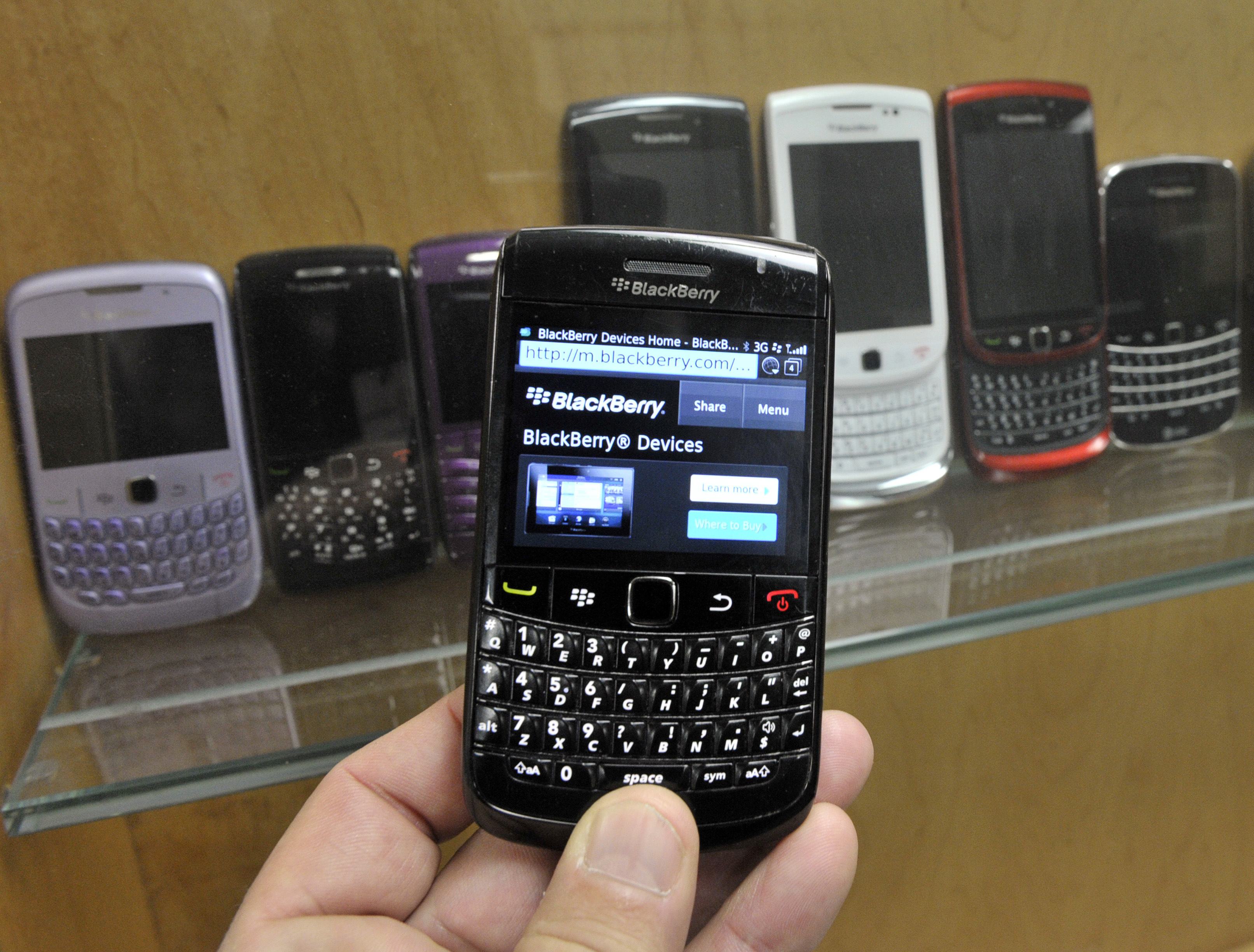
BlackBerry devices
MIKE CASSESE/REUTERS
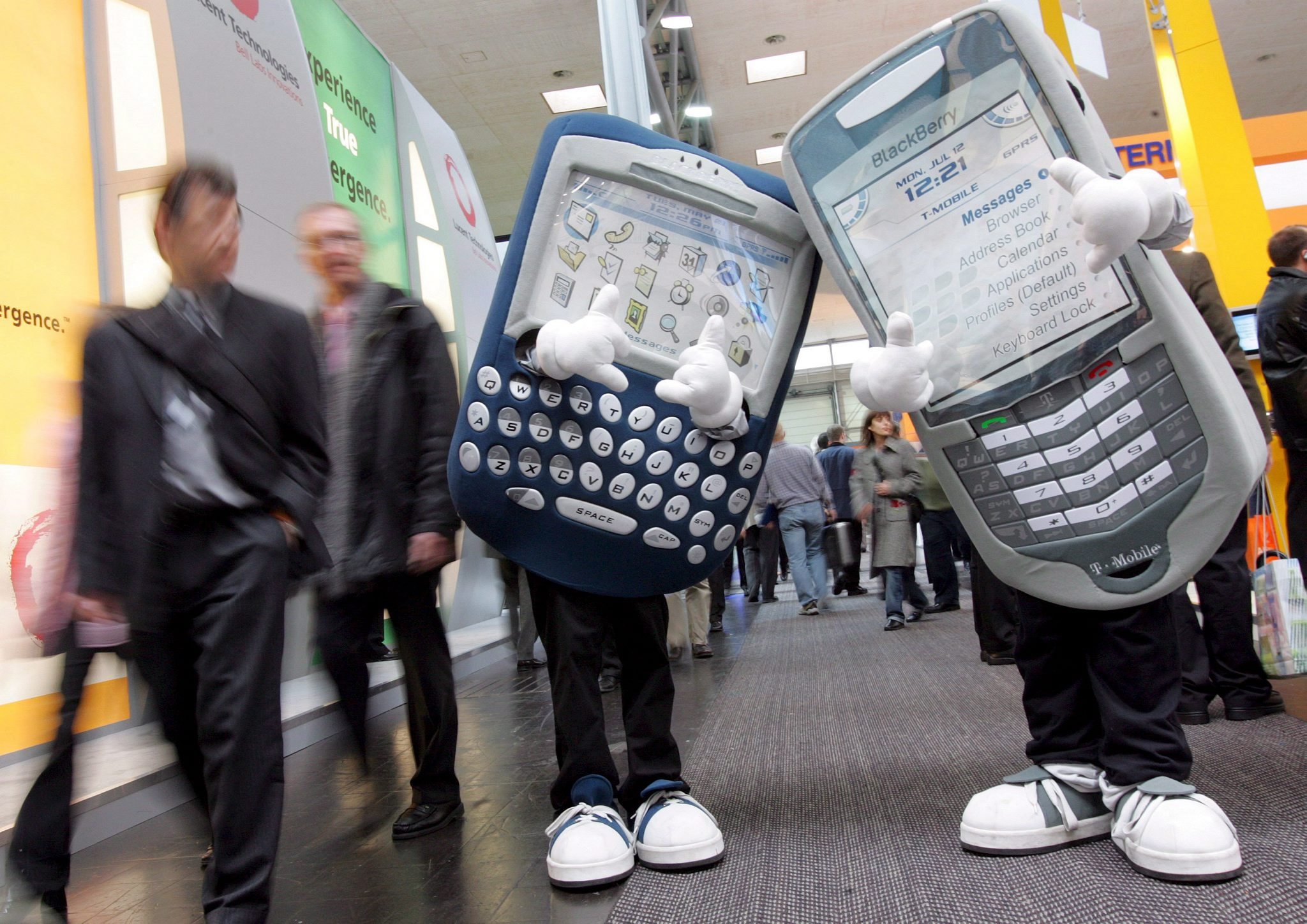
A trade fair in Germany in 2006
RAINER JENSEN/EPA
The Communicator, launched at the CES tech show in Las Vegas, has detachable colour back covers and expandable storage. It is set to be shipped in the second half of 2026 at $499 (about £370), with a $100 discount for early orders.
While CES has ceased to be a launch event for the big smartphone makers, niche players still use it to gain attention. The privacy-focused Swiss phone-maker Punkt is launching a minimalist device designed to appeal to those who want to shield their information from Big Tech.
The Punkt MC03 is essentially two phones in one: half is a privacy-first “vault”, where only Punkt-approved apps and services, like those offered by Proton, are allowed. The other is where users can download the usual suite of apps from the Android store.
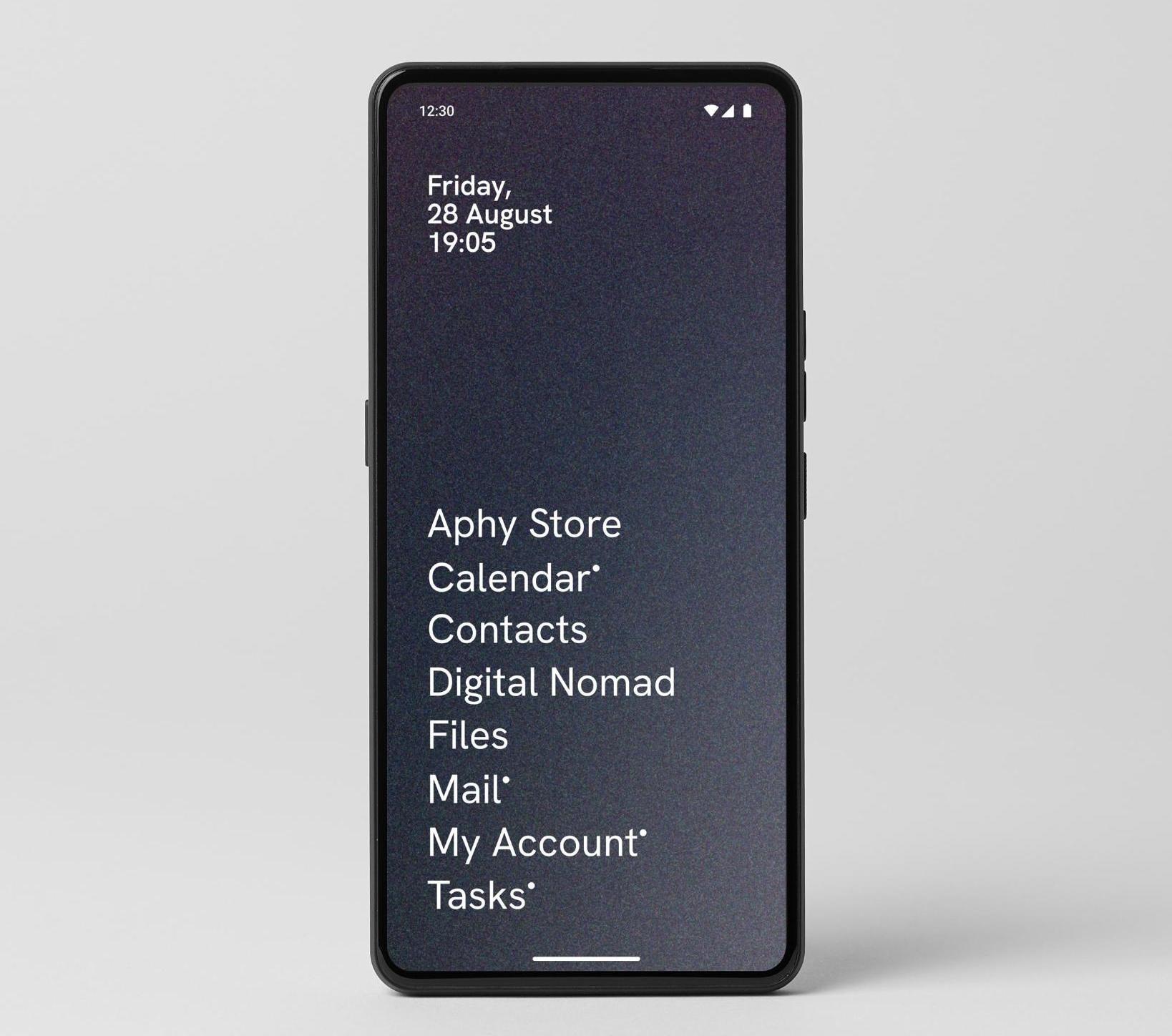
However those apps are prevented from accessing user location and activity data when they are not in use. Its operating system AphyOS is developed by the Swiss company Apostrophy, which prides itself on being privacy-centric, with data controlled by the user and not accessible by third parties.
Petter Neby, the founder and chief executive at Punkt, said there was increasing interest from European and Middle Eastern countries in the phone, which he claimed were keen to break from the dominance of US-based tech companies.
“Privacy is being sought by people more than ever before, particularly as we enter the age of AI,” he said. “They are stressed and overwhelmed by the determination of Big Tech to track and monetise their every online movement. Punkt offers them a solution — a modern, premium device without the need to compromise on their privacy.” The MC03 costs €695, plus a €9.95 subscription, but this includes a VPN.