
(Credits: Alamy)
Tue 6 January 2026 15:30, UK
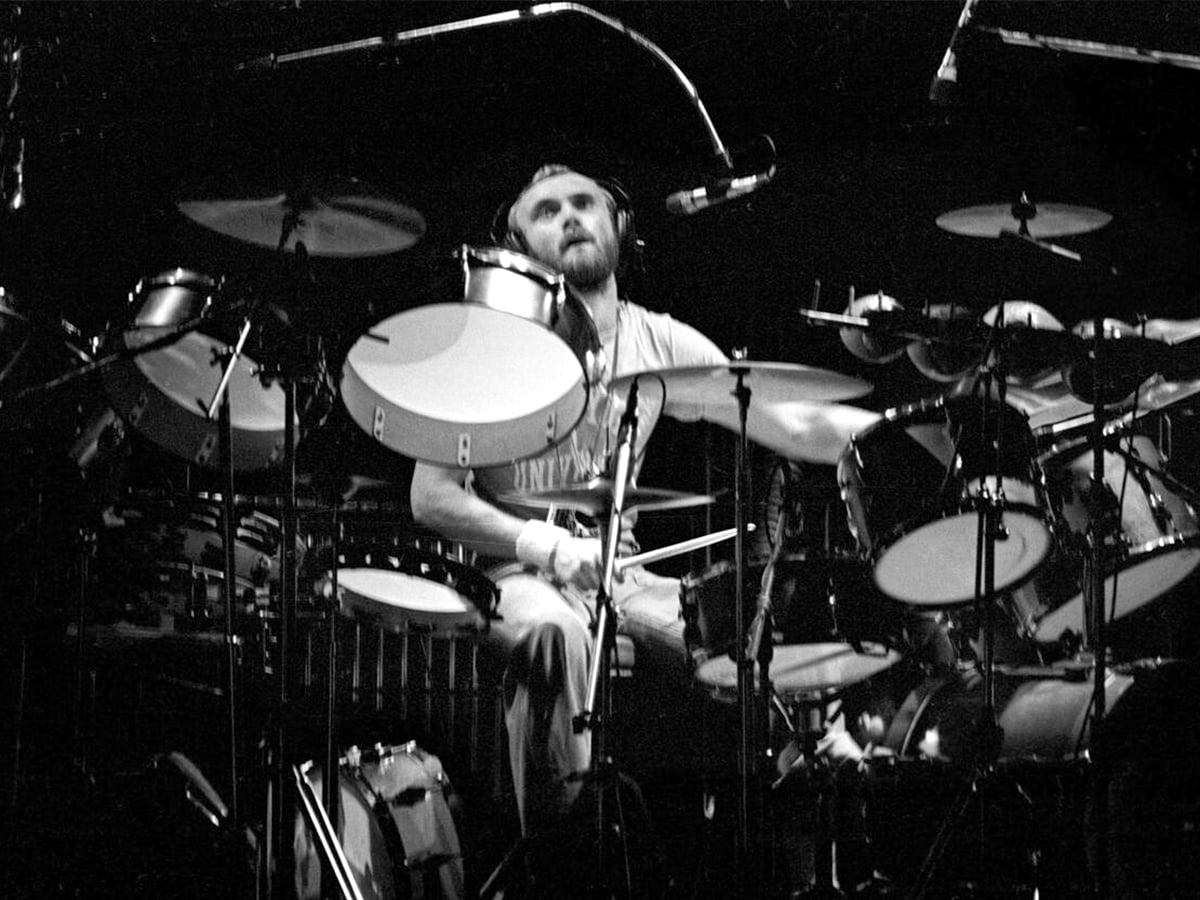
It’s easy to forget the amount of chops that Phil Collins has ever since he first stepped behind the drum kit.
Everyone might like to remember the dopey version of him singing the biggest MTV hits of the 1980s, but when you listen to his back catalogue with Genesis, there are pieces of his discography that are enough to put Neil Peart to shame. But Collins would also be the first to admit that he is no match for the true professionals who turned their talent into a borderline superpower.
Granted, Collins does at least belong in that company as well. While he did his best to serve the song just like Ringo Starr and Jim Keltner had done before him, he wasn’t only looking to make pop tunes for the rest of his career. In fact, had Face Value not lit everything on fire back in the day, chances are the version of Collins that we hear today would have been a lot more interested in fusion playing than anything remotely popular.
He had grown up in an era that was all about people trying to push themselves on their instruments, and it wasn’t like there was a shortage of competition when he started working outside of Genesis. Weather Report had started incorporating jazz into everything that they played, and even though Brand X gave Collins a decent outlet, he also had to worry about competing with the likes of U.K. at the same time when they released records like ‘In the Dead of Night’.
That was far more demanding from a technical perspective, but rock and roll drumming isn’t about trying to cram as many fills into one five-minute exercise. The greatest of all time are the ones that try their best to establish the right groove, but the ones that truly impressed the drummers in the room were those that could play the most rudimentary things and yet still sound like a thunderous hurricane in the back of every band.
And while Keith Moon was the fixture of that playing for a long time, there’s no sense in trying to compete with John Bonham. Although Led Zeppelin were already on their way to becoming one of the greatest rock and roll bands in the world, getting Bonzo behind the kit was the fifth gear that they needed. Jimmy Page was already on his way to becoming a monster guitar player, and Robert Plant could soar to the rafters, but if you took everything out of the picture, it would have sounded like the battle for Middle Earth happening behind the kit.
Collins was still getting used to playing rock and roll and following in the footsteps of legends like Buddy Rich, but there was hardly any way to describe what Zeppelin were doing, saying, “He had the best bass drum of anybody I’ve ever seen, and I became a convert there and then, you know. So I started to follow him wherever he was doing rude to be playing in a band. Next time I saw him was with Led Zeppelin when they were still called The New Yardbirds. The early Led Zeppelin was something to behold because nobody was doing that.”
But considering what they would go on to do, saying that nobody could play like them was almost an understatement. Looking through Physical Graffiti, they had all the elements of what the perfect rock and roll band was supposed to have, whether that was the all-star frontman, the epic tales throughout their songs, or hearing Bonham go from the subtlest heartbeat to sounding like he was signalling the apocalypse on one of their songs.
That kind of size and scope may have helped Genesis a great deal when they were making their own classics, but it was about more than simply playing as hard as possible. They played songs that demanded that they hit with everything they had, and when they came up for air after Bonham passed away, they already had millions of hard rock bands in their wake looking to do the same thing.
Related Topics
The Far Out Led Zeppelin Newsletter
All the latest stories about Led Zeppelin from the independent voice of culture.
Straight to your inbox.