
Breadcrumb Trail Links
Some patients cared for in ‘unconventional’ spaces, such as alcoves, hallways, and dining rooms
Published Jan 06, 2026 • Last updated 10 hours ago • 3 minute read
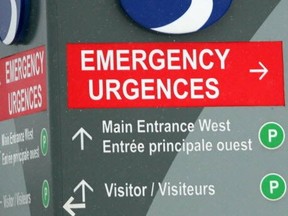 As of Tuesday, Sault Area Hospital is shouldering 119 per cent occupancy. JEFFREY OUGLER/ THE SAULT STAR Article content
There appears lesser room at the inn than ever.
Advertisement 2
This advertisement has not loaded yet, but your article continues below.
Article content
Sault Area Hospital said Tuesday “extremely” high patient volumes are forcing some patients to be cared for in “unconventional” spaces, such as alcoves, hallways, and dining rooms.
Article content
Recommended Videos
Article content
As of Tuesday, the region’s principal health-care facility is shouldering 119 per cent occupancy, with 18 patients admitted in the emergency department waiting for an inpatient bed and another 31 individuals waiting to be seen.
“This level of demand can, unfortunately, result in longer wait times, which is challenging and tiring for everyone,” SAH said in a social media post. “Our team prioritizes care for the sickest patients first to ensure those in urgent need receive timely treatment.”
This overcapacity due to a combination of factors rather than a single cause, SAH says.
Advertisement 3
This advertisement has not loaded yet, but your article continues below.
Article content
While increased pressure during peak respiratory illness season was anticipated, the current situation reflects broader, compounding system-wide challenges, director of communications and public affairs Brandy Sharp Young told The Sault Star.
Key contributing factors include more than 70 individuals currently awaiting placement in alternate level of care settings, which limits the availability of inpatient beds.
“Seasonal illness surges, including influenza, COVID-19, and other respiratory viruses, are also contributing, alongside an aging population with increasingly complex and chronic health needs,” said Sharp Young, adding that high emergency department volumes are resulting in increased hospital admissions, and higher patient acuity is leading to longer lengths of stay.
Advertisement 4
This advertisement has not loaded yet, but your article continues below.
Article content
“In addition, limited access to primary care is contributing to avoidable hospital admissions,” she said.
Sault Area Hospital said it recognizes that primary care shortages are one of several contributing pressures.
“When individuals are unable to access timely primary or community-based care, conditions can worsen and require hospital-level treatment, placing additional strain on emergency and inpatient services,” Sharp Young said.
Sault Area Hospital says it is following its established surge plan and is managing patient volumes within the organization.
“This plan does not include transferring patients to other regional or provincial hospitals,” Sharp Young said.
The hospital is working closely with health system partners, including long-term care providers, Ontario At Home and Ontario Health, to manage patient flow and support appropriate transitions of care.
Advertisement 5
This advertisement has not loaded yet, but your article continues below.
Article content
“These partnerships are essential in addressing overcapacity and ensuring patients receive care in the most appropriate setting,” Sharp Young said.
Meanwhile, the public is asked to limit visitors to only those essential to supporting the patient.
“Reducing congestion helps our teams focus on providing timely, appropriate care,” SAH said.
Also, expect longer wait times than usual. Non-urgent patients may use SAH’s Virtual Home Waiting Room to check estimated wait times and wait from home until closer to their expected turn.
SAH says patients with non-urgent needs may consider alternatives, such as contacting their family doctor, nurse practitioner, or visiting a community walk-in clinic.
The hospital suggests those experiencing an emergency call 911 or proceed directly to the emergency department. Those unsure whether their symptoms are an emergency can speak with a registered nurse for health-related advice 24/7 by calling Health811. Call 811 or visit https://bit.ly/3NvM2Dg.
Advertisement 6
This advertisement has not loaded yet, but your article continues below.
Article content
“We ask that you please be kind and patient with our staff as they manage multiple demands,” SAH said.
“Your understanding and support during this extremely busy time are greatly appreciated.
“Throughout this period, we continue to focus on providing safe, high-quality care for every patient, even during these exceptionally busy circumstances.”
None of this comes as a surprise.
Sault Area Hospital reported in late fall it continued to be plagued by capacity pressures, which officials predicted were bound to only balloon as the respiratory season hit full stride.
Senior staff developed a multi-phased, “detailed” plan to manage increased patient volumes during peak respiratory activity, which includes optimizing inpatient and critical care capacity, strengthening staffing models and ensuring “efficient” patient flow throughout the hospital.
Advertisement 7
This advertisement has not loaded yet, but your article continues below.
Article content
“We have consistently greater than 300 in-patients in our facility and we struggle currently with a considerable number of alternate level of care patients,” SAH president and CEO Ila Watson told board members and senior staff then.
Occupancy reached as high as 324 last summer.
The state-of-the-art Great Northern Road facility, which opened in 2011 to replace two smaller buildings on Queen Street East, was geared to house some 290 inpatients. In fact, the new building was 20 per cent larger than the two former hospitals combined.
Since then, SAH has had to convert areas not intended for inpatient use into bed spaces.
“We continue to find contingency spaces by doing less desirable things like using recovery spaces, spaces that we might have as dining rooms we have patient spaces,” Watson told September’s board meeting.
“That’s how stretched we are and how deeply we need to go to look for additional space.”
On X: @JeffreyOugler
Article content
Share this article in your social network