
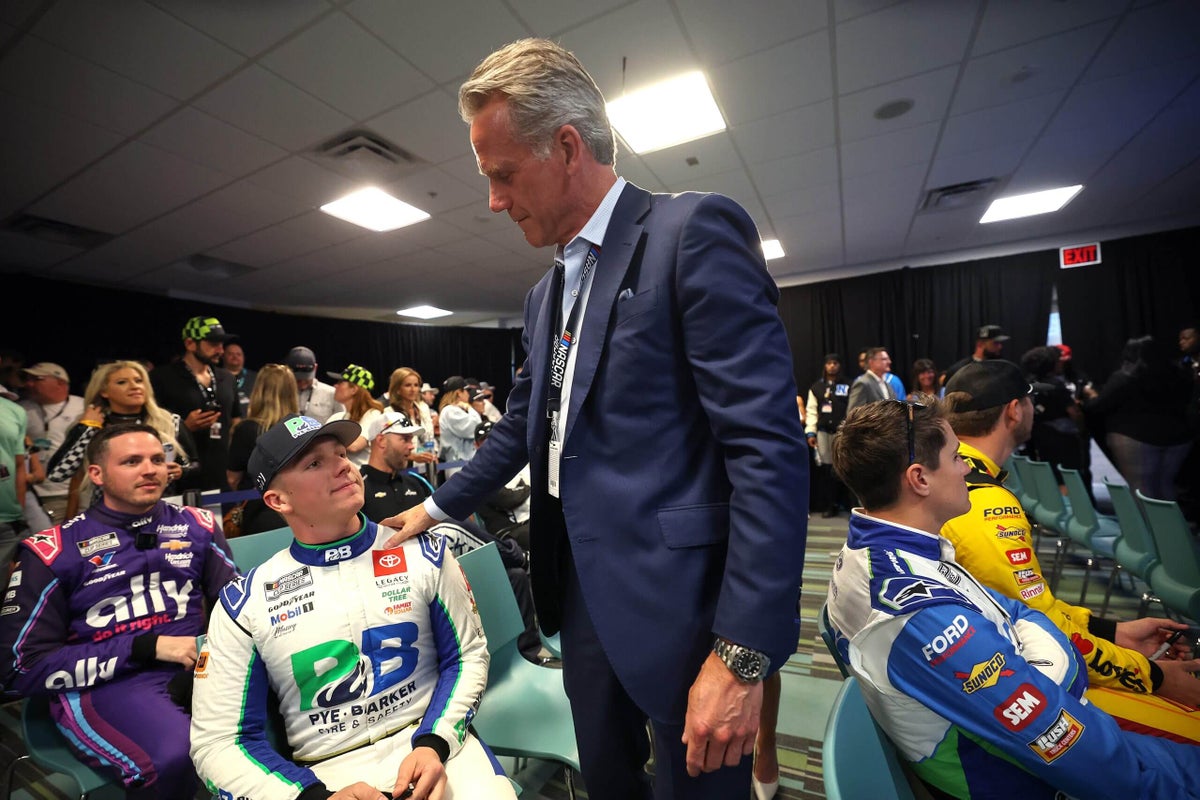
There will be some rejoicing over the news that NASCAR commissioner Steve Phelps is resigning and will transition out of the company by the end of the month. This is because Phelps was a central figure in the messy legal battle between NASCAR and two teams, a dispute that has left the sport and its leadership bruised and bloodied.
If the antitrust lawsuit weren’t ugly enough, disparaging texts unearthed during the discovery process from Phelps to another NASCAR executive about team owner Richard Childress only made matters worse. The fallout has included Childress threatening litigation and a high-profile sponsor publicly calling for major leadership changes.
Phelps’ comments also served as further evidence for a contingent of fans and some within the garage who believe NASCAR’s executive leadership team is severely out of touch with the people who love the sport most.
For this group, Phelps represents the first of what should be many of NASCAR’s decision-makers to be shown the door. If NASCAR is to reassert itself in the sports landscape, those people believe, it needs to return to the formula that once had it rivaling the NFL for television ratings, with the sport led by those who truly embrace it.
But for many others in the NASCAR community, including several team employees who spoke to The Athletic on Tuesday, it’s a mistake to think Phelps was out of touch. NASCAR was better with Phelps in charge, they feel, and the issues surrounding the sport aren’t suddenly going to be rectified because he’s departing.
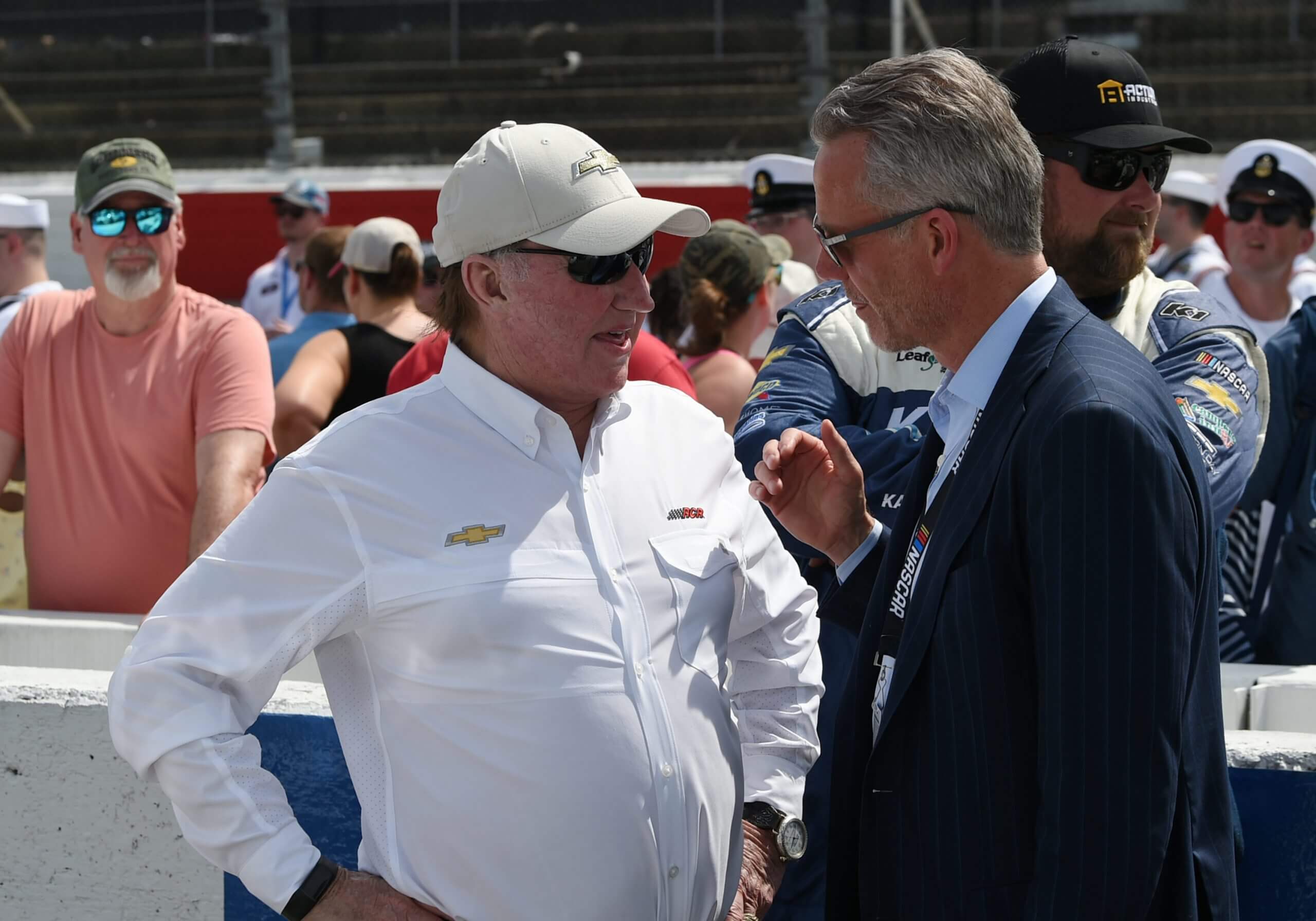
Richard Childress (left) and Steve Phelps speak before a race in Darlington, S.C., in April, seven months before Phelps’ comments calling Childress a “redneck” were made public. (Jeffrey Vest / Icon Sportswire via Getty Images)
During the two-plus years of charter negotiations that were at the heart of why two teams sued NASCAR, Phelps was revealed in testimony and evidence to have frequently advocated for those and the other teams, pushing NASCAR chairman and CEO Jim France to be more receptive to giving them what they wanted. Had Phelps not been hamstrung by France’s refusal to budge on the terms, the lawsuit might never have materialized, the cloud that’s overshadowed the sport ever since the lawsuit was filed in October 2024 might not have formed in the first place, and the sport would still likely have Phelps in the commissioner role.
Blame Phelps for some of it; he deserves it. There is no excusing his remarks about Childress, whose everyman, never-back-down persona is something with which many fans identify. Insulting a NASCAR Hall of Fame team owner is a surefire way to lose fans’ respect.
What does not fall solely on Phelps’ shoulders, though, is that the league was dragged into federal court. Or that NASCAR has taken a considerable financial and public relations hit as a result.
Had the situation become untenable? Was Tuesday’s announcement inevitable? Perhaps. Phelps’ standing within the sport was certainly weakened by the comments he made about Childress. It would’ve taken a lot of work to repair his frayed relationships.
The question is whether Phelps wanted to try. Tuesday’s news release called it a “personal decision” for Phelps. If this was his call, if he was ready to leave after all this, so be it.
But if NASCAR pushed him out, it would be hard not to view Phelps’ departure as him taking the fall for the sport’s failures. Others above him made miscalculations in the charter negotiations, but he is the one leaving, creating a feeling that nothing will really be all that different going forward.
And, as many in the garage feel, NASCAR is better with Phelps prominently involved. He should’ve been given another chance based on his reputation in the sport.
Few could have deftly navigated the many complications brought by the COVID-19 pandemic, during which Phelps’ leadership earned widespread praise. Not only was NASCAR one of the first sports to return after shutting down in 2020, but it also completed a full season, allowing its teams to receive full payouts from NASCAR’s media rights partners, enabling many teams to remain operational.
Phelps was also instrumental in NASCAR becoming more welcoming to people of all backgrounds, pushing NASCAR’s founding France family to disassociate from its relationship with the Confederate flag. The family listened, and in June 2020, NASCAR banned the flag from being displayed at any of its events.
Phelps’ tenure at the top of the sport, which began in the fall of 2018, also included NASCAR dramatically reshaping its once dreary schedule by adding groundbreaking races held in the Los Angeles Memorial Coliseum and on a course utilizing city streets in downtown Chicago, as well as the first international premier Cup Series race since the 1950s. These events all drew mass media attention and introduced the sport to new fans.
As NASCAR looks forward, the league doesn’t plan to make any other leadership changes, high-ranking NASCAR executive Ben Kennedy, nephew of Jim France, told employees Tuesday morning during a company meeting, according to sources who were present.
Who will handle all of Phelps’ duties is not known, but these are big shoes to fill. For now, his tasks are expected to be spread out to others within the company.
But the void he’ll leave won’t be so easily filled.