
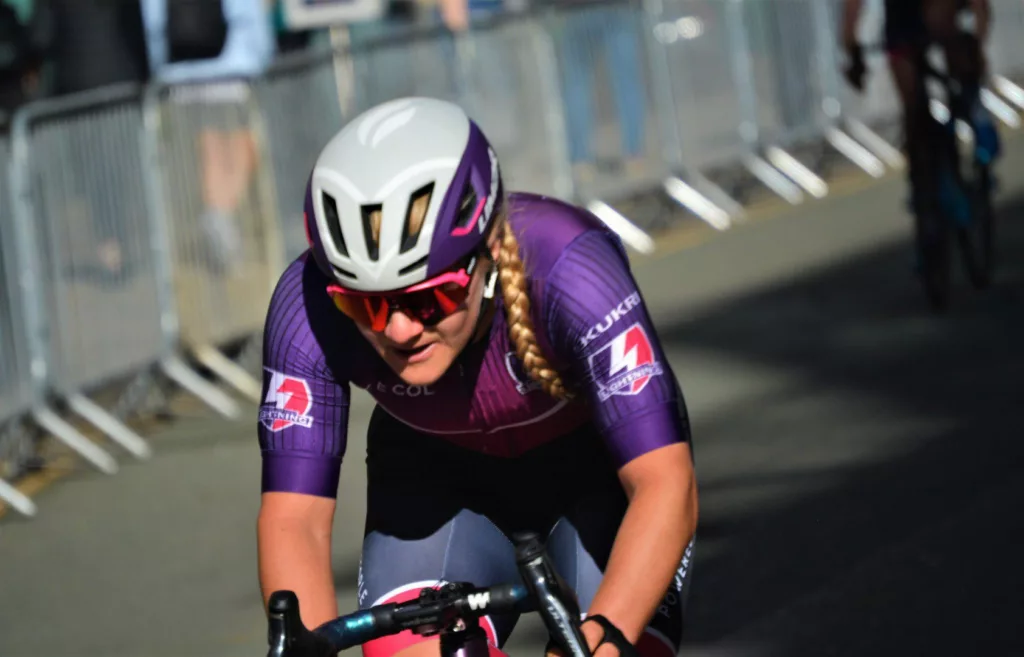
British rider Frankie Hall is set to line up for Roland Le Dévoluy in 2026, with her name appearing on the startlist for the team’s early-season campaign in El Salvador. The move brings Hall back into a structured continental environment following one of the most unconventional and self-directed seasons in the women’s peloton.
Roland Le Dévoluy, formerly a Women’s WorldTour outfit, are rebuilding around a mixed roster of experience and youth, and Hall’s inclusion signals a clear intent to add proven race-winning depth. Also joining the squad for 2026 is Kaia Schmid, the young American rider continuing her gradual return to top-level racing after a disrupted start to her professional career.
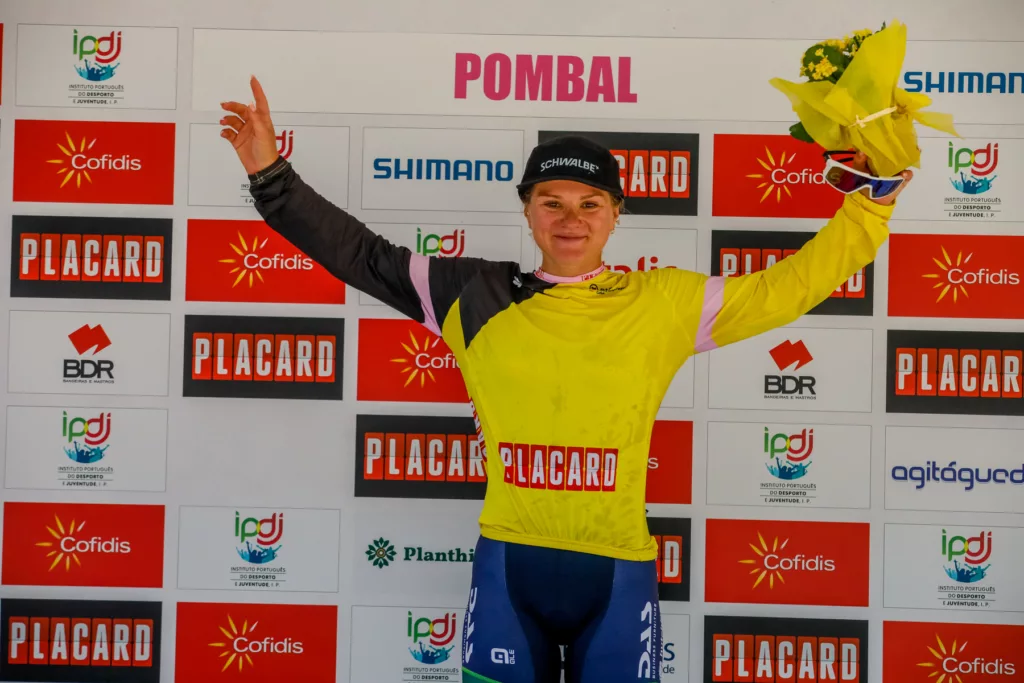
Frankie Hall: experience forged outside the system
Hall arrives at Roland Le Dévoluy after a period that has come to define her career arc. Now 30, she has accumulated UCI victories on four continents and consistently demonstrated numbers and race craft that stand comparison with riders already established at WorldTour level. Yet much of that progress has been achieved without the security or backing of a long-term professional contract.
A former elite hockey player who only turned to competitive cycling in her twenties, Hall’s pathway into the international peloton has been unusually compressed. After beginning UCI racing in 2023, she quickly translated domestic form into results abroad, but found herself caught in a structural contradiction that increasingly shapes women’s cycling: experienced enough to deliver, but outside the age profile many teams now prioritise for long-term development.
Rather than stepping away, Hall responded by building her own season. Across 2024 and 2025, she assembled a global calendar through guest rides, composite teams and independent entries, racing across Europe, North America, Asia and Oceania. The results were tangible. UCI stage wins, consistent points accumulation, and strong performances in stage races underlined not only her physical capacity but her adaptability in varied race scenarios, often without the support structures most riders rely on.
Her background outside cycling has also shaped her approach. Having come to the sport later than most of her peers, Hall’s “cycling age” remains relatively young, and her rate of learning has been steep. Technical improvement, tactical awareness and confidence have all accelerated through sheer exposure, particularly in environments where organisation, clarity and role definition were present regardless of budget.
Kaia Schmid: rebuilding after an abrupt transition
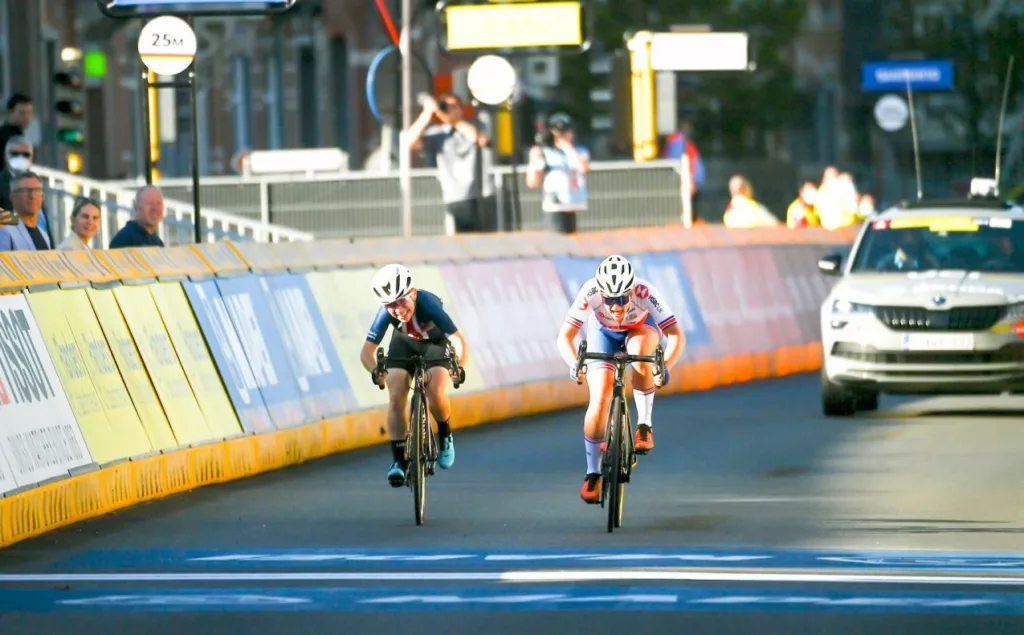
Alongside Hall, Roland Le Dévoluy will also welcome Kaia Schmid, a rider whose career has unfolded at the opposite end of the development spectrum. Raised in Marblehead, Massachusetts, Schmid emerged as one of the most decorated juniors of her generation, collecting multiple national titles across road and track, a junior world title on the track, and a silver medal at the junior road world championships in 2021.
That success accelerated her move into the professional ranks, where she joined the WorldTour at a young age. The transition, however, proved challenging. Illness, injury and the cumulative demands of elite racing disrupted her early seasons, limiting both race days and continuity. Like many riders stepping directly from junior dominance into senior racing, Schmid encountered the physical and psychological strain of competing for survival rather than results.
In recent seasons, her focus has shifted towards stabilisation and long-term development. Racing at the continental level has allowed her to rebuild fitness, confidence and consistency away from the intensity of the WorldTour spotlight. Her move to Roland Le Dévoluy fits that trajectory, offering structured racing opportunities and a platform to translate her junior promise into sustainable elite performance.
A rebuild with intent
For Roland Le Dévoluy, the 2026 roster reflects a deliberate blend of profiles. Hall brings experience, proven resilience and immediate competitiveness, while Schmid represents a rider still in the process of rediscovering her trajectory after an accelerated and difficult transition into the professional ranks.
The early-season races in El Salvador will provide the first reference points for how that balance plays out on the road. For Hall, it marks a return to a defined programme after years of improvisation. For Schmid, it is another step in a measured rebuild. For the team, it is a statement of intent as they continue to reshape their identity following their WorldTour exit.