
Your support helps us to tell the story
From reproductive rights to climate change to Big Tech, The Independent is on the ground when the story is developing. Whether it’s investigating the financials of Elon Musk’s pro-Trump PAC or producing our latest documentary, ‘The A Word’, which shines a light on the American women fighting for reproductive rights, we know how important it is to parse out the facts from the messaging.
At such a critical moment in US history, we need reporters on the ground. Your donation allows us to keep sending journalists to speak to both sides of the story.
The Independent is trusted by Americans across the entire political spectrum. And unlike many other quality news outlets, we choose not to lock Americans out of our reporting and analysis with paywalls. We believe quality journalism should be available to everyone, paid for by those who can afford it.
Your support makes all the difference.Read more
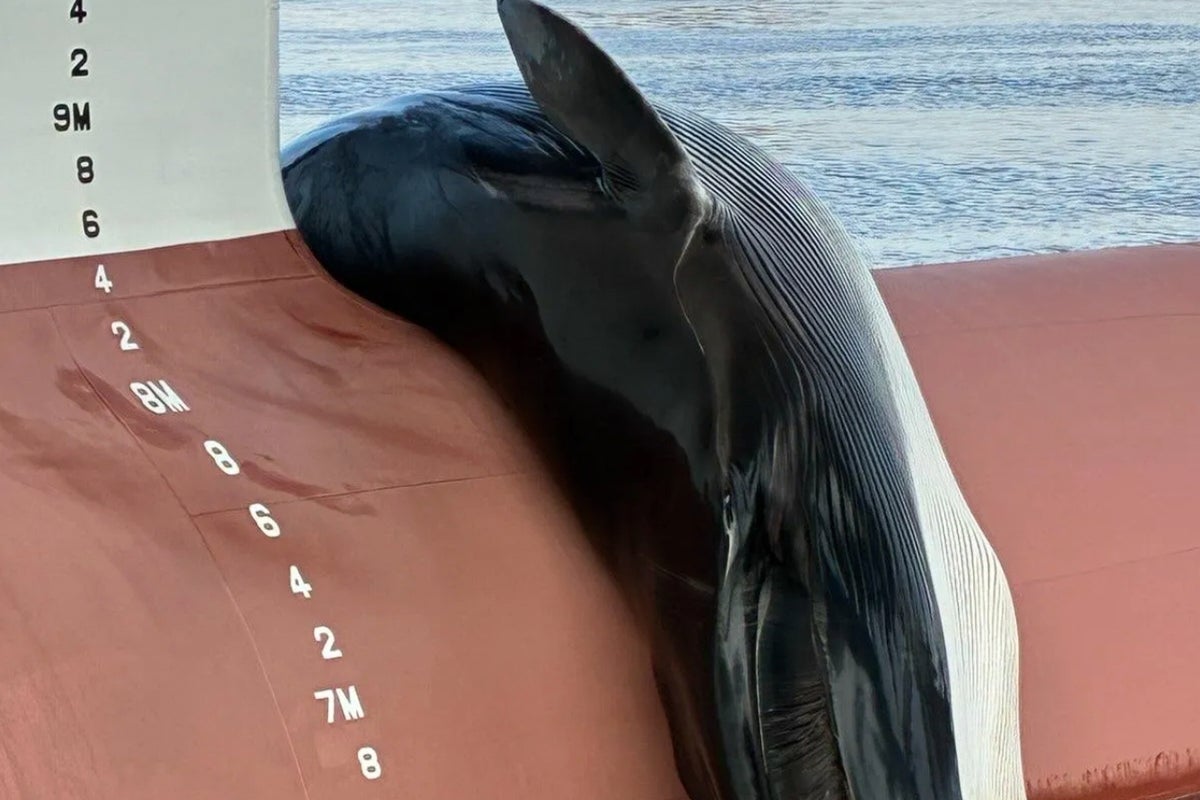
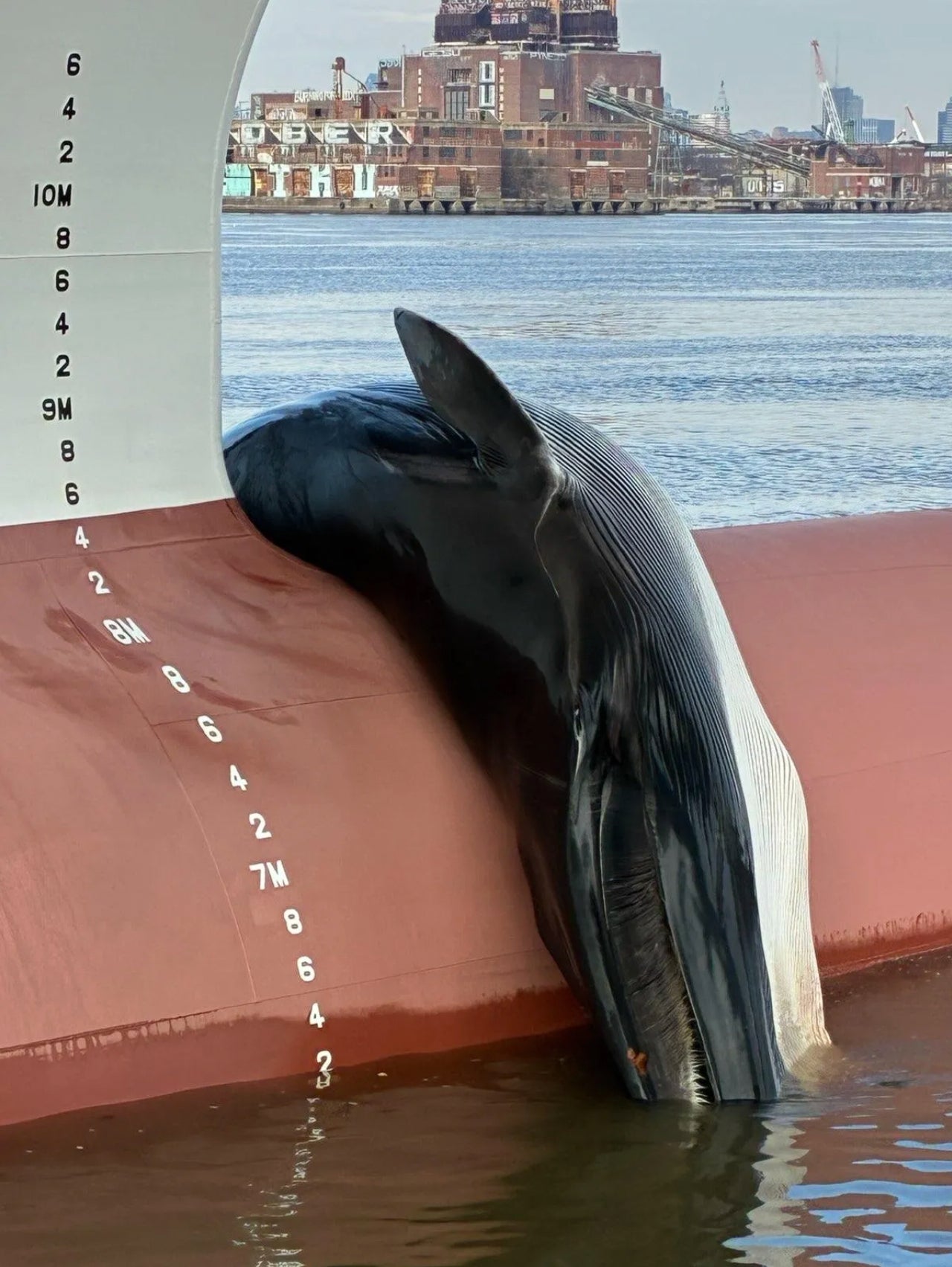
An endangered whale has been discovered dead on the bow of a container ship docked in New Jersey, prompting authorities to investigate its cause of death and arrange for carcass removal.
The US Coast Guard reported the whale on Sunday at the Gloucester Marine Terminal, a port located at the base of the Walt Whitman Bridge, which links New Jersey and Pennsylvania. The Marine Mammal Stranding Center, a local animal rescue service, confirmed the discovery via social media.
In a follow-up post on Tuesday, the centre stated it was working to tow the carcass for a necropsy, hoping to ascertain precisely how the whale died.
The National Oceanic and Atmospheric Administration on Tuesday confirmed its enforcement office has opened an investigation into the death but declined to comment further. It said anyone with information about the dead whale should call the agency’s hotline.
open image in gallery
Whale Death New Jersey
The deceased animal is believed to be a fin whale between 25 to 30 feet long (7.6 to 9.1 meters), the center said. The endangered species is known to swim in waters from southern New Jersey to the New York City area.
Populations of the massive mammals have gradually recovered in the Atlantic Ocean thanks to conservation efforts after becoming nearly extinct from commercial hunting. All dolphins, porpoises and whales are protected by the federal Marine Mammal Protection Act, which makes touching, feeding or otherwise harming them illegal.
Fin whales are the second-largest animals behind the blue whale. Fully grown, they can reach up to 85 feet (25.9 meters) long and weigh between 40 and 80 tons (36.3 and 72.6 metric tons).
The giant mammals are found throughout the world and are threatened by ship strikes, fishing gear entanglements and the effects of climate change, among other challenges.