
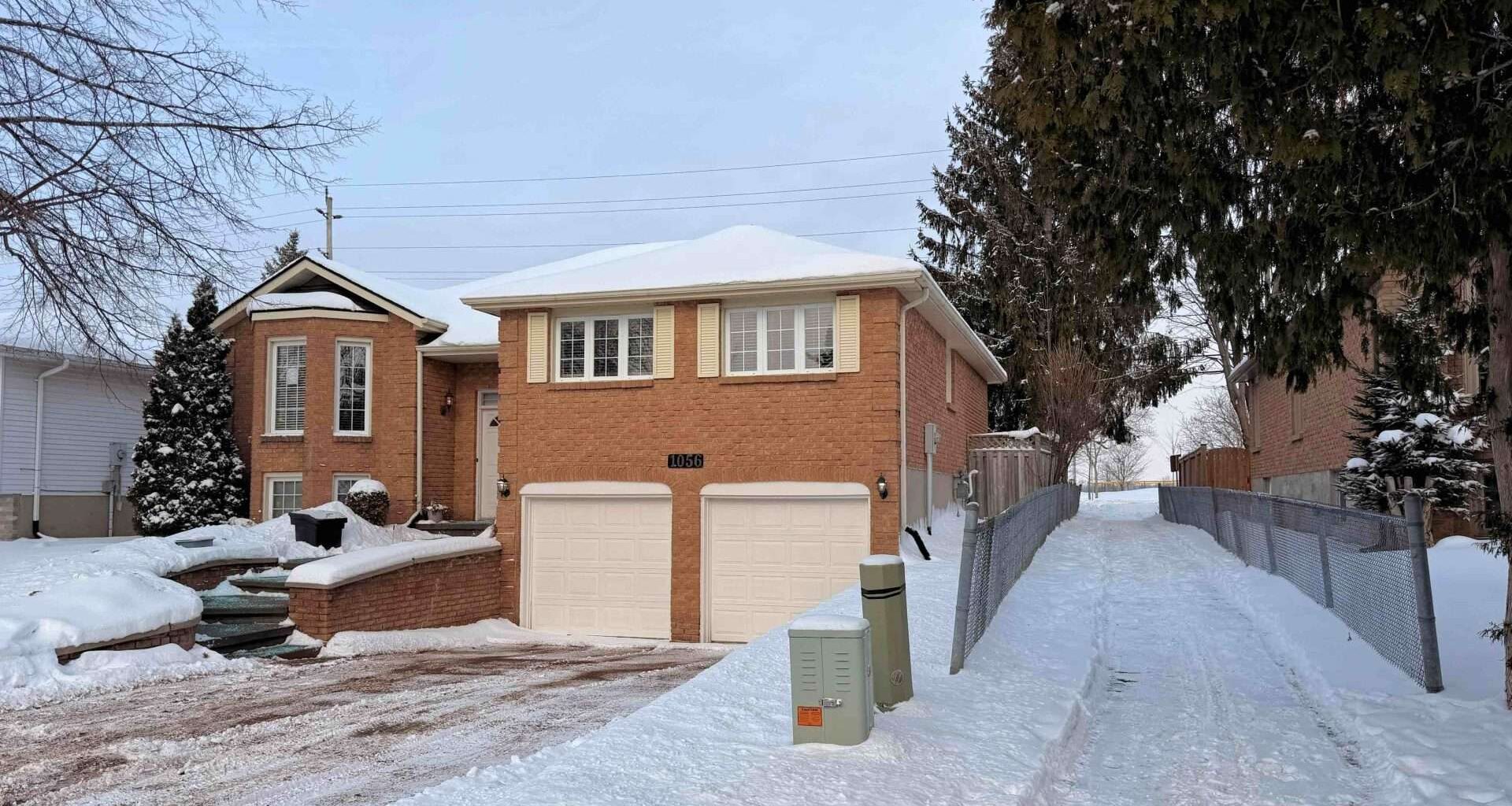
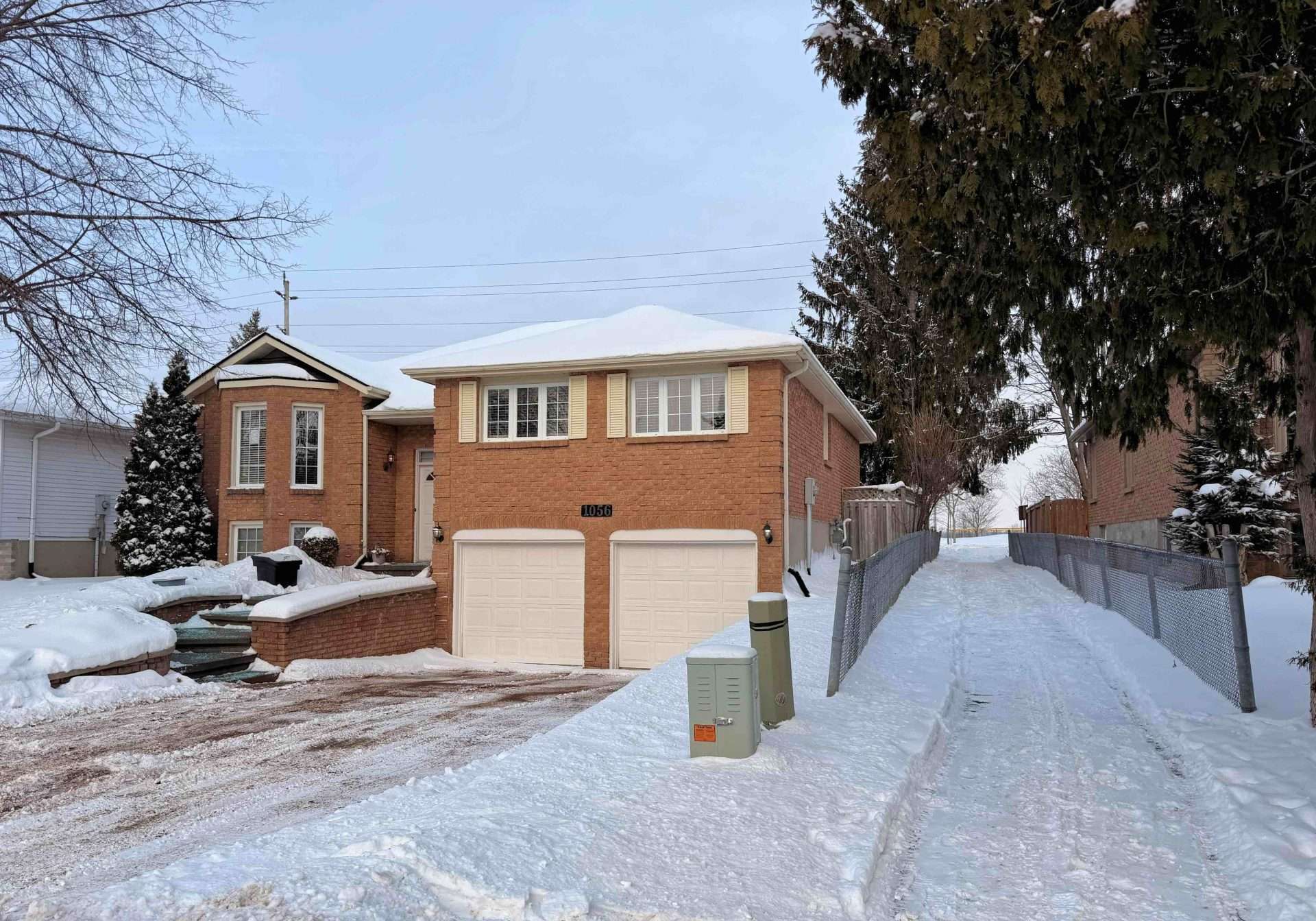
 1056 Palmerston Crescent, pictured here on Tuesday, Jan. 6, 2025. Photo by Cris Vilela/Kingstonist.
With a neighbourhood “up in arms” over the City of Kingston’s latest housing support strategy, Collins-Bayridge District Councillor Lisa Osanic plans to bring a motion to the first council meeting of the year, asking the City to sell the house it just purchased at 1056 Palmerston Crescent.
“This has been [the] biggest issue I have dealt with as a councillor. This is my 20th year and I’ve never had an outcry like this before. Ever,” Osanic told Kingstonist.
She said the detached single-family bungalow in the established Westwoods neighbourhood, which backs onto Woodbine Park, became a flashpoint of community fear and anger over the Christmas holidays when it was revealed the City bought the house for about $780,000 with the intention of converting it into supportive housing.
The five-bedroom bungalow will be retrofitted into an eight-bedroom home, and eight men from the homeless shelter system are expected to move in, plus support staff, by March 31, 2026, she explained.
Osanic said she’s been bombarded with emails and calls over the past couple of weeks from anxious residents who are upset about the chosen location and have safety-related concerns.
“I’ve had hundreds of emails — hundreds. I’ve put 25 hours into fielding phone calls and having meetings and sending their concerns to staff,” the veteran councillor said.
She said community fear spread like wildfire after the City publicly announced the purchase and location on Friday, Dec. 19, 2025, and sent out flyers to the entire neighbourhood explaining what it plans to do with the house and who will live there.
It’s part of a broader strategy to decentralize housing and homelessness supports away from the downtown core. The City also purchased similar homes, ranging from $665,000 to 775,000, to provide supportive housing in Lakeside and Pittsburgh Districts.
So far, the supportive housing project in Osanic’s west end district has generated the most community pushback.
Backyards in the area do not provide enough separation between neighbours, and 1056 Palmerston is also located next to a well-used pedestrian pathway connecting to Woodbine Road and is regularly used by children going to nearby schools and splash pads, she explained.
“The problem with Palmerston is that the homes have very small side yards and so everybody can see everything,” Osanic said.
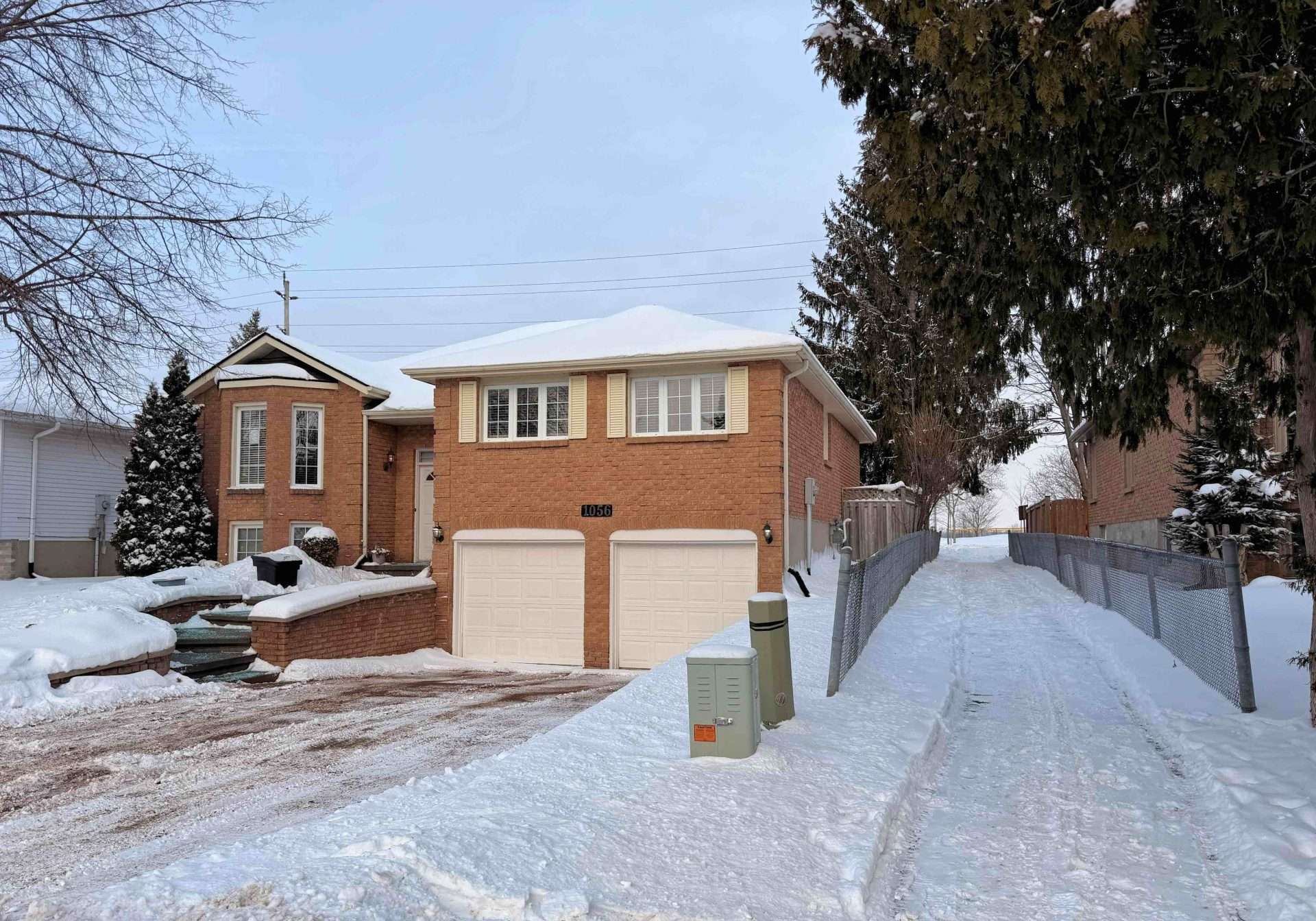 The walkway next to 1056 Palmerston from the front.
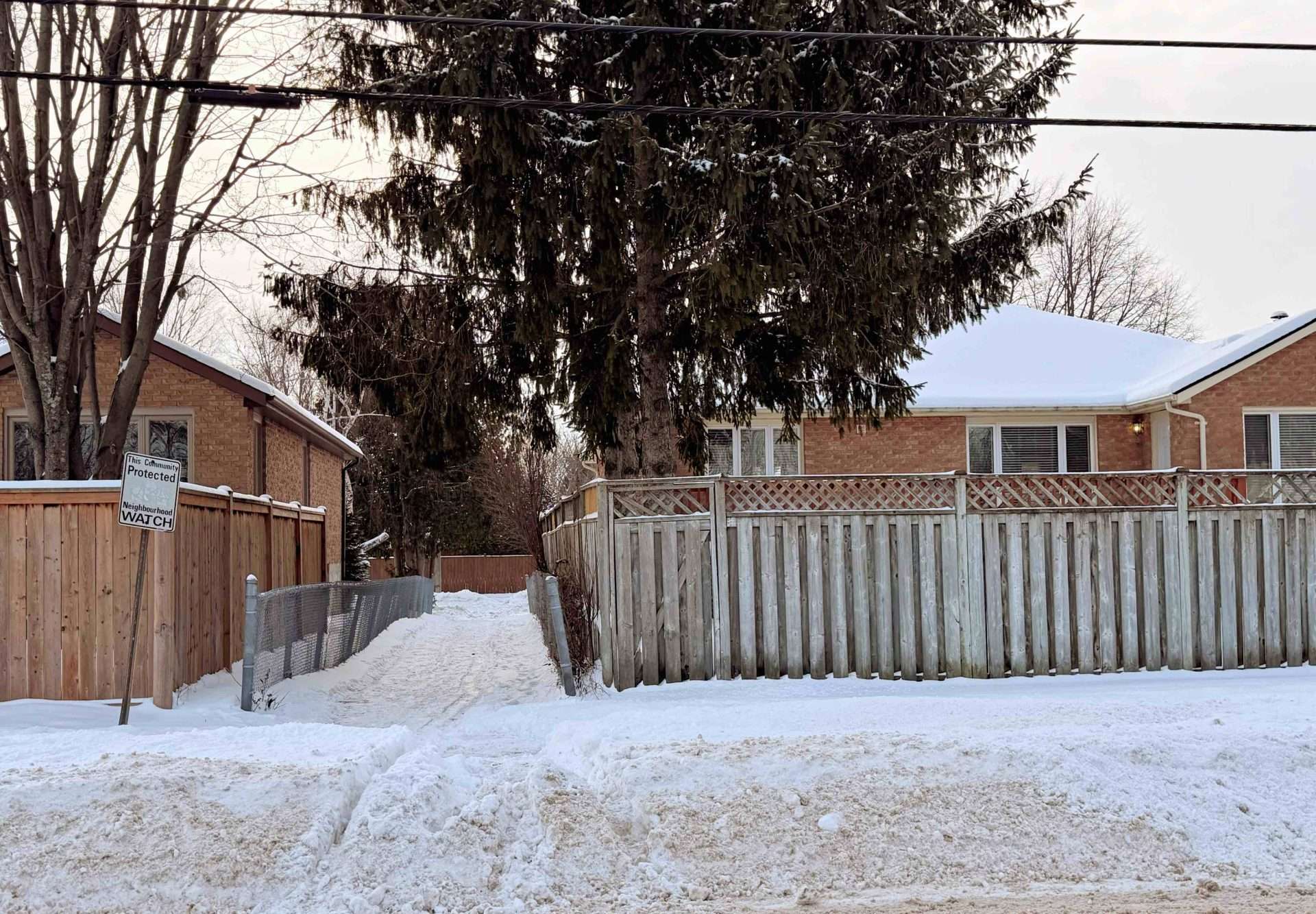 The walkway next to 1056 Palmerston from the park.
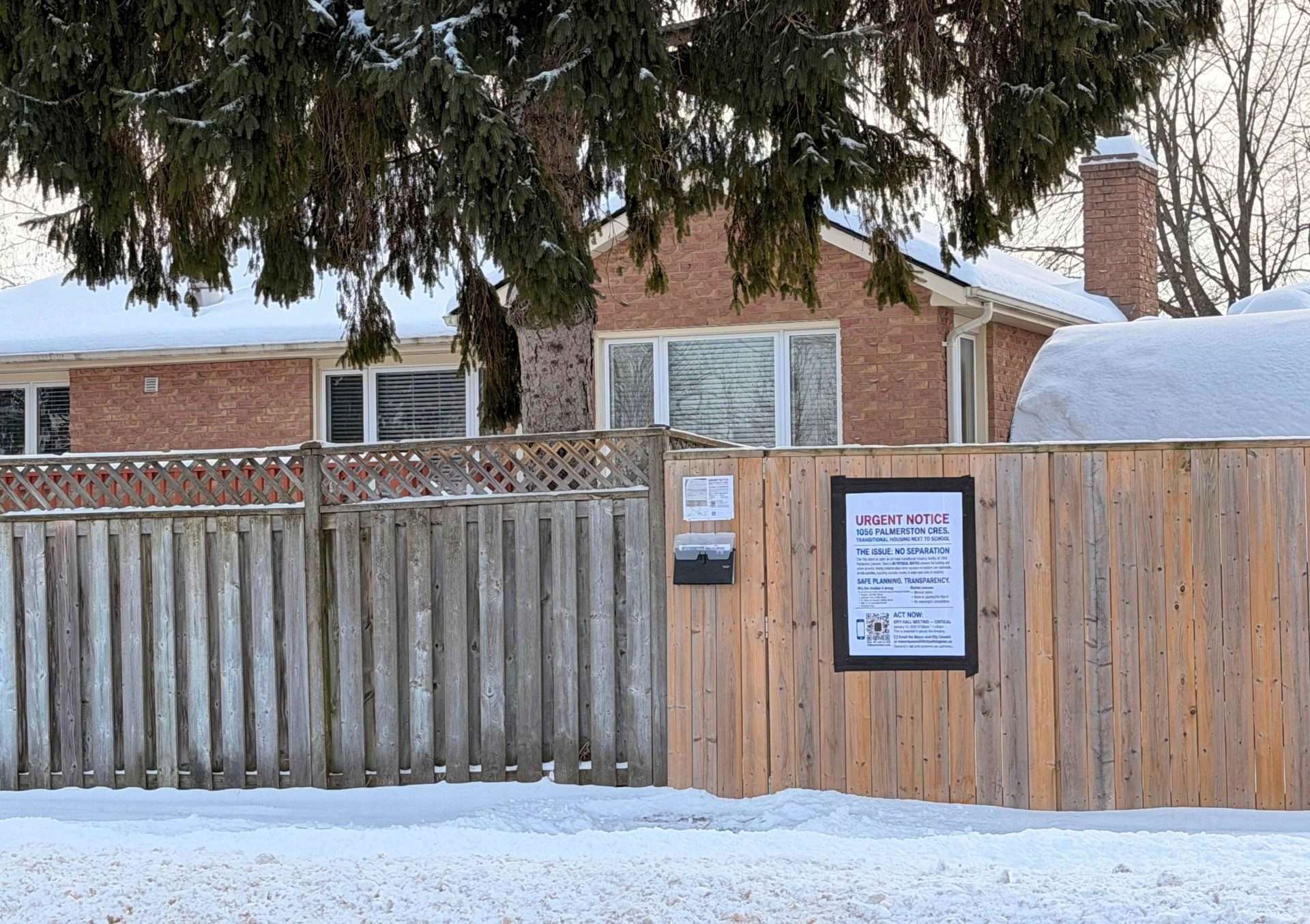 Messaging for neighbours opposed to the City’s plan for 1056 Palmerston Crescent is affixed to a fence beside the property.Photos by Cris Vilela/Kingstonist.
The Collins-Bayridge councillor said some of the public feedback referred to public safety, fear of crime and drug use, secrecy surrounding the house purchase, planned consultation after the fact, and the potential impact on property values.
Osanic is worried the supportive housing strategy at this address could be doomed to fail before it even starts.
“The neighbourhood is up in arms. So how can the house be successful? It’s going to be like a fishbowl. The neighbours will be watching every move, and how comfortable will it be for the residents inside the house with the way that this has blown up?” she posed rhetorically.
The City contracted Ryandale Transitional Housing to provide 24/7 on-site support for the future occupants of 1056 Palmerston. Ryandale has decades of experience running similar housing units around Kingston.
According to City officials, the goal of supportive housing is to provide vulnerable individuals with a place to stay that’s out of homeless shelters while they await stable, affordable housing, and to disperse the housing away from the downtown area.
“Council has provided specific direction to continue moving emergency shelter and transitional/supportive housing across a broader geography to ensure that the concentration of housing services does not further concentrate and thereby stigmatize vulnerable populations,” said Miles Brackenbury, a Housing & Homelessness Communications Officer with the City.
Unhoused people who are chosen to reside at Palmerston Crescent have “low to medium” acuity and will be offered a variety of services such as mental health services, addiction recovery programs, life skills training and social/recreational activities, according to the City’s Get Involved webpage.
Osanic was told that future occupants have to be drug-free for at least one year in order to qualify for staying at Palmerston, the house will operate under a strict drug-free policy, and Ryandale has volunteers to drive clients to services in the downtown area.
But, so far, she said those safeguards and other assurances have done little to calm neighbourhood fears.
“It’s a house of eight men. Hopefully the men are all great people and there’s nothing to worry about. But all it takes is one incident and then what are we going to do?”
She suggested the Palmerston Crescent house would be less controversial if it was designated for women or mothers and children only, which is what she said is intended for the Lakeside District supportive housing earmarked for a house at 167 Braemar Road, also run by Ryandale.
Ryandale has organized a public information session on Wednesday, Feb. 11, 2026, from 6 to 8 p.m. at Lancaster Public School, 1020 Lancaster Drive, to address neighbourhood concerns over Palmerston Crescent, but some anxious residents want the meeting held sooner.
“People are so outraged and they want to get to the bottom of it,” said Osanic.
She conceded that her planned Tuesday, Jan. 13, 2026, motion, which aims to sell the property and find another location, is unlikely to generate much political traction.
“I do not think I am going to get any sympathy (with the motion). There’s a fear that a precedent could be set if the house is put up for sale.”
Her motion was seconded by Loyalist-Cataraqui District Councillor Paul Chaves who, ironically, faced the same community pushback and a failed scrap-the-location motion over the City’s new 30-bed emergency homeless shelter at 924 Sydenham Road. However, Council did agree to review the Sydenham Road shelter after its first six months of operation to see if it should continue at that location.
Council approved the supportive housing policy with a $3.5 million budget to buy single-family homes last fall, but left it to staff to find suitable locations and hire agencies to operate the houses.
Osanic also criticized the timing of the location announcement, just days before Christmas, leading to a wave of calls and emails from concerned residents that sent her on a frantic quest to get more details from staff.
She said she spoke to another councillor, who suggested that it may be time for the City to rethink its controversial policy of housing and homelessness decentralization that puts an emphasis on buying properties first and consulting with the neighbours later. Referring to remarks made by her colleague, she repeated: “We have to change our policy. We have to keep these places to live closer to the services. Spreading them out sounded good in the research papers that were presented to us. The reality is that it’s just not working.”