
From January to March, there were four drug poisoning deaths in Red Deer. There were nine from April to June.

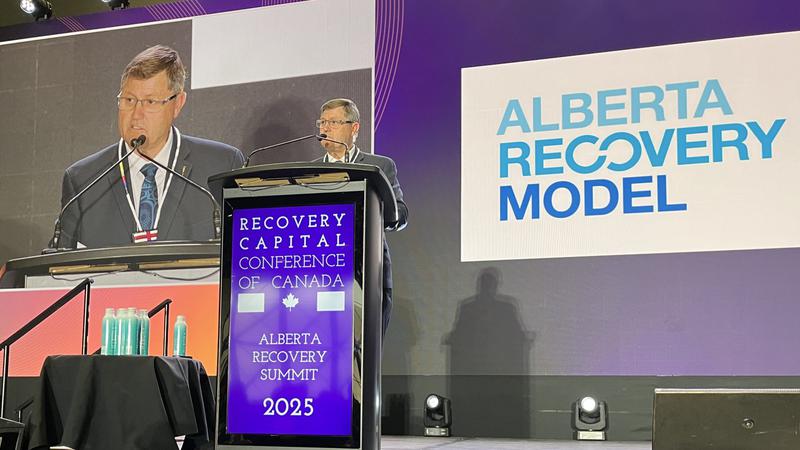
Rick Wilson, the minister for mental health and addictions, and MLA for Maskwacis-Wetaskiwin, spoke with rdnewsNOW in late December, and said numbers are actually declining — if you compare 2025 to 2024.
That is true, from a certain point of view — there were 55 deaths from opioid overdoses in Red Deer in 2023, and 30 in 2024, according to the website; there were 17 through September 2025. Data on deaths for October to December isn’t yet available.
Circling back to EMS responses to opioid-related events, there were 162 in 2024, compared to the 268 tracked in 2025. This year’s total is the highest of all the years the government has tracked, going back to 2017.
Asked about stats on deaths, as shown on the surveillance website, and as they related to the date the OPS closed, Wilson cited a 26 per cent decrease from January to August, comparing this year and last. For Red Deer, the drop year-to-year for those timeframes was actually 31 per cent, but Wilson wanted to focus on Alberta.
“We’ve seen a decrease substantially across the province. Opioid-related deaths fluctuate month-to-month, but overall, it’s down substantially,” he says.
“Overall, the stats are down. They’re trending down.”
Wilson was also asked if given the numbers, they stand by their decision to close the OPS.
“We’re into recovery, not enabling. We’ve got some great recovery community stuff going on in Red Deer, where you can actually start helping people. But as long as you enable them, I mean, they’re drug addicts,” he stated.
Wilson shared that more than 400 people have gone through the recovery community facility on Red Deer’s north end since it began taking patients in late 2022. There have been over 500 admissions, with a subset requiring re-admission.
He also said positive therapeutic recovery services are happening at the Red Deer Remand Centre, adding the federal government has come to see how it works, and wants to incorporate it into federal prisons.
“[With the OPS], they didn’t just totally close the site — we’ve got a transitional team who will go out on the streets and work with people, and if someone is in trouble, they’ll get help. We’ve also got a really good virtual program. There are lots of tools; we didn’t just totally leave people hanging,” Wilson insists.
The group he alludes to, he says, is called the rapid response team, and is based out of Safe Harbour.
“Not just enabling them, but actually giving them some help,” he says.
Also big news in this area for Red Deer in 2025 was the announcement that Turning Point would lose most of its provincial funding, effective Nov. 1.
The provincial government told rdnewsNOW earlier this year that all services Turning Point offers would be transferred to other providers, so Wilson was asked about the success of that transition.
At the time, he wasn’t sure, but the ministry tells us it continues to fund two programs for Turning Point, via Recovery Alberta — those being Nightreach, and an Overdose Prevention Program which provides naloxone training to the public. Those two programs were already in place.
Meantime, Turning Point has added a Dayreach program thanks to funding from United Way Central Alberta.
Turning Point’s interim executive director, Carolyn Corrigal, says that still leaves two critical programs in the lurch — those being the women’s pregnancy and STBBI program, and the stop syphilis program.
A spokesperson for Primary Care Alberta says these services, which were being funded by the Ministry of Primary and Preventative Health Services to the tune of a million dollars, can be accessed through Primary Care Alberta and the Primary Care Network, as well as the 49th Street Community Health Centre, via a person’s primary care provider.
“The fallout is huge, and the community is experiencing the effects with increased overdoses occurring on public property, higher levels of distress and emergency for those on the streets, plus agencies and the library are experiencing higher volumes of individuals needing supports as well,” Corrigal says about the impact of losing their funding.
“Not to mention there is now one less place to use a public bathroom (a huge shortage for homeless folks in the city), to get fed, warm up, store mail and connect with caring staff. The loss is huge.”
Corrigal also wants the public to know that at no point did the government cite to them anything about financial mismanagement when it came to why their funding was cut. All their audits and grant reviews have been positive, she says.
Corrigal says it happened due to “health system refocusing,” those being the government’s words.
She also says the Turning Point board continues to navigate the aftermath of what’s happened, and plans to share more in the months ahead about their long-term strategy, including the fate of their downtown head office, which they own.
“We can always use extra help via donations of food, gloves, hygiene supplies and monetary contributions so we can do more for those in need,” she adds. “Especially as we are severely short on shelter beds in the city and many individuals are currently forced to be outside all night in the cold.”
Regardless of Wilson’s take on the numbers, rdnewsNOW asked him what his message is to the friends and family of those who have died this year from opioid-related overdoses.
“Well, we have to really work with them. Like I said, there are things out there they can do. We’ve got what we call the Rapid Access Addiction Clinic, beside Safe Harbour. We’ve got the enhanced medically supported detox capacity right in Safe Harbour, and that’s helping people withdraw from substances as they go into recovery. We also invested into the Red Deer Dream Centre there, and we’ve got online recovery programs. There are a lot of things going on to try to get people out of that state of addiction and get them the help they need,” said Wilson.
“Are we going to do it overnight? No, but we’ve got a lot of things in place that weren’t before. I get calls every day from parents who want to help their son or daughter, brother or sister, but to force somebody into treatment right now is pretty difficult.”
Wilson said the government is implementing what they call compassionate intervention to assist with folks severely at risk of harming themselves or others.
Overlapping with the mental health side of Wilson’s portfolio, the minister said they’re strongly going to focus on youth in 2026.
That includes through the Protection of Children Abusing Drugs (PChAD) program, and expansion of the CASA program into more schools.
It also means continued investment, he says, in the CASA House initiative, with new homes going up in Medicine Hat, Fort McMurray and Calgary, and a fourth being relocated from Sherwood Park to Edmonton.
There are also five new recovery communities opening on Indigenous communities, he shared.
“There is hope out there. It’s not just all despair. I’ve seen it with my own eyes that we can make a difference,” Wilson concluded.
“When I see these young kids and people that all of a sudden were hard addicts, and now they want to become recovery coaches and help other people into recovery, you feel like you’re really making a difference and saving lives.”