
“I don’t think that is an expense that I should have to resort to,” she said.
“It just seems a bit on the nose to have to pay to keep a pest out.”
In 2020, Whanganui District Council, Horizons Regional Council and Department of Conservation (DoC) said there was nothing they could do about deer on people’s residential properties.
“Nobody is really taking responsibility for it, or know how they can deal with it,” Arathoon said.
DoC’s acting wild animals manager, Mark Ryan, said the department was aware of the ongoing deer issue.
“Under the Wild Animal Control Act 1977, [DoC] is responsible for managing populations of wild animals at priority conservation sites on public conservation land,” he said.
“These deer are spreading from private farmland, with no public conservation land for approximately 15km.”
DoC can enter private land without landowners’ permission but that provision is generally only used to protect high-priority areas and after all other attempts to work collaboratively with the landowner have been exhausted.
“We understand some private landowners around the area have been carrying out deer controls on their lands,” Ryan said.
“We recommend residents looking for assistance in controlling deer on their property to contact local hunting clubs, such as the New Zealand Deerstalkers’ Whanganui Branch, to see if their members might be able to assist.
“Other deterrents like electric fencing or dogs could be helpful, and working with neighbours to manage numbers can help make control more effective.”
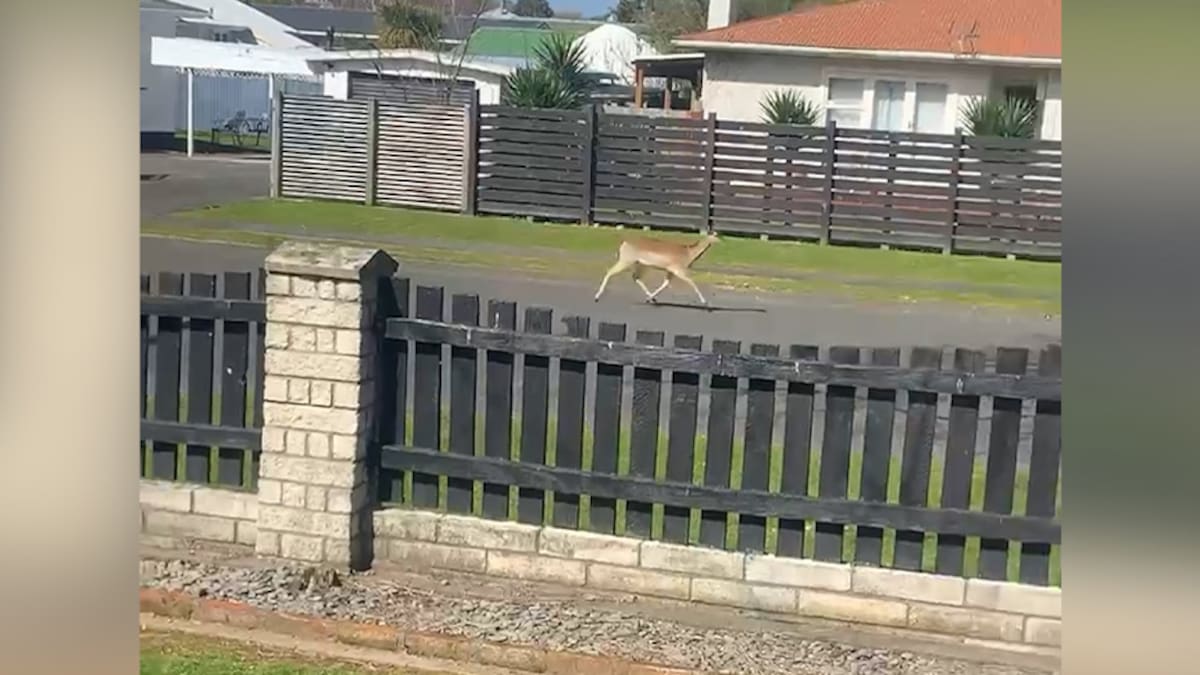
The deer were wandering on to roads, including the busy Somme Parade, making it dangerous, Arathoon said.
“With this amount of them wandering around, something awful is going to happen – you can’t have deer dashing through.
“This is Whanganui; you don’t expect deer to leap out across the road.”
Recently, Arathoon discovered a dead deer that had been hit by a vehicle outside her property.
Whanganui District Council regulatory and compliance operations manager Jason Shailer said the animal management team only responded to reports of wild deer if the animals were creating a traffic hazard.
The council assisted, with police where appropriate, to reduce risks to road users, he said.
“However, managing wild deer on private property is outside the council’s jurisdiction,” Shailer said.
Horizons’ animal pests team leader Daniel Hurley said the regional council did not have the authority to deal with deer on private land because deer are not included in the Regional Pest Management Plan (RPMP).
Controlling deer was up to individual landowners or occupiers, Hurley said.
In recent times, Horizons had not been made aware of any instances or reports about the deer.
Delhi Village resident Richard Thompson said he had requested that Horizons schedule deer as a pest in Whanganui so it could undertake pest control.
“It’s affecting us here at Delhi Village, where deer come in and eat plants in our private gardens … also up in our forest, there’s constantly deer moving through there,” Thompson said.
Thompson believed there were more deer around now and said the camera he set up in the forest picked up movement “almost every day”.
“They damage young trees that we’re planting so I’ve pretty well stopped doing any replacement forestry planting until I get the deer situation sorted,” he said.
“We have some areas that are retired from production, given that we are reverting that into native bush, and the deer are eating out all of the palatable species, which means the second wave of native plants just get eaten and hammered so everything dies.”
Delhi Village resident Richard Thompson would like deer to be deemed pests in Whanganui so Horizons can step in.
Another resident, Ben O’Leary, said he did not mind the deer but he could understand why some residents were concerned.
“I like seeing them about, it’s something different,” he said.
“All of the visitors I have over think it’s awesome but if you are trying to maintain a garden, that would be a different story, obviously.”
Arathoon acknowledged some residents did not mind the deer.
“There are two sides of the coin,” she said.
“Of course, some people think they’re lovely and attractive, but people once thought possums were cute too.”
Horizons is scheduled to review the RPMP, as required by the Biosecurity Act 1993, from September 26, 2027, as it will be 10 years since the plan was last reviewed as a whole.
“We are undertaking a work programme associated with this review,” Hurley said.
“We are currently in the discussion document phase of the work programme and are looking to seek community views on the issues and options early-mid this year.”
Information on the RPMP review is available on Horizons’ website horizons.govt.nz.
Feedback and queries can be emailed to regionalpestmanagementplanreview@horizons.govt.nz.
Fin Ocheduszko Brown is a multimedia journalist based in Whanganui.