
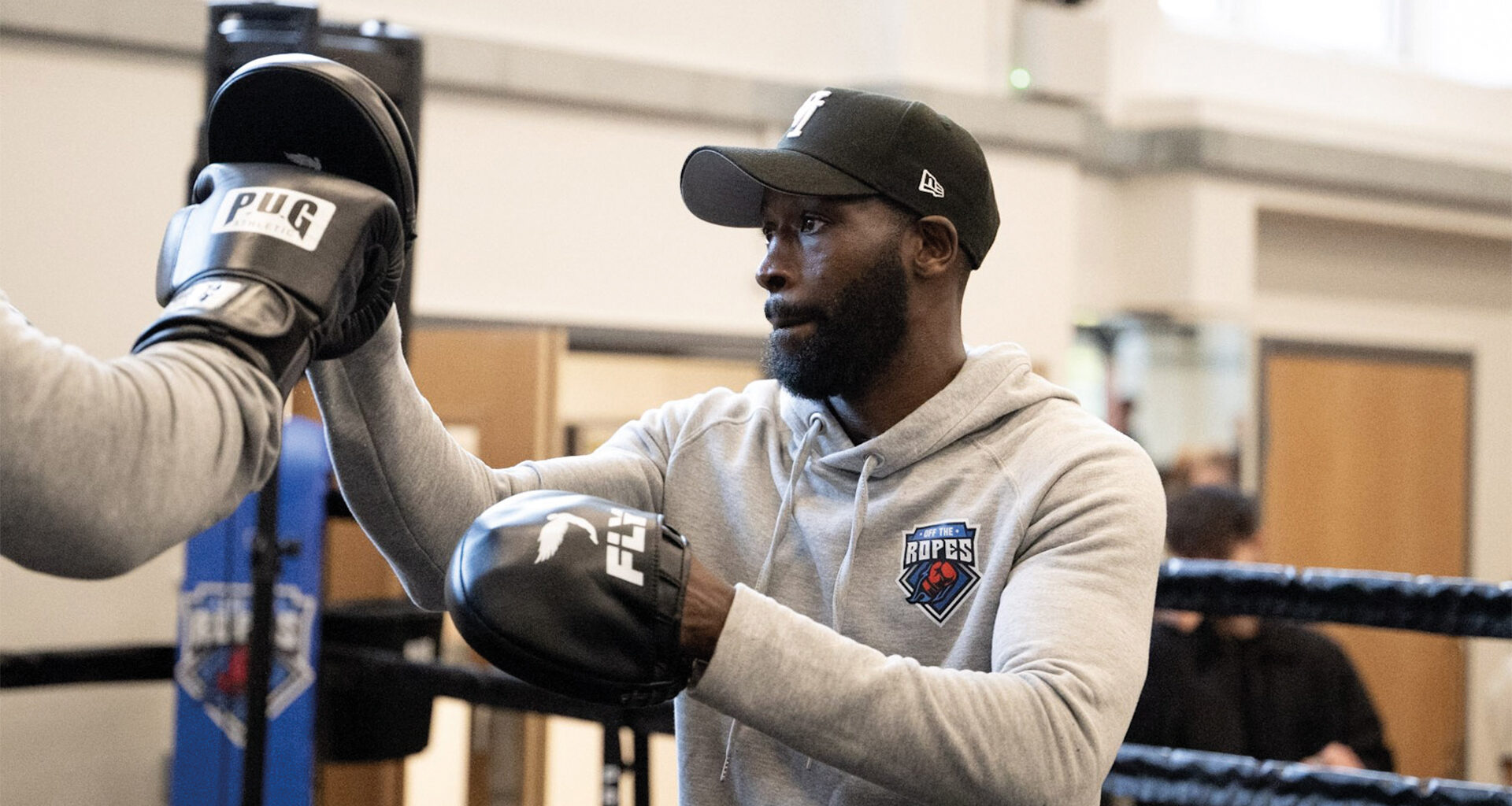
On opening day in November 2025, when Big Issue first visited, the room is in constant motion. Gloves meet pads with a steady thud; footwork patters across the floor; conversations pick up between rounds. Nothing about the space feels clinical. That’s deliberate. A boxing gym needs to feel like a different place – somewhere you wander into even on days you have little to give.
No one understands that more clearly than Joshua Nelson, now a coach with Off the Ropes, whose own experience of the mental health system long predates the charity.
Read more:
He spent more than 15 years in boxing, first as an amateur and later as a professional, before mental ill health derailed everything. He was admitted to hospital. Medication caused rapid weight gain. Training
routines disappeared. His sense of self narrowed to the illness.
“When I was in the hospital, there was nothing like this,” he says. “No gym. No physical outlet at all.
Nothing to help you feel like yourself.”
It took him six years to return to training. He lost the weight he had gained, rebuilt his fitness and worked towards a single goal: to fight again and walk into the ring beside his son. When he managed it, he treated it as evidence that recovery can take unexpected routes.
Advertising helps fund Big Issue’s mission to end poverty
“It showed me that you can pick yourself up no matter your situation,” he nods.
Today, he coaches with Off the Ropes, and the ease with which he talks about his own past earns instant trust. Many of the people he trains recognise elements of their own lives in his story.
A few feet away stands Lauren, who has trained with Off the Ropes for years. The crowd on opening day is noisy and larger than she expected. We step aside to talk, sitting cross-legged on the edge of one of the rings. She has autism and ADHD and is open about what she finds difficult.
“Normally, there are four of us,” she pauses. “It is not usually like this.”
She often trains as the only woman in the room, but says she has never felt unsafe. “You would think a sport like this would feel intimidating,” Lauren admits. “But I have never once felt uncomfortable here.” Boxing has historically been seen as a boys’ sport, but she dismisses the idea immediately. “That is what people outside think. It is not like that in here.”
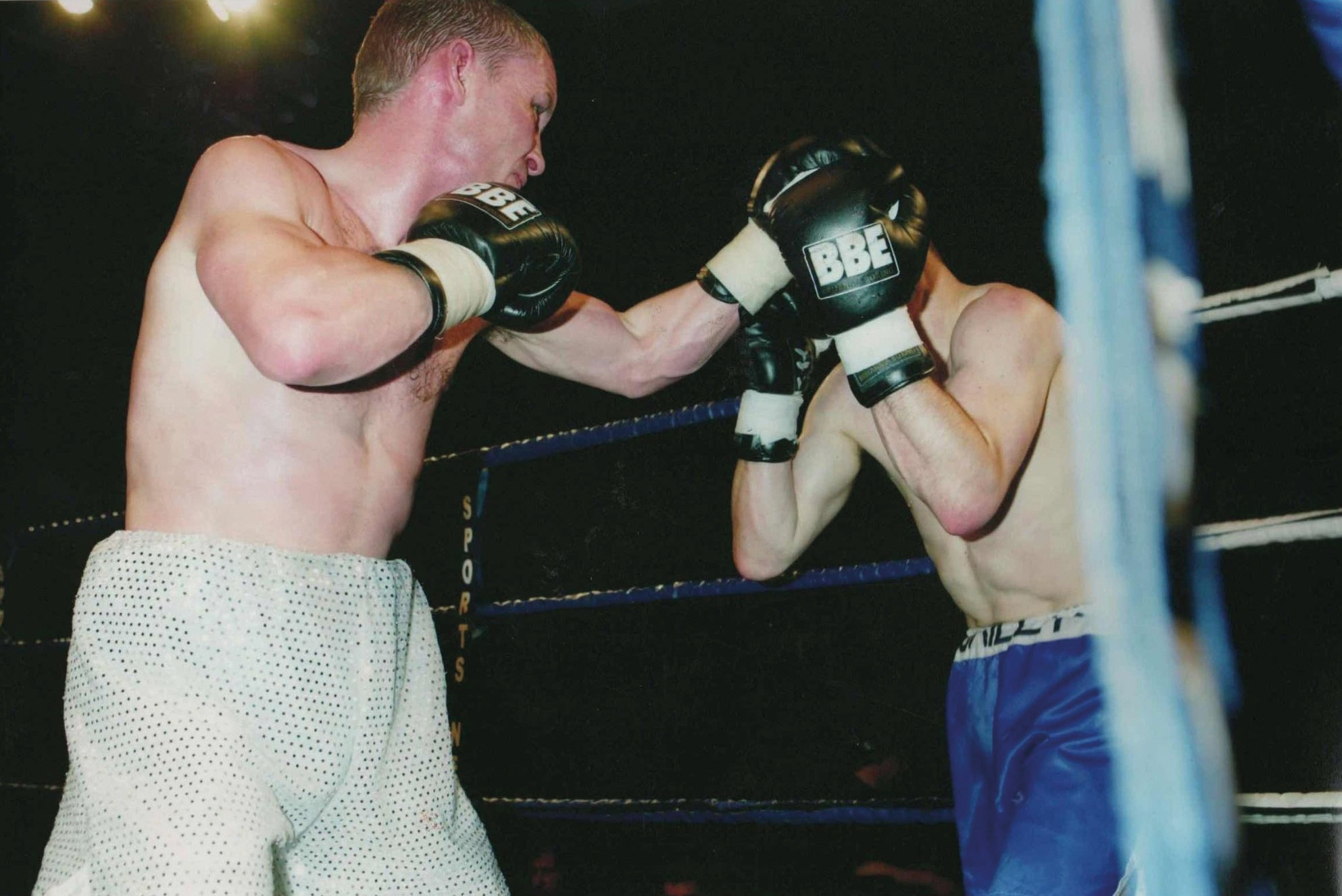 Warren Dunkley in his professional boxing heyday
During training her concentration improves in a way medication alone wasn’t able to do. “Warren helps me with that. My focus is much better here,” Lauren says. And so is her physical health: “At the start of the year I was 22 stone. I am 18 stone 4lbs now. I stopped smoking. I stopped drinking. I love getting a sweat on.” Her relationship with Dunkley is central to her confidence. “He is like a father to me,” she says. “I feel believed in here. I am not just a diagnosis. I can be myself.”
Advertising helps fund Big Issue’s mission to end poverty
Lauren speaks with pride about the long road to this gym. “We started in a little hall in Swanley. Then a tiny space in another gym. Warren spent years trying to find somewhere. Now look at this. I come three or four times a week. I live for boxing.”
Off the Ropes began with Dunkley’s ward sessions. It expanded when he and another co-founder, psychiatrist Dr Patrick Davey, started asking what happened once people were discharged. Too often, they returned to hospital because there was nothing to structure their days once they were home.
Dunkley had boxed as a child and picked it up again in his 20s when he felt something was missing. He worked in construction, studied sports science and eventually joined the NHS. His first role was in
neuro-rehabilitation, helping people adjust to life after catastrophic injury – work he describes as humbling. He later qualified as an occupational therapist and moved into mental health, bringing what he calls the “industry of purpose” into patient care.
On the ward in Bromley, he saw how exercise shifted things. He saw how slow pacing and medication could drain motivation, how boredom simmered into frustration, and how frustration could escalate into conflict. Boxing sessions often cut through that. He began imagining a community version – somewhere that offered consistency, not just a burst of activity that ended with discharge. They set up Off the Ropes as a charity and borrowed any space available: a hall in Swanley, a corner of a busy gym, whatever they could find.
One evening, Dunkley emailed Okocha to ask whether the trust had any unused buildings. The reply arrived half an hour later. As Okocha puts it: “We had this building, and like most NHS organisations, we’re keen to have a presence in the community we serve. This is a resource that’s not just for those who use our services in the hospital, but for the local community as well.”
The new gym now serves two groups. People under Oxleas’ mental health services attend for free as part of their treatment. Local residents can self-refer for £4 a session. If the fee is difficult, the team adapts, Dunkley adds. “No one should feel they cannot come because of that.”
Advertising helps fund Big Issue’s mission to end poverty
Okocha sees the space as more than a gym: “This is a bridge that helps people settle into the community – making friends, making connections, somewhere to come to. Isolation and loneliness are reduced.”
He also links it to wider health inequalities. “Those with severe and enduring mental illness tend to die sometimes 15 or 20 years earlier than others,” he says. “Involvement in exercise that helps their physical health improves their life chances.”
That dual purpose, mental and physical health, aligns with NHS strategy. “The 10-year health plan talks about prevention,” Okocha says. “This will prevent physical ill health in some people. It talks about doing more in the community. And it talks about being an anchor institution – where the community recognises that you are there to serve them.”

And while the boxing gym is unique, Okocha stresses that you don’t need specialised equipment to support your mental health. “Walking is easy and not expensive. Ten thousand steps, 10 kilometres if you can manage it. The evidence is huge, and you don’t need to go to a gym.”
Goldie Leigh may be the first NHS site to house a boxing ring, but it is unlikely to stay unique for long. The pressures facing mental health services demand new ways to keep people well, connected and active. What’s happening in this small building points to something larger: a model of care that blends clinical support with places people actually want to spend time. If the future of the NHS lies closer to its communities, it may well look a little like this.
Do you have a story to tell or opinions to share about this? Get in touch and tell us more.
Advertising helps fund Big Issue’s mission to end poverty
Change a vendor’s life this winter.
Buy from your local Big Issue vendor every week – and always take the magazine. It’s how vendors earn with dignity and how we fund our work to end poverty.
You can also support online with a vendor support kit or a magazine subscription. Thank you for standing with Big Issue vendors.