
Windsor-Essex is not exactly known for big climbs, loamers and lift laps. That is part of why the Windsor Essex Bike Club’s rise has surprised even the people who built it.
“One of the big things to note is just sort of the unexpectedness of this or how unlikely the rise of WEBC is just because of where we’re located,” says club president James Braakman. “We had almost essentially no mountain bike community at all before we started.”
Braakman says WEBC began in 2022 when a small group of riders started meeting on local trails and talking about what the region lacked.
“We started in 2022 and it was a few of us who got together who had really been impacted by mountain biking in their own ways,” he says. “For me specifically, mountain biking essentially changed my life, especially with mental health.”
The early idea was simple: use bikes to connect people in a place where riders were scattered in pockets.
“Not until we got together did things really take off,” he says.
Big group rides after COVID
The first sign it could work came through casual group rides, timed perfectly for a community looking for reasons to get outside and meet people again.
“We just started with a few group rides that had massive turnouts,” Braakman says. “It was right after COVID and people wanted to meet other people who rode mountain bikes and we just didn’t have that connection or community.”
Those rides turned into a trail club, incorporated in 2022, with a big goal: find land, get permission and build something sanctioned.
A council vote and a rare partnership
WEBC found its opportunity behind the Libro Centre in Amherstburg.
“We don’t have a lot of hills or elevation in Windsor, Essex at all,” Braakman says. “Any place that has just even a fraction of elevation, we kind of really targeted.”
The club brought a proposal to town council at an ideal moment.
“They’d just been sworn in so we kind of caught them at the perfect time,” he says.
The first phase of the Libro Centre trails project was unanimously approved along with a land stewardship agreement.
“The town would receive the recreation venue at no taxpayer dollars,” Braakman says, adding that while the model is common in established trail towns, it was new in the region. “We were the first ever to do that.”
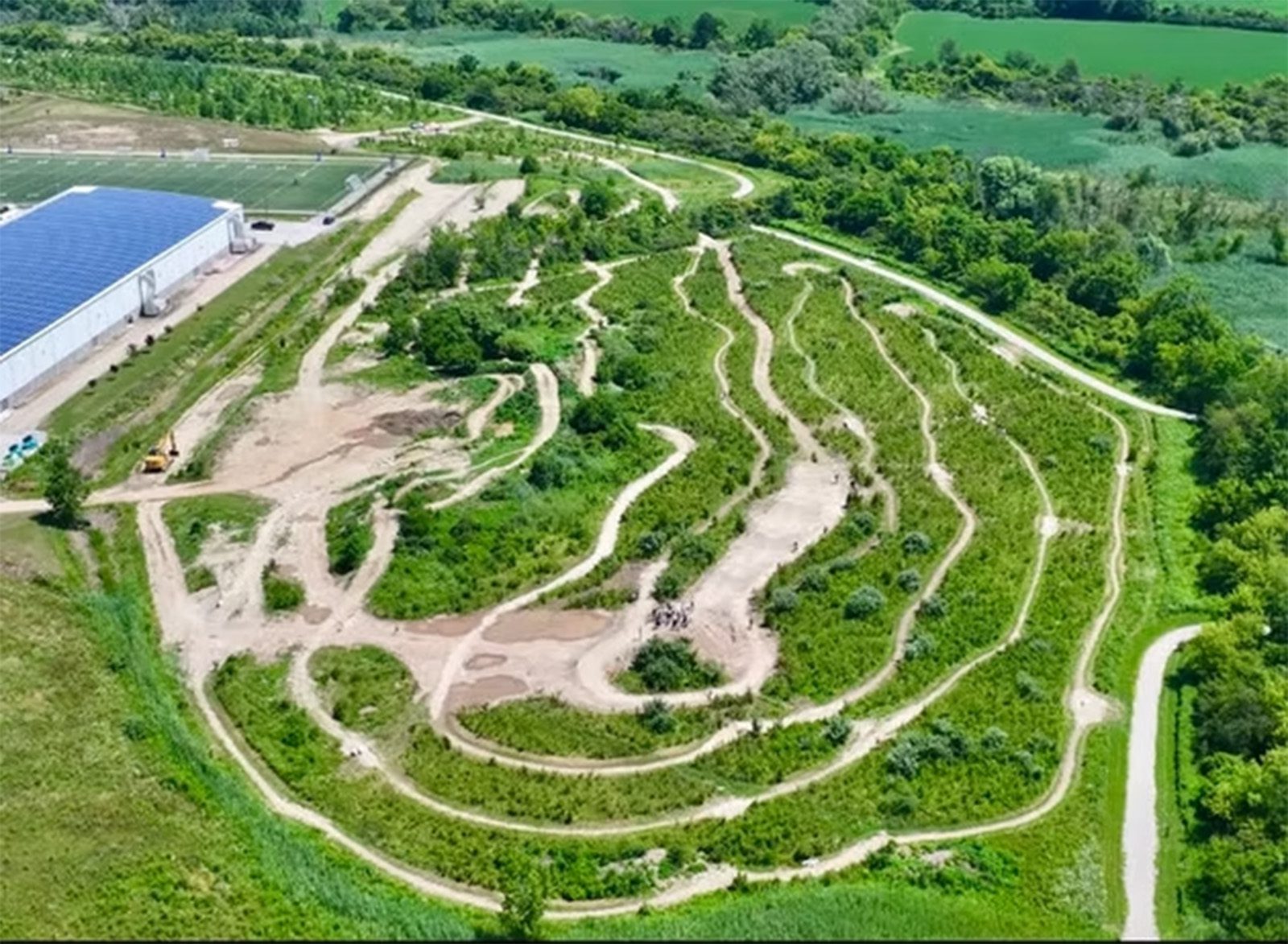 The current set up.
Three phases, three winters of fundraising
What followed was a rapid-fire buildout driven by donations, volunteer labour and a growing local fan base.
“We raised $30,000 that first winter in 2023 to build the first phase of the project,” Braakman says.
The following winter the club returned to council with a bigger plan.
“That would have been the winter of 2024 I think we raised $60 or $80,000 that winter,” he says. “That was all from local donors, businesses, individuals who stepped up.”
By winter 2025, the club was building its third and final phase and the fundraising hit six figures.
“Last winter spring of 2025 we raised $100,000 for the third and final phase,” he says.
That phase included a major dirt-moving effort to create the elevation the region does not naturally have.
“We brought in over 300 dump truck loads of dirt to build our own little manmade hill,” Braakman says.
A new riding zone and a five-times bigger scene
“The amount of riders from 2022 to now; I bet we have at least five times the amount of riders,” Braakman says. “We’ve had 500 people sign up for a membership since 2022, like 500 different people.”
Fundraising for 2026: skills park first, pump track nearby
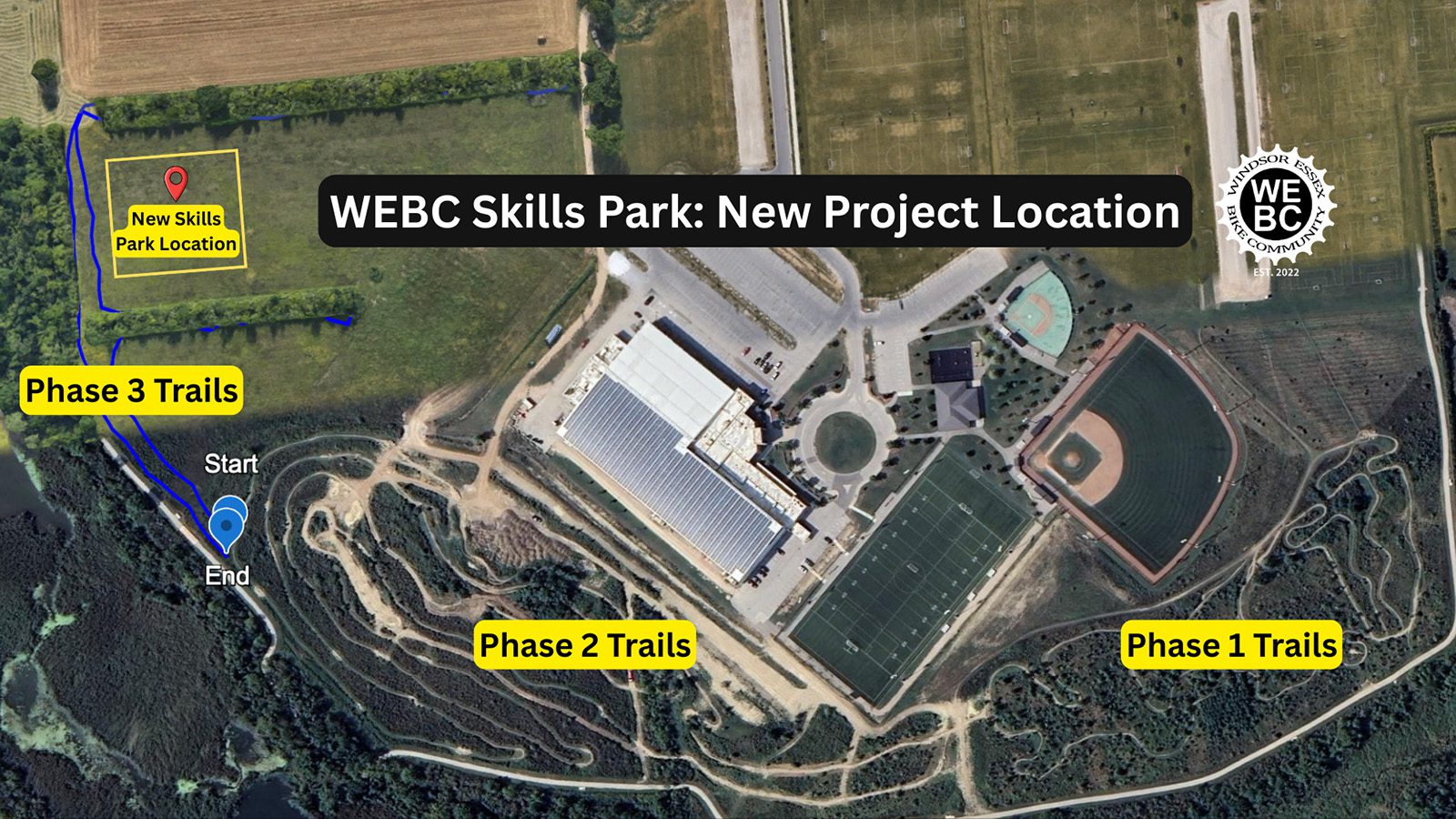
With the Libro Centre trail build complete, WEBC’s next target is a skills park that will connect directly into the existing trail network and sit beside a proposed pump track project led by the town.
“Our next big build project will be the WEBC Skills Park at the Libro Center,” Braakman says.
The club expects a January 19 council meeting to formalize approval.
“We have our town council meeting on January 19th to get it approved, which it should not be a problem at all,” he says.
Then comes the money.
“We’ll go full on this winter to raise hopefully $20,000, $30,000, $40,000, $60,000 to build the thing,” he says. “It’s our plan to really make it as special as possible.”
Not just jump lines
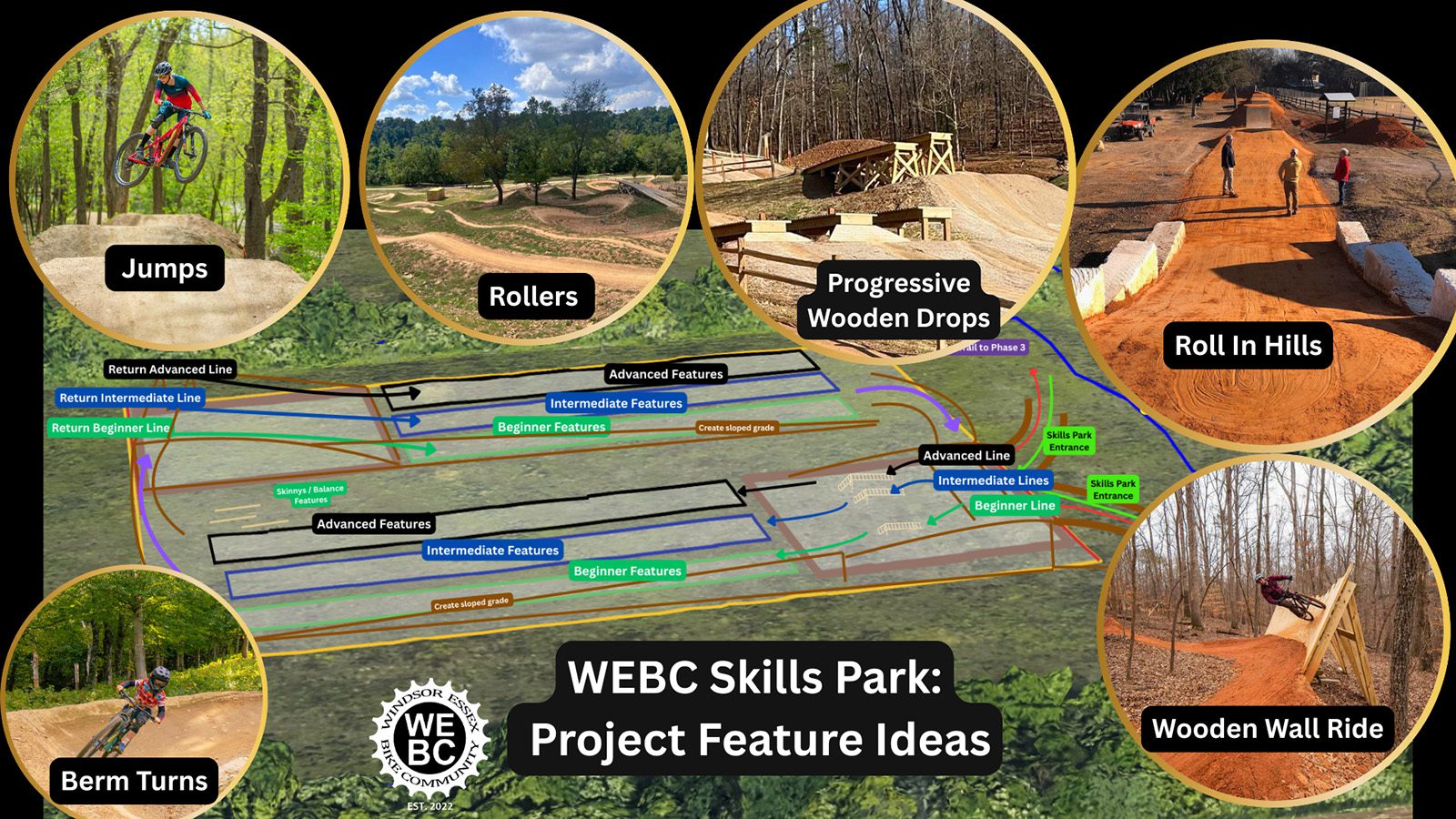
Braakman says WEBC wants the skills park to feel more like a course than a single straight skills line. It will blend BMX influence with mountain bike progression.
“We want to make it more than just your standard skills park where it’s just jump lines,” he says.
The club is leaning on the experience of a former pro BMX rider, Eric Favot, who also ran Joyride for a decade.
“That’s gonna involve rollers, jump lines, wooden drops, wooden features, wall rides,” he says, calling the goal “progressive” for “all skill groups.”
Building value with volunteer labour
Braakman says the club has learned that fundraising numbers are only part of the story. Volunteer-built parks carry a bigger replacement cost than the cash total suggests.
For a region that once had “almost essentially no mountain bike community,” Braakman says that kind of momentum still feels a little unreal.
“In one of the flattest places in Canada with no community, a couple of us just said let’s figure this out,” he says. “And it’s just gone nuts.”