
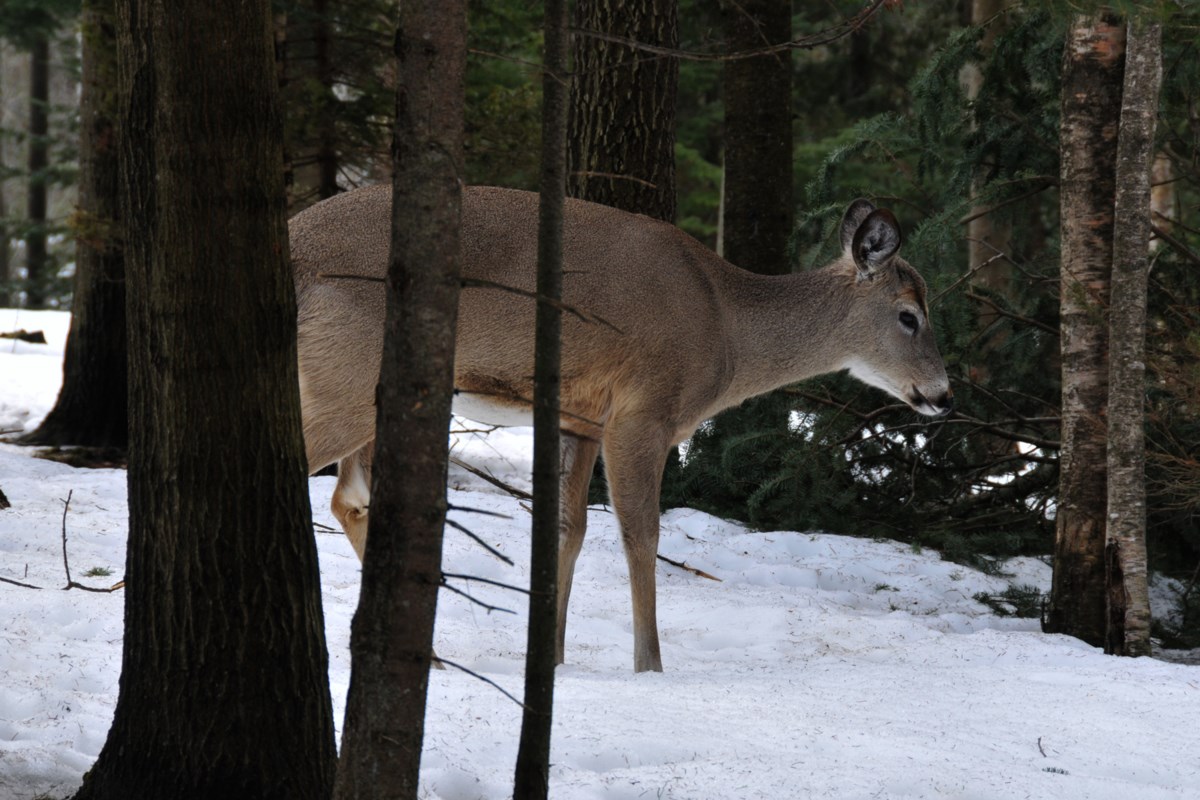
Feeding wild animals might seem compassionate during cold months, but when it comes to deer, local naturalist says it’s a deadly mistake rooted in misunderstanding
ORILLIA – It’s been a controversial topic for decades, but science has shown that feeding Ontario’s white-tailed deer in the winter is harmful to their health, warns an Ontario naturalist.
“Science has proven that deer can’t digest oats and all that,” said Bob Bowles, a decades-long environmentalist and instructor at Lakehead University in Orillia.
“It destroys their metabolism. They are meant to (eat) browse in the cold weather. Oats and corn and all that … they don’t need. It sounds like a good news story, but it’s just something to satisfy the hunters and hurt the deer,” he said.
Deer are ruminants and their biological system is set up to digest high-fibre wood browse, such as twigs, stems and cedar, explained Bowles. They are also adapted to eat less in the winter and live off their body fat.
“Science shows how harmful it is to feed deer in the winter. (The) MNR used to feed deer because they didn’t realize how harmful it was to the deer,” said Bowles, who noted the ministry has discontinued the practice.
Rapid or dramatic changes to a deer’s winter diet can lead to bloating, diarrhea, enteritis and, in some cases, death, according to a 2021 report.
“Deer have starved to death with full stomachs in winter because they could not digest high carbohydrate foods like hay, grains, corn and alfalfa,” noted the report.
Feeding deer a high load of carbohydrates disrupts deer’s digestive system, leading to lactic acidosis, which can lead to hoof rot or sudden death.
In 2023, the Province of Quebec outlawed the feeding of white-tailed deer outside hunting season, from Dec. 1 to Aug. 31, according to a CTV report.
“The Quebec government said that despite people’s good will, feeding a deer can cause serious health problems, including energy imbalance, diarrhea, bloating and also inflammation that can lead to rapid death,” reads the report.
Feeding deer also results in deer congregating around the food. Various sources explain that the closeness of deer and sharing of breath and saliva can spread disease such as chronic wasting disease.
The congregation of deer is also a magnet for predators and becomes a hunting ground for coyotes and wolves, officials warn.
And people who feed deer often live near roads. It’s been shown that deer-vehicle collisions spike near feeding zones, Bowles explained.
If people start feeding deer and then quit, the deer can starve because they’ve become used to artificial food sources. Feeding deer near homes also results in the deer eating landscaped trees, flowers and shrubs.
The best way to help deer is to protect their natural habitat, including cedar swamps and thick forests, and providing natural food sources such as dogwood, viburnum and cedar that deer can safely consume, said Bowles.
“The big thing is not to cut the trees. We are cutting trees everywhere and deer depend on trees as do other wildlife, moose and rabbit …” Bowles said.
“Deer are good at finding their own browse and they can reach fairly high. They roam around and get their own browse. They will find enough,” said Bowles.
OrilliaMatters columnist David Hawke wrote, “Nowadays the accepted way to help deer (if you insist on interfering) is to knock down some hardwood trees in March. If the winter has been stressful, that important fat layer may be coming to an end and a bit of easy access to maple tree tops might help them make it to the next thaw.”