
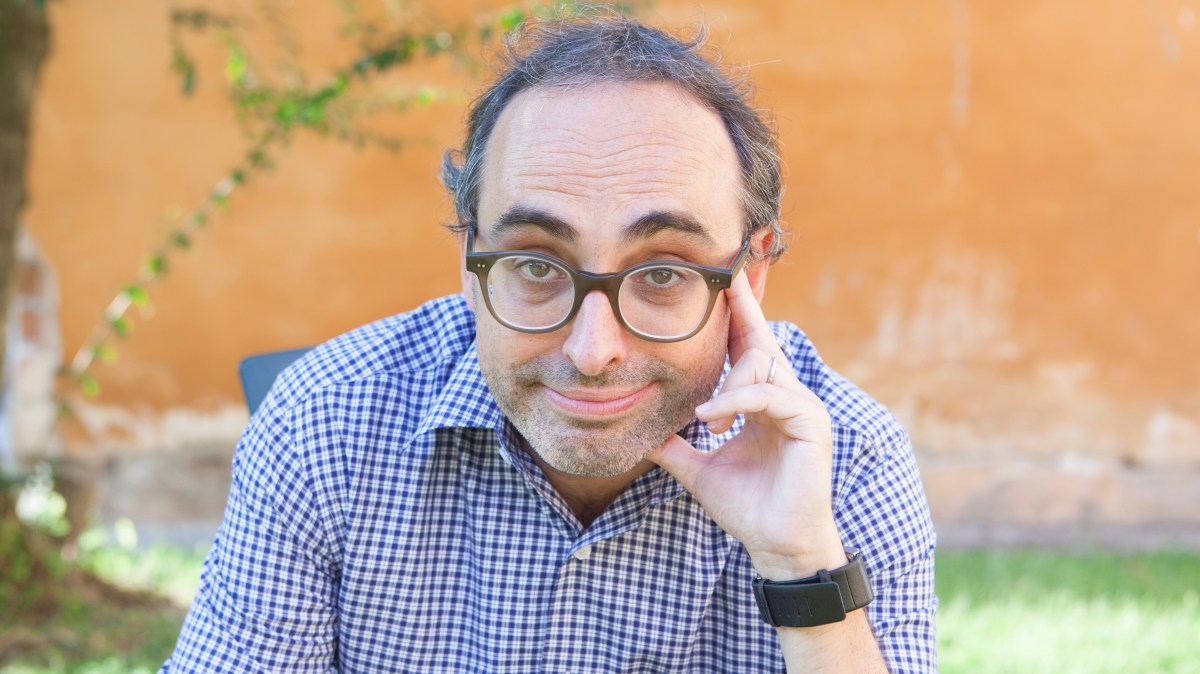
Readers of Gary Shteyngart’s previous work might not be surprised to hear that his latest novel features a Russian Jew living in Manhattan. This time he’s even called Igor — the name Shteyngart was given when he was born to Jewish parents in Leningrad in 1972, seven years before the family emigrated to New York.
His first novel, The Russian Debutante’s Handbook (2002), drew heavily and satirically on his immigrant life, as did his second and third (Absurdistan and Super Sad True Love Story). Next came a memoir of it, Little Failure, after which he vowed to leave off the subject for a while and explore the “non-Russian, non-Jewish experience” instead.
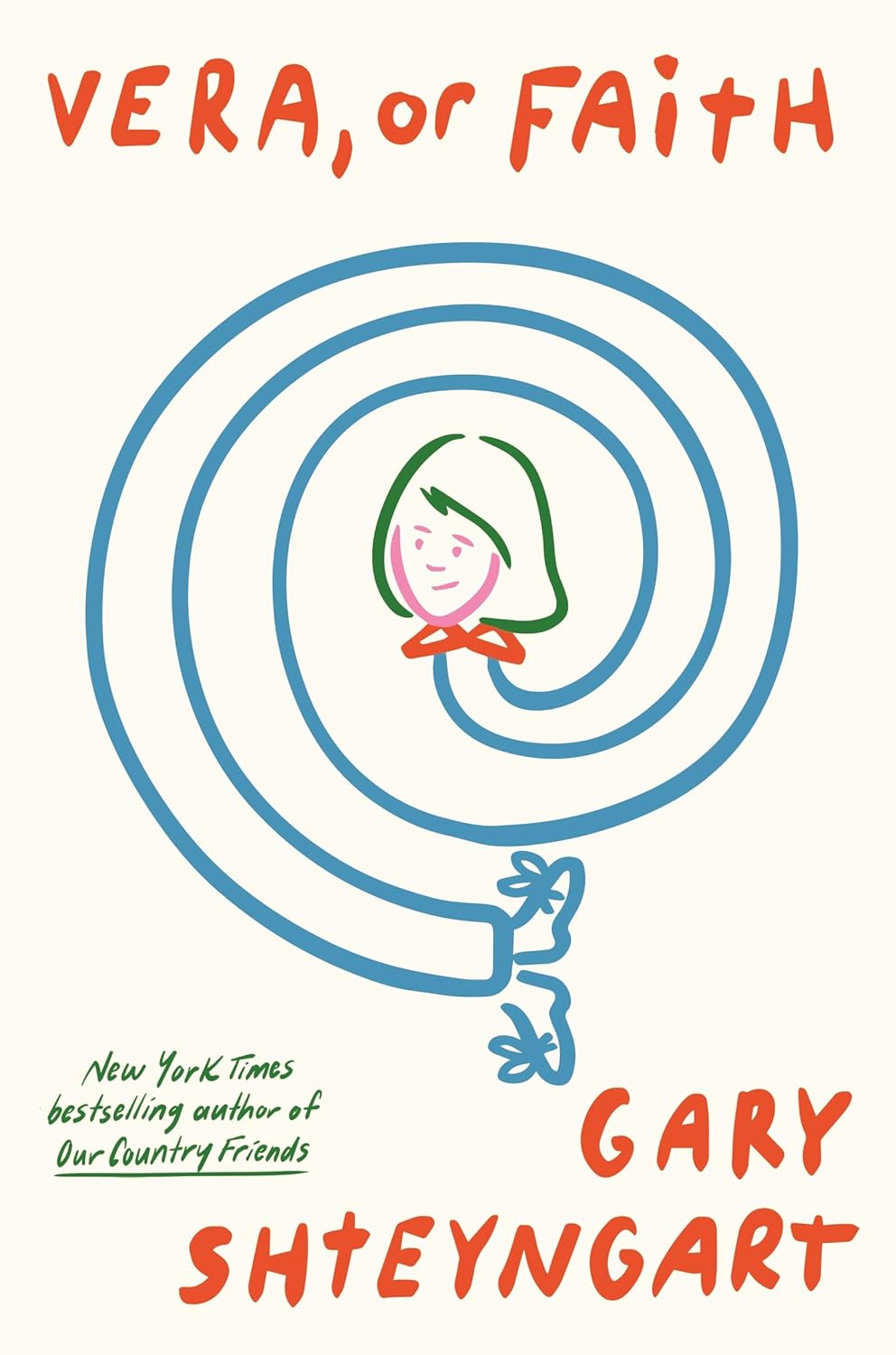
But after doing so for just one book, Lake Success, he returned to his old stamping ground with Our Country Friends, in which the main character was not only a Manhattan-based Russian Jew, but also a writer, which Igor is too in Vera, or Faith. In this case, however, there’s a slight twist. Igor is seen through the third-person eyes of his eponymous daughter: a bright, autistic ten-year-old determined to make sense of her family, posh new school and country. To this end, she keeps an ever-expanding Things I Still Need to Know Diary in which she notes words and ideas that she later finds out about and produces in public with a proud flourish, but that ultimately do little to aid her quest for
understanding.
Then again, her family, new school and country are pretty baffling places to be. The only things she knows about her birth mother (aka Mom Mom) is that she was a Korean whom Igor met at college in Ohio and that she was mysteriously unable to handle having a small child. As for her father, although she tries hard and often successfully to worship him, she can’t help noticing that he spends quite a lot of the time drinking “Daddy’s special juice” and passing out on the sofa.
In a novel where every chapter title begins “She had to…”, one of the many obligations she burdens herself with is to make sure he and her Wasp stepmother (aka Anne Mom) don’t split up. Meanwhile, at school, her ornate vocabulary, fascinating facts and habit of carrying The Chess Player’s Bible unaccountably fail to endear her to “the Populars”.
But most baffling of all is what’s happening in America — which is where the novel rather loses its way. Or, more specifically, where it provides further proof that not the least of the damage Donald Trump has done to the country is the effect he’s had on its literati, whose obsession with the damage he’s done to the country may be understandable, but by now feels wearingly predictable. In his defence, Shteyngart does hit out in all directions. As a self-styled “progressive”, Anne Mom holds political salons for “women in ballet flats”, having first paid Vera to make sure that works by people of colour are prominently displayed on the bookshelves. As a self-styled “left-wing intellectual”, Igor has an impressive line in sneering at more or less everything, but is less good at resisting the lure of money, however dodgy the source.
• Gary Shteyngart: Want to understand Russia? Then read this novel
In his further defence, Shteyngart at least varies the angle of attack on Trump — mainly by never referring to him directly. The indirect stuff, though, is scarcely subtle. The novel is set in a near-future America that’s poised to introduce a constitutional amendment giving an “enhanced vote”, worth five
thirds of a normal one, to white people not of immigrant stock. Several states have a policy whereby women entering them have to give a urine sample to prove they haven’t had an abortion. (How urine can prove this goes unexplained.)
There’s also a hysterically over-the-top ending that I won’t spoil, even though it’s quite a book-spoiler itself — a liberal fantasy of how bad things might get. This clumsiness/Trump Tourette’s is an especial shame given how sharp, funny and touching the depiction of Vera remains. Shteyngart may not be the first novelist to contrast a child’s innocence with the wicked adult world, but he does it with a winning combination of sure-footedness, mischief and a kind of melancholy sweetness that never curdles into sentimentality. The book’s title is explained when Vera remembers that her name is the Russian for “faith”. “She had to have faith,” she decides. “But in what?” It’s a question that becomes harder to answer the longer the book goes on.
• Read more book reviews and interviews — and see what’s top of the Sunday Times Bestsellers List
The abiding trouble, though, is that her role as an oasis of goodness amid all the wrong surrounding her could almost serve as a metaphor for the novel.
Vera, or Faith by Gary Shteyngart (Atlantic £16.99 pp256). To order a copy go to timesbookshop.co.uk. Free UK standard P&P on orders over £25. Special discount available for Times+ members.