
The Return of Heavenly
By
·
August 01, 2025
The second life of cult indie pop band Heavenly began in Amelia Fletcher and Rob Pursey’s kitchen, when their youngest daughter came in angrily demanding to know why her parents were on her timeline. Fletcher and Pursey had no idea what she was talking about.
“She was looking at TikTok, and our song kept on coming up—’P.U.N.K. Girl’—and she thought we’d somehow planted it. We had no idea. We didn’t even know what TikTok was,” says Pursey. “Soon she discovered that it was turning up on her friends’ phones as well, and it wasn’t anything we’d done.”
Unbeknownst to the members of Heavenly, “P.U.N.K. Girl,” from their 1994 album The Decline and Fall of Heavenly, had become a hit on social media; teenagers were posting videos of themselves with clips of the song playing in the background, delighting the group with their different interpretations of the 30-year-old tune. It’s a trend that has shown no signs of abating. “The latest song that has gone a bit crazy is ‘Me and My Madness’ off the third album,” says Fletcher. “It’s doing almost as well ‘P.U.N.K. Girl.’ I don’t know how these kids found it, but it’s this big hit. Completely mysterious.”
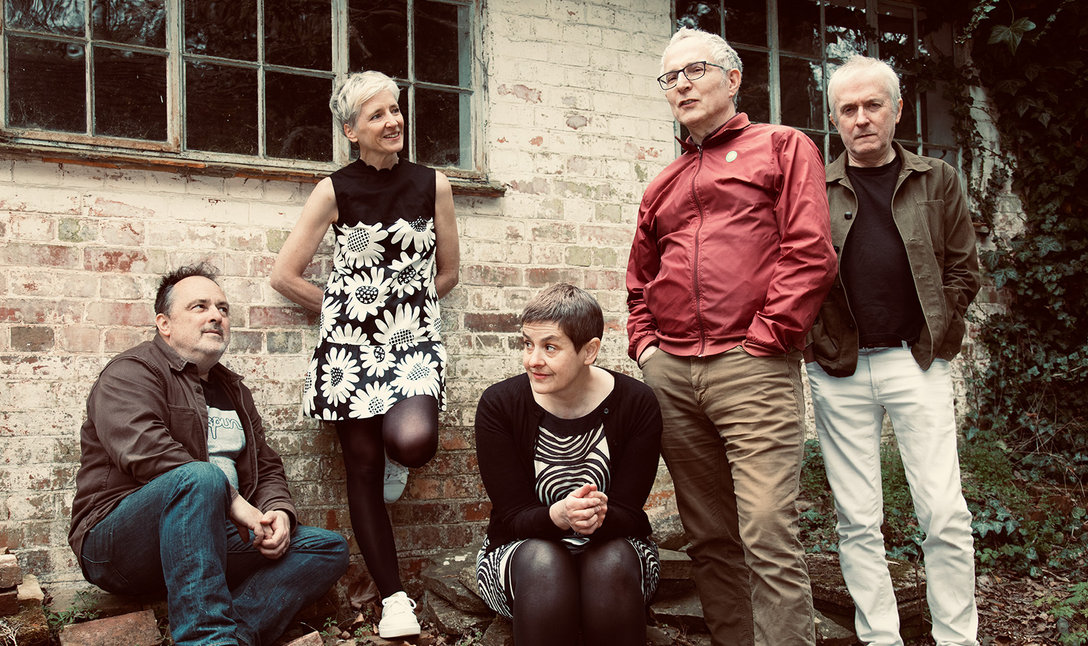
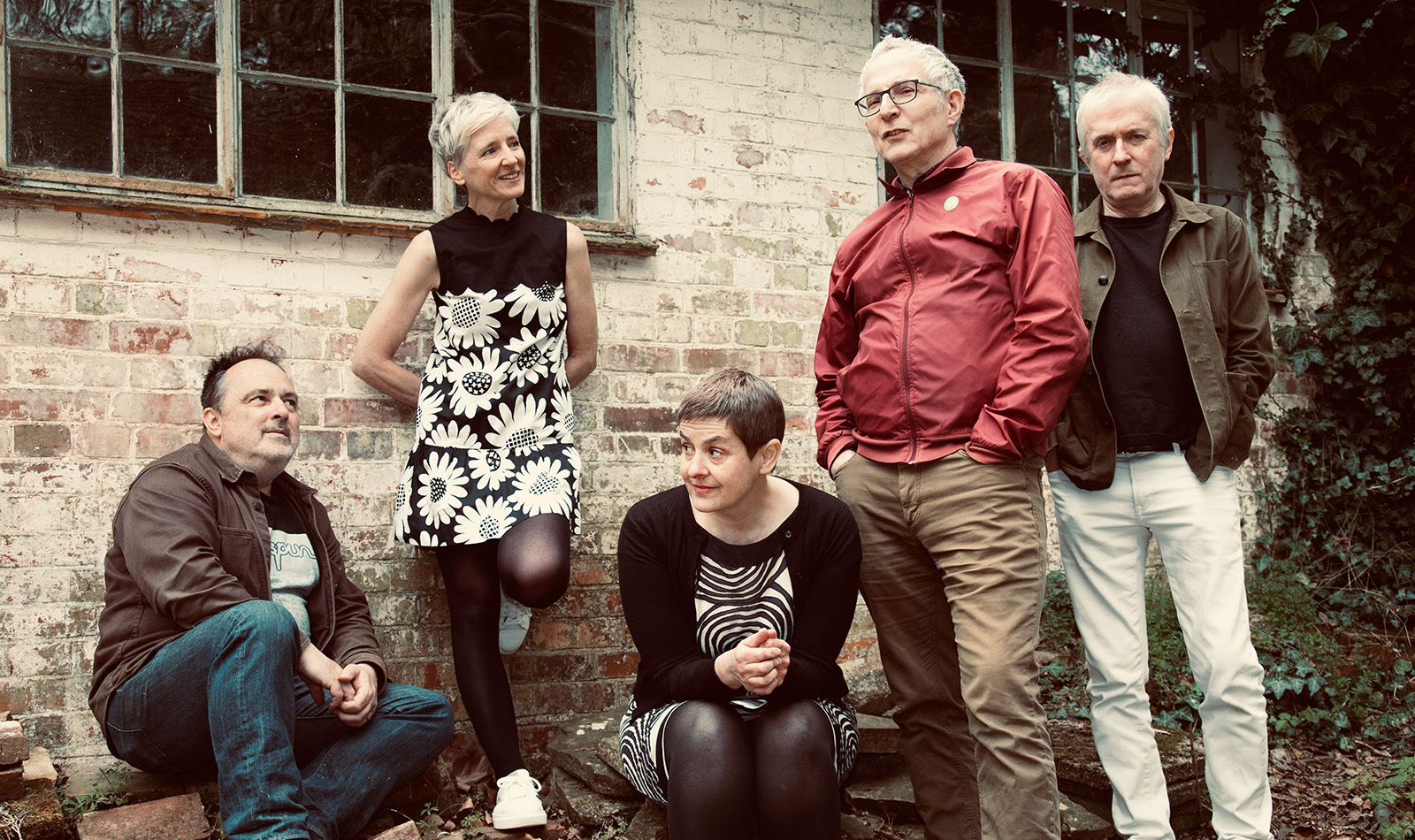
Heavenly—Fletcher on guitar and vocals; Pursey on bass; keyboardist Cathy Rogers; guitarist Peter Momtchiloff; and Mathew Fletcher (Amelia’s brother) on drums—formed four decades ago out of the ashes of beloved C86 band Talulah Gosh; they’d go on to make three records and a handful of EPs for similarly beloved label Sarah Records and one for British indie label Wiiija, coming to an unexpectedly tragic end in 1996 after Matthew took his own life shortly before the release of Operation Heavenly.
In the decades since, the members of Heavenly have pursued other projects and careers both musical and otherwise, but reviving the band wasn’t on the cards until they became aware of their renewed popularity with a younger generation. “It was the combination of discovering that people were interested in it and also that we were interested in it,” says Fletcher. “Both of those things made us think, well, let’s just put the records out and see what happens, let’s do a gig and see what happens. And all of those experiences were just really nice, so now we’re a band again!”
But Heavenly is very much not a nostalgia act—it was under strict orders from Pursey that the reformed band work on new material rather than simply play old songs live. Thus, anyone who has seen the group live recently might have heard a new Heavenly song, “Portland Town,” which was properly released as a single in July. A full-length of all new material is also in the works—Ian Button, who plays with Fletcher and Pursey in Swansea Sound, has joined the band on drums. Additionally, all of Heavenly’s original albums have been reissued on vinyl by Skep Wax, the indie label run by Pursey and Fletcher out of their home in Kent, which has also been releasing a steady stream of records by young indie pop bands like Lightheaded, Jeanines, and The Cords. In many ways, Heavenly aren’t just an inspiration for modern bands in underground music, they’re also still very much an active part of it.
“On one level, it would have been more sensible to go, ‘Okay, we’ve, we’ve done bands now we can, we can be the elders of the indie scene and preside over a label,” says Pursey. “But in fact, no, we still behave like teenagers with the band and we try to run a label. I don’t know if that’s a healthy combination or not, but that’s the way it is.”
Below, the members of Heavenly talk about their reformation, the process of reissuing their old records and playing live, their take on the underground scene of today, and the over/under on playing music during the day.
Had you always planned on reissuing your records or did the rights just revert back to you? Was there a reason you decided to release it yourself?
Rob Pursey: There’d been a compilation LP of the singles, which was released by Damaged Goods, who were friends of ours, and it was a much bigger hit than anybody expected. During lockdown was when we thought it’d be a good idea to start a label. That was initially to do new things—there was a new Catenary Wires LP, and there was the first Swansea Sound LP. Then the Heavenly thing seemed like a logical thing to do, and it wasn’t difficult, because we’re still friends with Matt [Haynes] and Claire [Wadd], who ran Sarah. It was pretty straightforward to say to them, ‘Look, we want to do this.’ And they’re like, ‘You’re crazy. Go ahead.’
Amelia Fletcher: Theoretically, [Sarah] still have the rights, but they were perfectly happy for us to do it. They’re quite determined that they don’t want to re-release anything. They always wanted to stop when they got to 100 releases, and they said that quite early on. Then they got Sarah to 100 and they stopped like they said they would. Unfortunately for Heavenly, we wanted to do another album, so we had to find a different label. We signed to a label called Wiiija, which is now part of the Beggars Group. I cleverly signed a contract that basically gave us our rights back after three years if we wanted them with three months notice. I probably forgot about this. When we finally thought, we’ve rereleased the other three, we should re-release [Operation Heavenly], I went and had a look. I was like, ‘Hey, I signed a good contract!’
In addition to reissuing your old records, you’ve now played a lot of shows as Heavenly and are writing/releasing new material. Was it your intention to become an active band again?
Amelia: I think the intention initially was just to do one gig, but of course, to do one gig, you have to do quite a lot of other things. You have to meet up lots of times and you have to remember all of the songs. We had to listen to them all again. Doing all the re-releases, we’d been looking back at old stuff and old photos and old flyers from shows and all of that. So even though it was just one gig, there was a lot of emotional stock in it by then. It was definitely a possibility we would have just played that one show and thought it was really fun and then not done anymore. But we’re all old and it’s just good to do fun things.
Rob: It is good to do fun things. The only thing for me, particularly, maybe Pete as well, is that we were not particularly keen on doing lots of gigs just playing the old songs the way that, obviously, lots of bands do—and that’s fine. But my attention span is very poor. I personally get very bored quite quickly of just playing the old songs. That’s why there are some new songs, because if there weren’t any, I wasn’t going to do it anymore. The new songs are to entertain ourselves more than to entertain the audience. It’s a commercial masterstroke!
Amelia: If you’re just a band doing your old songs and nothing else, you’re almost like one of those cover bands—but of yourself. That would have felt pretty weird pretty quickly. But people shouldn’t fear when we play, we’re not gonna play the songs that you like. I’ve got a friend whose daughter’s favorite bands are Tyler the Creator and Heavenly. She went to see Tyler the Creator recently and he didn’t play her favorite song. So she said, ‘Now the only band I trust is Heavenly,’ but she hasn’t told us which her favorite song is. We really need to find out.
Rob: The interesting thing with this last LP, Operation Heavenly… in the lead up to that coming out was when Mathew died. So the whole process of playing the songs live—there was a tour that was going to happen that had to be canceled, and everything had to be put in this box because we couldn’t face it. A lot of the songs on the record will be some that I think we never played live so they feel especially fresh, in a way, because they weren’t really given the airing that they would have had. I feel more excited about playing the songs off [Operation Heavenly] than any of the others because they are like new songs, really.
Had any of you listened to Heavenly’s music like in the last 30 years before you reissued it? Or was the reissue campaign the first time you’d really gone back and listened to the records?
Amelia: I’d listened to the singles, and the ones that people really know, but I hadn’t gone and done any kind of deep listening to the album tracks. It’s weird—sometimes you suddenly realize there are songs you’ve written and played and that you barely remember.
Cathy Rogers: We probably were all somewhat nervous listening to the records again and wondering how they would sound now all these years later, and I think with each sequential album slightly more so. But the feeling was, actually, it sounds really good and it doesn’t sound old and it sounds really fresh and we sounded kind of confident, like we were doing something that we had somewhat got the hang of by then. I hadn’t listened to it much in the meantime, but it was really nice to then go back.
The reformed Heavenly has now played shows all over the world—do you book your own gigs or do you have an agent? I’m sure you’ve gotten a bunch of offers since reforming.
Rob: We are going to go back to the States next year, and for that we have now got an agent. But in Europe, we do it all ourselves. I’ve just been talking to some people in Spain that run the Madrid Popfest. They’re really lovely and they’re quite good at organizing things. It’s a bit more work because you have to do it yourself, but there’s enough people around the world that you can contact and say, ‘We want to do this.’ And they will say, ‘Yep, we’ll do it.’ It’s quite informal, but they’re capable of putting on big shows. I don’t think it really restricts us. If we wanted to play a different kind of corporate indie circuit….we don’t want to do that. The other thing that we don’t really ever do is festivals. If you want to do a festival, you’ve got to have an agent, because they’re booked through agents.”
Amelia: That’s where we differ, I’d quite like to play a festival.”
Rob: I don’t really like listening or playing music in the open air. I think daylight and open air are not suitable.
Amelia: The reason that I’d quite like to do it is quite often there’s a lot of youngsters there who might actually be quite excited to see Heavenly, but might not come out to see Heavenly, as it were.
When you started playing the old songs again, did you find it very easy or was it hard?
Cathy: I remember a feeling that I had before where if you’d go and see a band and people would yell for a certain song, and they’d say, ‘Oh, sorry, we haven’t learned that one.’ I always found that completely incomprehensible; now I find it completely comprehensible. For me, I remember lyrics. For some reason, they just stuck in my head. But things like chords and parts and things like that, it was like learning them from scratch. You knew how they were meant to sound so not completely from scratch, but it takes a lot of learning.
Amelia: The thing that made it even harder for me was that after Heavenly, I made the decision to stop playing guitar in bands and either sing or sing and play keyboard. I literally had barely played guitar since the mid-‘90s—and I played guitar in most of the songs in Heavenly so I had to effectively relearn how to play guitar. There were moments when Rob was kind of going, ‘You don’t have to do it. We could get another person in.’ But I pulled through. I practiced a lot, and I seem to have learned guitar again, which I’m excited about.
What has it been nice playing with younger bands and working with young bands via Skep Wax?
Rob: It’s been really, really nice. It is really nice if you get a band who nobody’s really heard of when you put them out, and then more people hear of them, and maybe they get on the radio. You can see the kind of it gives them a boost, and it makes them feel real. There’s an upside and downside for bands that come onto our label because we do have quite hardcore indie ethics, if you like. There’s certain things we won’t do. The sort of band who want fame and fortune at all costs would probably be better off avoiding us. But if they want to be allowed to do what they like…I mean at least we can give some advice.
Amelia: It is really nice having Heavenly as well and being able to play with those bands. Like the Skep Wax Weekender, which is a four day festival in London, started out as a Heavenly gig—let’s have a couple of Skep Wax bands play with us. Then, oh well, which ones? Why don’t we do another night?
Rob: Jeanines and Lightheaded were coming to the UK at that time exactly, we clearly had to have them play. So before we knew it, there was a little festival—indoors in the darkness.
Pete, what do you feel about playing outside during the day?
Pete Momtchiloff: Well, I can answer this one. For a long time, I thought that there was something that rock music didn’t work during the day, and I have become a convert. The reason I like it, I’m afraid, is for social rather than musical reasons. There’s usually lots of time to hang out and talk to people afterwards, and people might not have drunk too much. They don’t have to go anywhere. Public transport is running. So I actually think for social reasons, daytime shows are good, excellent.
What is everyone’s favorite Heavenly record?
Cathy: I think mine is Operation Heavenly. It has such an interesting mixture of songs but they really do all go together. I think we sound really chipper, it’s really kind of perky. Sorry, I’m not coming up with very good adjectives.
Pete: No, I agree with those adjectives. I think they’re the correct adjectives.
Amelia: I think my very favorite one, which we did put onto the third album on re-release, is the Atta Girl EP. For that particular set of five songs, we had a really clear vision of what we were doing, and it really panned out just exactly right.
Rob: Operation Heavenly is the one I like best, partly because I do think the songs are really good, like Cath said, but also it’s the one I think is pretty well produced. With the others, I don’t really ever think that. I think the songs are really good. In retrospect you notice that there are some really good songs on all of those records, but the way they are rendered is not brilliant. Whereas with the fourth one, it’s still quite rough at the edges, which is good, but I think it’s really coherent and it’s very energetic, and it was really well put together by Ian Shaw, who produced most of it.
You recently put out a new single, “Portland Town” and you’re working on a new Heavenly record. How is that going?
Amelia: We’re almost through the process of having a whole set of songs—I’ve got to write one more. We recorded about half of them and got vocals onto three and listened to them. We weren’t absolutely sure which was going to be the single, but [‘Portland Town’] came out the most single-sounding, and it felt like the right song to be releasing now because of everything that’s going on politically. It felt very celebratory of difference, but also supportive and allied to difference in a way that felt kind of important to do.
Has it been fun writing new stuff again?
Rob: It has been really good fun. We haven’t mentioned Ian [Button] yet, but Ian, who now drums with Heavenly, is a pretty remarkable person. He’s a brilliant drummer—he learned all the old Heavenly songs for those first gigs—but he’s now part of the process of helping us put these new songs together. A lot of it is worked out in the room, and he is very much a part of that. It’s always the part I’ve enjoyed most, I suppose. But I think that he is just a really wonderful contributor. That makes it fun because you can change gear with new songs quite easily and quickly to try things out and then settle on what feels like the right way to go.
As people who have been participating in underground music for a long time, what are your thoughts on the state of the underground today?
Amelia: I think there’s pretty healthy underground—the stuff that sounds like what we like and what we think of as indie is only one part of that. Obviously, there’s a myriad of different undergrounds. But I think even our bit of the underground is actually pretty healthy. There’s quite a lot of bands, including pretty young bands, coming through that are exciting and properly, properly indie. I think what is really hard is now breaking those bands. In the past, if you were Lightheaded or the Jeanines—we can get them so far, and Slumberland can get them so far—but they might have had a hope of selling 10,000 records before, and now maybe we can sell 1000. It’s changed in that sense, and that’s more about the format. It would be brilliant if digital made that back, but the digital doesn’t make that back, so it’s really, really hard to fund. And it’s not funding the label, we’re less worried about that. But it’s hard to then fund shows, it’s hard to fund everything.
Rob: The underground, the kind of the real space which I suppose we occupy, takes up different forms. I was reading this article today about how the scope for algorithmic domination and AI domination will lead to certain things being a lot quicker and more efficient but the internet becoming dominated by something that you can’t entirely trust. So I think those musical communities that are clearly created outside of that world and the digital culture that is so immense in all parts of our life will remain quite appealing to a lot of people. I was talking to some young person at a gig in America, and they were asking about Sarah Records and they said, ‘How did you even do it? There was no internet.’ It’s quite a good question because it was all done with letters and fanzines. It had to create its own sort of little communication network because there wasn’t an alternative. Now you can email people and you can put up on Facebook very quickly to say there’s this gig. Your means of communication have become easier, but your means of maintaining independence, or, God forbid, making any money out of it probably got harder. But I think one of the things that bands we work with are happy about is there is a definite sense of community. If you play a gig with them, you feel like you’re part of a gang, and that is a nice feeling—that’s always been a nice feeling.
Any advice for underground bands that might be feeling pressure to compromise their ethics in order to make money off their music?
Pete: I don’t think it’s a mistake to sell your music to make money. I mean, why not? I think it’s a mistake to make some deal which stops you enjoying music or doing music well. But some of my friends in music, the only real money they ever made was when their song got used in the film. You have to take yourself quite seriously to think that there’s something corrupt about that. So fine, sell out if you want. But I just think, as the others have been saying, you have to find a way to make music which you will enjoy and value, and that could be with a lot of money behind you, if you’re lucky, or it could be without a lot of money behind you. I don’t think either of those is superior, but I think the sort of practical stuff, about getting a scene, that’s the kind of thing which makes music enjoyable, whether it’s with money or not. Bandcamp has contributed to people being able to feel that what they do is valuable and they’re doing it effectively. I think these kinds of things are much more important than the nature of whether you have a contractual agreement with a company of some kind.