
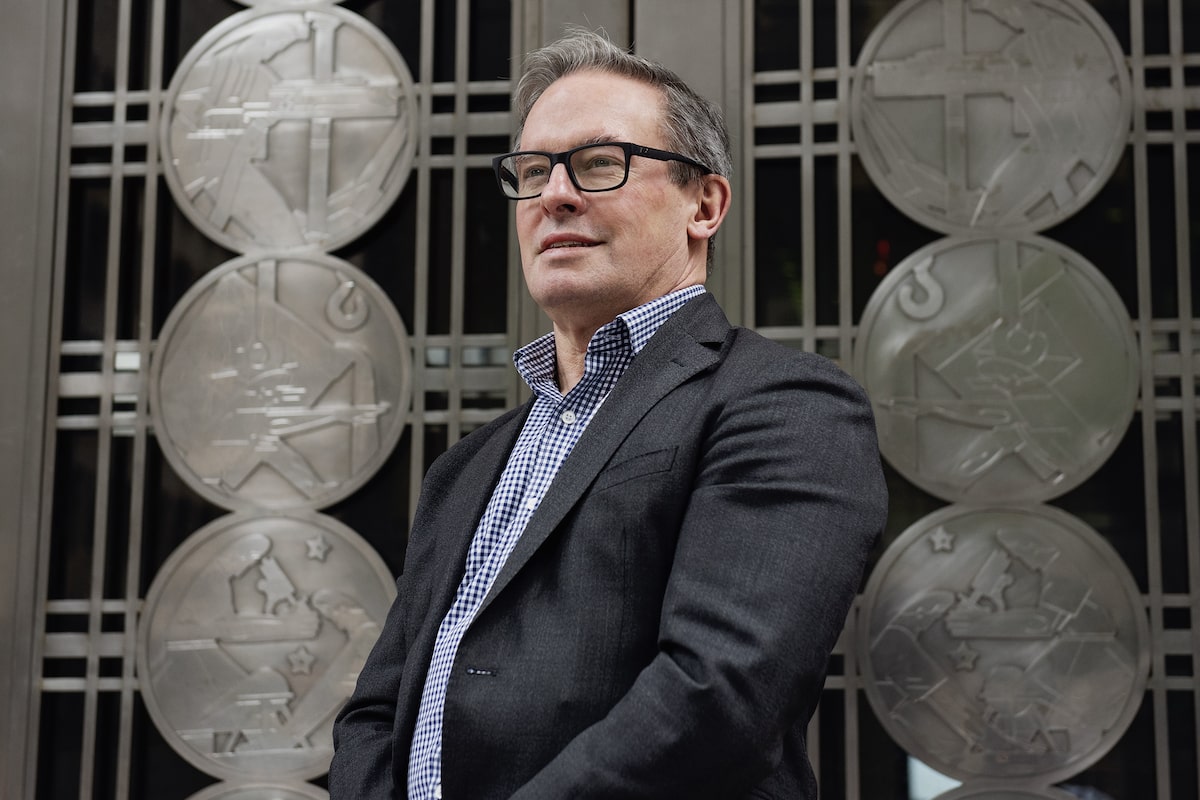
Mark Selby, CEO of Canada Nickel, in Toronto in 2023. Ontario is fast-tracking the company’s Crawford Nickel Project, located north of Timmins, Ont.Duane Cole /The Globe and Mail
Ontario is fast-tracking Canada Nickel Co.’s CNC-X Crawford nickel operation under the province’s “One Project, One Process” regulatory initiative, a move politicians framed as a response to U.S. President Donald Trump’s threats to Canada’s economic sovereignty, even as significant funding hurdles remain for the junior mining company.
Crawford, located about 40 kilometers north of Timmins, contains the world’s second biggest nickel reserve.
The Toronto-based company hopes to start building the mine before year-end, and is aiming to be in production at the end of 2028. Canada Nickel also plans to build a nickel processing plant in Timmins.
Provincial politicians at a press conference in Timmins on Tuesday said that designating Crawford for regulatory streamlining is a priority for Ontario because of the need for the world to move away from dependence on Indonesian-sourced metal. They also pointed to the importance of the electric battery and steel-making metal for Canada’s economic sovereignty, particularly in the face of uncertainty over Mr. Trump’s aggressive foreign ambitions.
Just over a week ago, Mr. Trump seized control of Venezuela and its oil reserves. He has since made threatening comments towards Colombia, Cuba, Mexico, and Greenland. Mr. Trump has also repeatedly said he wants to make Canada the 51st state, a move that some believe is based on his desire to bulk up his country’s resource capabilities.
“We’ve just recently seen what Trump did in Venezuela, [targeting] the oil,” George Pirie, Ontario minister of northern economic development and growth, said at the Timmins event. “But he’s not going to be able to take our nickel out of the ground. Not a bloody chance. Not a bloody chance. We’ve got it right here. We’re going to process it here, and we’re going to develop value-added industries here in the north.”
By being singled out under Ontario’s new fast-tracking process, which was first announced in October, Canada Nickel will only have to deal with one representative at the provincial level, who will be overseeing all its permits. Under the province’s default regulatory system, it isn’t uncommon to deal with several different internal agencies to navigate all of the red tape, Canada Nickel CEO Mark Selby said in an interview.
While the special designation may not speed up the timeline significantly, it should make navigating the process much smoother, and reduces the likelihood of something falling through the cracks.
“This basically will ensure that things don’t get off track,” said Mr. Selby.
As much as the reduction in red tape will help Canada Nickel, a major impediment that still needs to be navigated is funding.
The construction of the mine is estimated at between US$2-billion and US$2.5-billion, but much of the financings that the company has in place are provisional.
Among the tentative fundings are US$500-million in debt from Export Development Canada, $500-million from another unnamed Canadian government financing agency, and about US$600-million in critical minerals and carbon capture and storage tax credits.
But even if all of that comes to fruition, there is still a substantial funding shortfall. Roughly about $300-million in additional equity funding is needed. Also being looked at is a sale of 10 to 20 per cent of the project to a third-party investor which could net up to about US$200-million. Samsung SDI of South Korea already has an option to purchase 10 per cent of Crawford for US$100-million.
“There’s a lot of work between now and year-end,” Mr. Selby said around all the various funding options.
Some of that funding gap could be alleviated with the help of the federal major projects office, he added. Canada Nickel last year was also designated for the federal program, which should also speed up regulation on the federal front.
Nickel coming out of Crawford will be sold to the electric car industry and the steel sector, with customers in the U.S and Europe.
Mr. Selby says he isn’t losing much sleep over Mr. Trump’s global trade war, and anticipates that there will be plenty of demand in Europe, which places a premium on metal mined using sound environmental standards. Indonesia, which controls about two-thirds of the global nickel market, has a much dirtier impact on the environment owing to deforestation and the use of coal in its processing.
Canada is a much bigger player globally than the U.S. in the metal.
The U.S. has only one primary nickel mine in operation, Eagle in Michigan, while Canada has vast operations in Sudbury, Voisey’s Bay, Labrador, and in northern Quebec.
Canada in 2024 produced 190,000 tonnes of nickel, compared to only 8,000 tonnes produced in the U.S., according to the United States Geological Survey. Indonesia was the global giant, producing 2.2 million tonnes.
Canada Nickel in the past has attracted equity investments from Agnico Eagle Mines Ltd AEM-T, Britain’s Anglo American PLC NGLOY, and Samsung SDI of South Korea.