
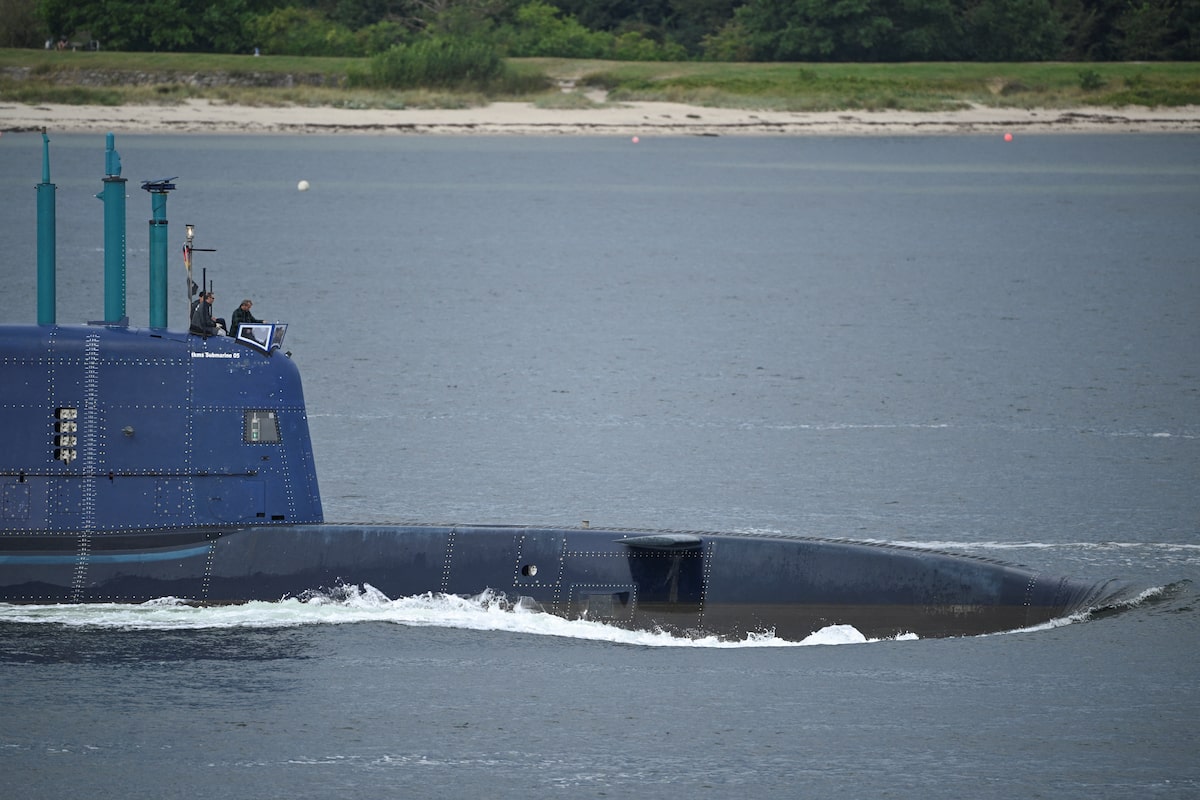
A submarine built by ThyssenKrupp Marine Systems off the coast of Kiel, Germany, in September, 2025.Annegret Hilse/Reuters
German submarine builder ThyssenKrupp Marine Systems is partnering with Canadian AI company Cohere to bring its technology aboard Canada’s next fleet of submarines, should TKMS win the multibillion-dollar contract.
The agreement is part of TKMS’s promise to integrate Canadian companies into its supply chain for the project, bringing the industrial benefits to the country that Ottawa is asking for.
Last August, Prime Minister Mark Carney announced that two companies – TKMS and South Korea’s Hanwha Ocean Co. Ltd. – had made the shortlist to build a fleet of up to 12 new submarines for the Royal Canadian Navy. Since then, Mr. Carney has visited and toured submarines in both countries to review each company’s bid.
Cohere raises US$500-million, hires former Meta AI expert Joelle Pineau
In a news release Tuesday, TKMS said Cohere’s language and data-driven artificial-intelligence models could help with decision-making, information management, training and naval interfaces for the project.
Dave Ferris, vice-president of the Americas and global public sector at Cohere, said the company’s technology would help reduce cognitive load and “empower sailors to act decisively.”
“Submarines are the ultimate high-stakes workplace,” Mr. Ferris said in a news release.
Last week, Ottawa asked the governments of Germany and South Korea to integrate auto industry production pledges into their submarine bids, according to a Globe report, as part of an effort to boost a domestic industry that has been battered by U.S. tariffs.
On Friday, TKMS launched a new website dedicated solely to explaining how Germany and its partner nation Norway are the obvious choice for building Canada’s next fleet of submarines.
Knowledge transfer between Canada, Germany and Norway, the inclusion of Canadian companies for maintenance and manufacturing, and interoperability with other NATO allies who also use TKMS submarines are among the selling points the company highlights on its new site.
Alongside Cohere, agreements with Quebec-based manufacturing company Marmen Inc. and Norwegian-owned Canadian subsidiary Kongsberg Geospatial Ltd. are also featured on the TKMS microsite to signify its willingness to work with Canadian industry.
Cohere co-founder Nick Frosst at their Toronto offices in 2024. TKMS said Cohere’s AI models could help with decision-making, information management, training and naval interfaces.Christopher Katsarov /The Globe and Mail
Meanwhile, Hanwha also hasn’t shied away from making its presence known to Canadians. The Korean company, too, has signalled its willingness to bring industrial benefits to Canada by building “sustainment” facilities on both coasts, where Canadian companies can perform maintenance, and opening a manufacturing facility here to build tanks, rockets, howitzers and resupply vehicles.
Hanwha has said it could deliver its first submarine to Canada by 2032, and four by 2035. TKMS has said it could deliver the first submarine well before 2035, but has not given a specific year. Both vessels are diesel-electric submarines because Canada has ruled out nuclear-powered options, which are more expensive.
Last June, Mr. Carney committed Canada to boosting its defence-related spending to 5 per cent of GDP by 2035, with 3.5 per cent dedicated to core military expenses and 1.5 per cent going toward related infrastructure. However, there was no mention of the submarines in the federal government’s 2025 budget.
Each submarine is expected to cost up to $2-billion each. David Perry, president of the Canadian Global Affairs Institute, has estimated that the total acquisition cost over the life cycle of the submarines would be about $10-billion per vessel.