
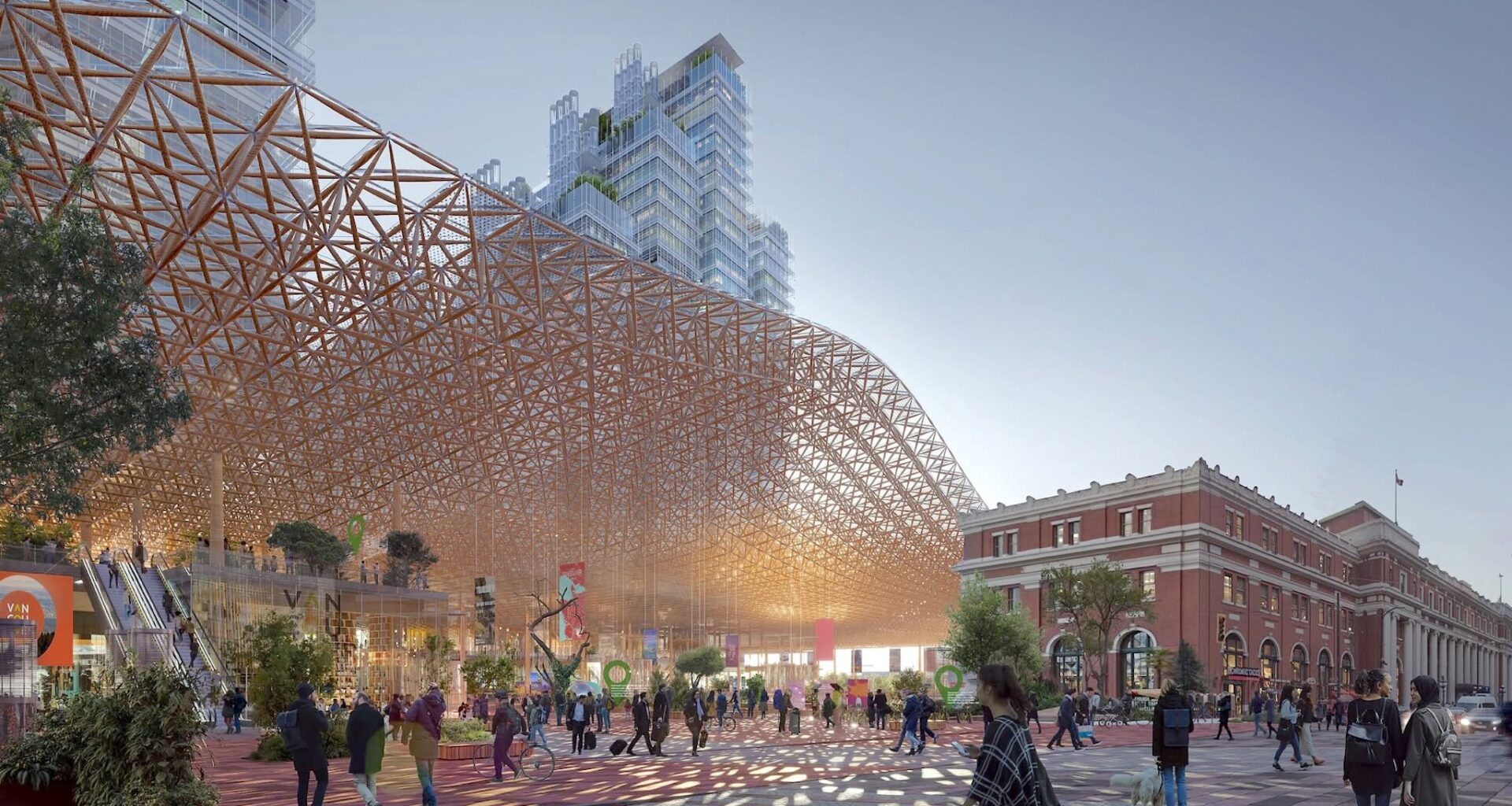
The Vancouver office of global architectural firm Perkins&Will has released more conceptual artistic renderings showing new perspectives of its unsolicited reimagining of downtown Vancouver’s Waterfront Station precinct.
As first reported by Daily Hive Urbanized in 2022, the firm envisions a dramatically expanded public transit hub and high-density redevelopment of the Gastown waterfront railyard north of the historic Canadian Pacific building and West Cordova Street.
The latest visuals build on artistic renderings previously shared by the firm, further illustrating a vision that places high-density towers, expansive public spaces, and a significantly enlarged public transit hub within the railyard north of West Cordova Street. More specifically, the new perspectives are from the ground level, which were not previously shown.
As previously noted, it should be strongly emphasized that this concept is purely a speculative design exercise and is not tied to any formal development application; it is not an actual proposal. The unsolicited concept is only intended to help stir public attention and discourse for what is possible for the prominent and important site, with some imagination, with the City of Vancouver leading a new formal planning process to determine a master plan concept for the Central Waterfront District.
The firm previously described its study as a way to explore what might be possible at a location that already functions as one of the region’s most important transportation nodes.
Existing condition:
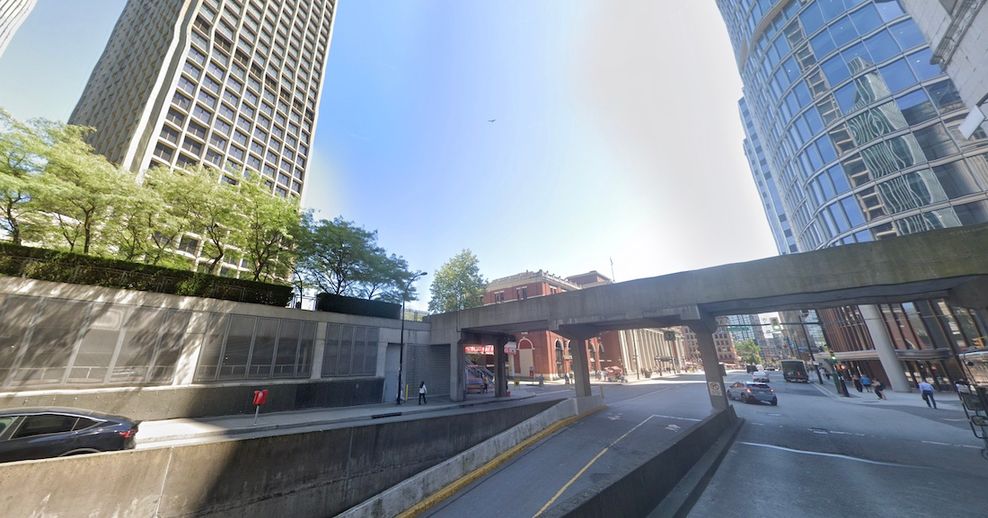
Existing condition of Waterfront Station looking east on West Cordova Street near Granville Street. (Google Maps)
Redevelopment concept:
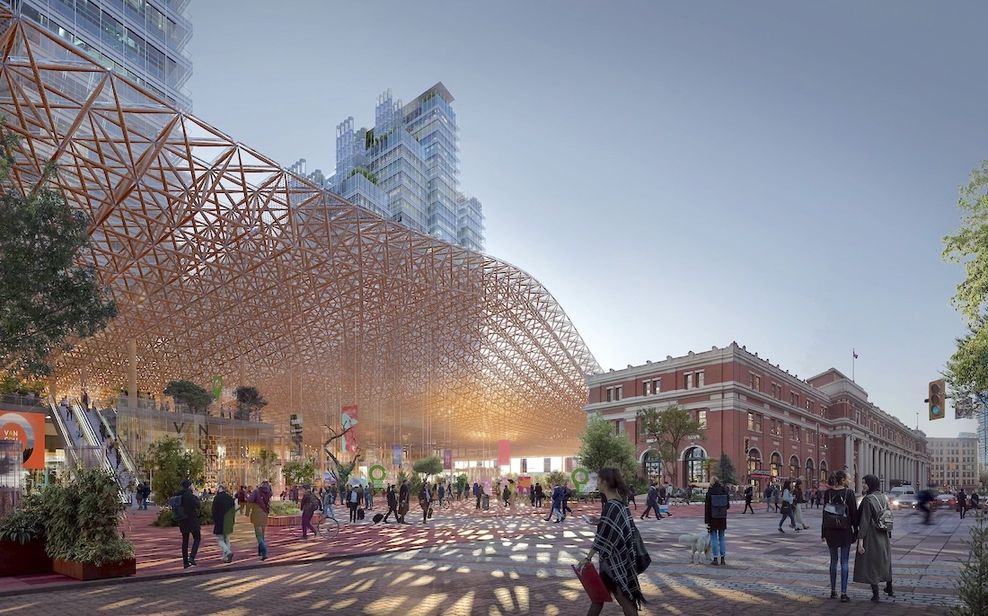
Unsolicited concept: Artistic rendering of reimagining and expanding Waterfront Station in downtown Vancouver. (Perkins&Will)
Waterfront Station currently serves as the downtown Vancouver terminus for SkyTrain’s Expo Line, the SeaBus, West Coast Express commuter rail, and multiple bus routes. Despite its importance, the surrounding freight car storage railyard has long been viewed as a barrier between Central Business District and the central waterfront.
Perkins&Will’s concept proposes spanning the existing railyard footprint to unlock new sites for tower development while significantly enhancing and expanding public transit operations below.
At the heart of the vision is an expansive outdoor concourse space covered by a large glass canopy — the size equivalent to several city blocks — creating a light-filled gateway that leads to SkyTrain, commuter rail, and regional rail platforms. The concept also allows for the potential accommodation of Via Rail and high-speed rail service to Seattle and Portland, along with the necessary baggage handling and operational support spaces.
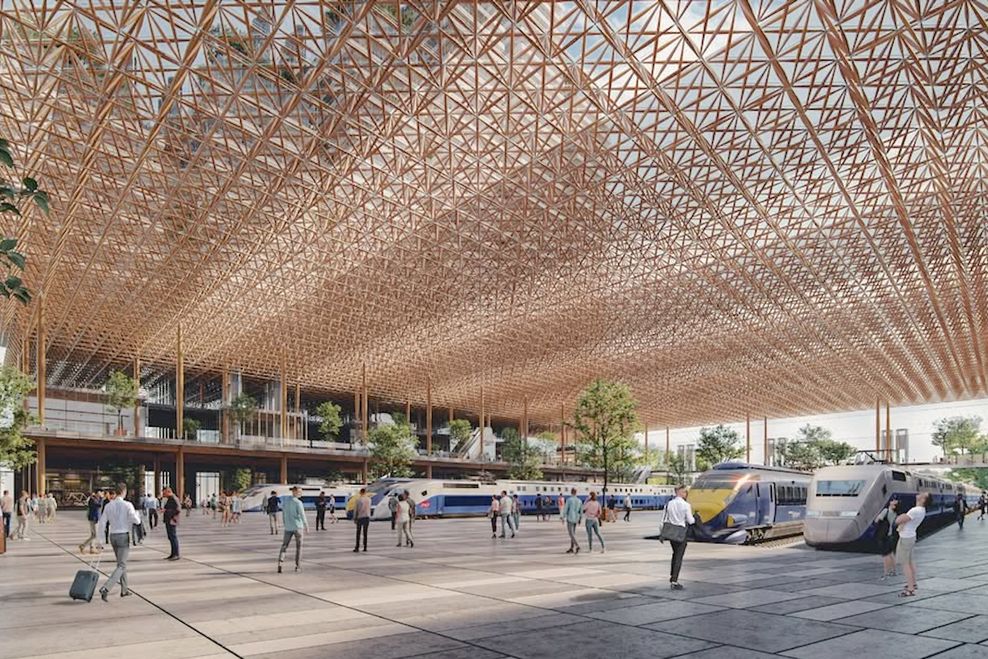
Unsolicited concept: Artistic rendering of reimagining and expanding Waterfront Station in downtown Vancouver. (Perkins&Will)
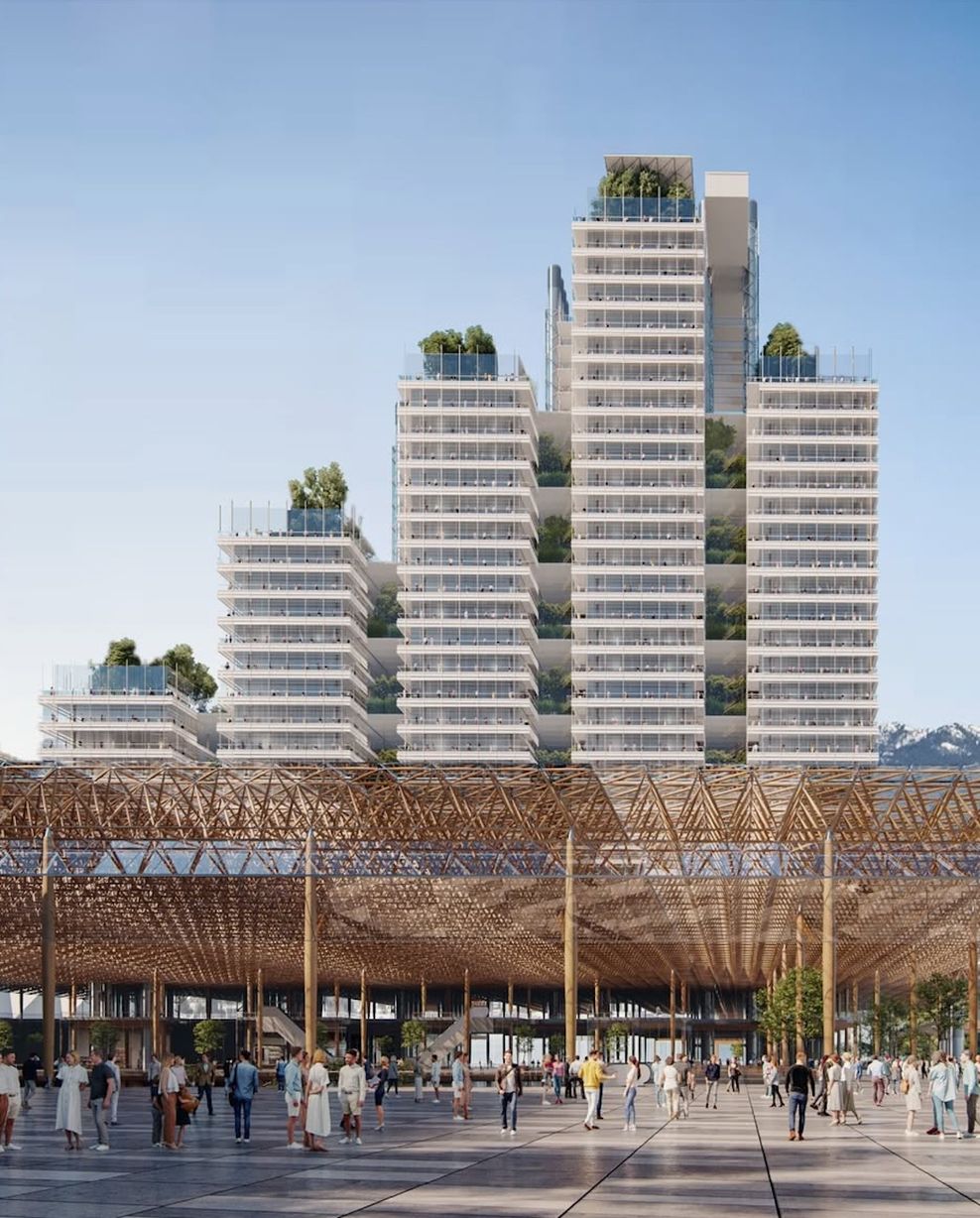
Unsolicited concept: Artistic rendering of reimagining and expanding Waterfront Station in downtown Vancouver. (Perkins&Will)
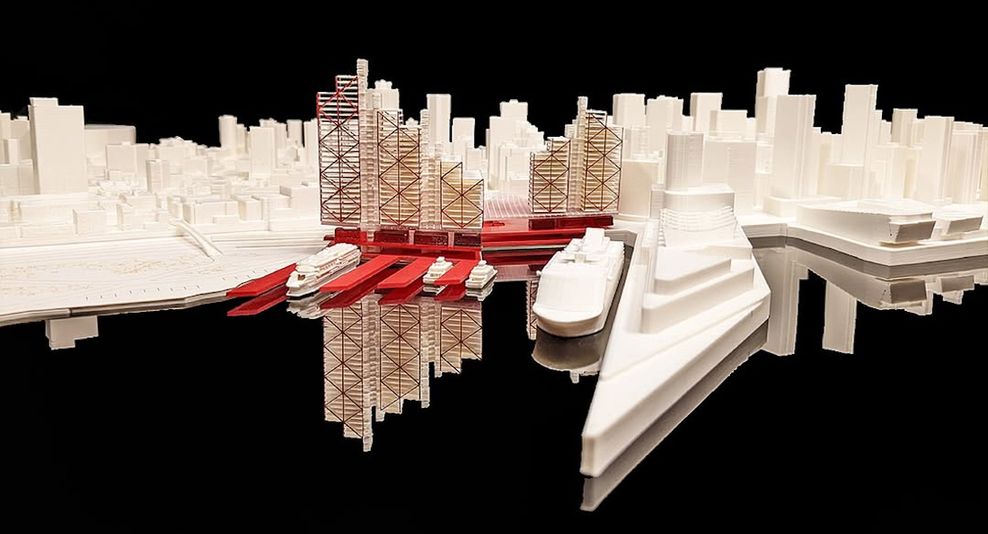
Unsolicited concept: Artistic rendering of reimagining and expanding Waterfront Station in downtown Vancouver. (Perkins&Will)
Public transit connectivity would be improved, with enhanced access to SkyTrain’s Expo Line and Canada Line. The SeaBus terminal would be relocated to a new, purpose-built marine terminal, which could also support passenger-only ferry routes to Vancouver Island.
Along the waterfront, the entire harbour edge would be opened to the public across multiple levels, including a new multi-level pier and publicly accessible open space along the eastern portion of the site.
Beyond the public transit and public realm improvements, the concept integrates substantial new office and hotel towers, seamlessly woven into the station precinct above.
Existing condition:
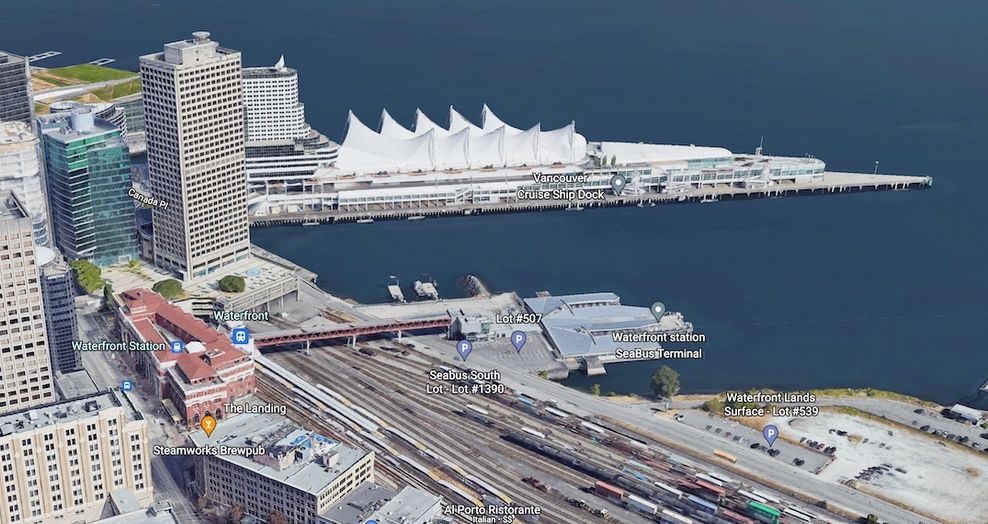
Existing condition of Waterfront Station and its surrounding area in downtown Vancouver. (Google Maps)
Redevelopment concept:
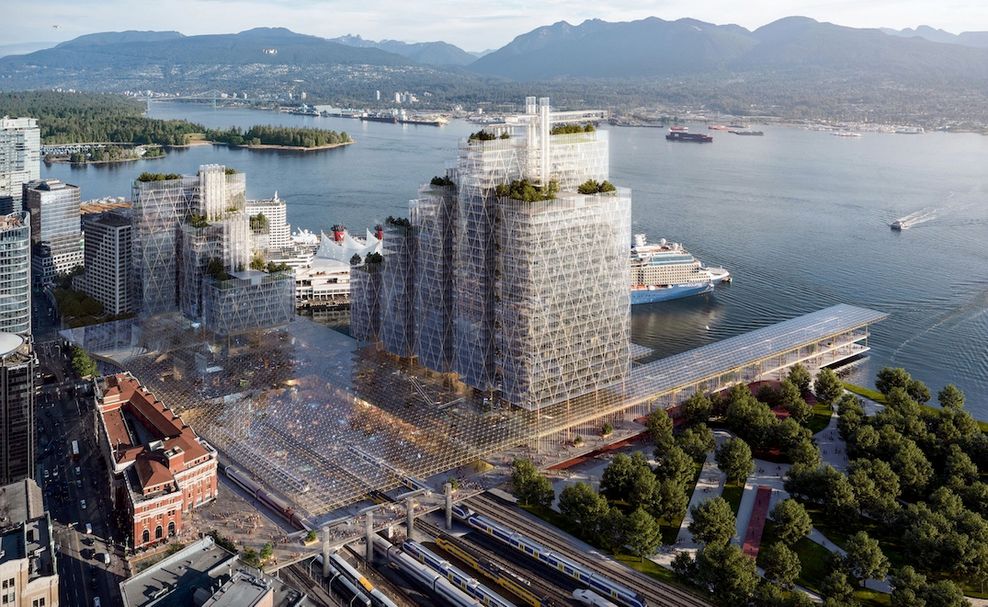
Unsolicited concept: Artistic rendering of reimagining and expanding Waterfront Station in downtown Vancouver. (Perkins&Will)
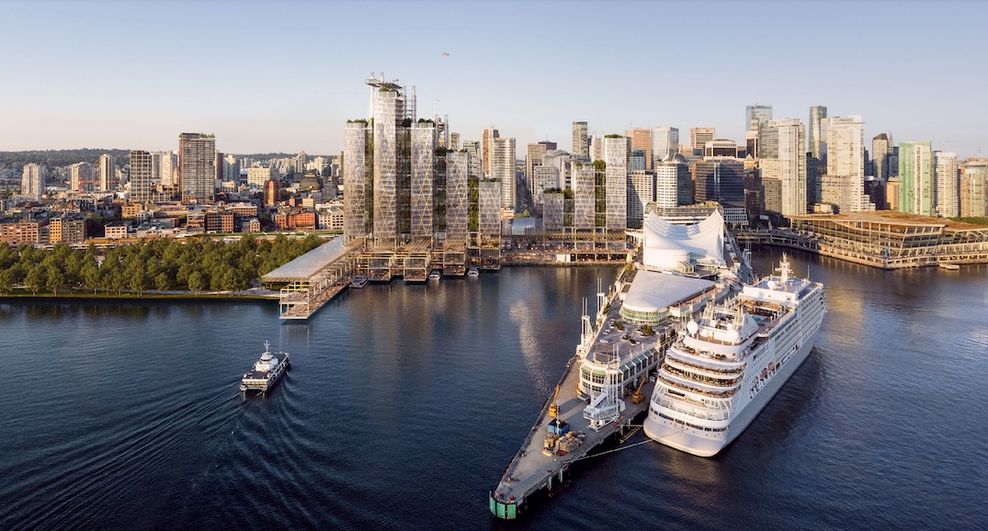
Unsolicited concept: Artistic rendering of reimagining and expanding Waterfront Station in downtown Vancouver. (Perkins&Will)
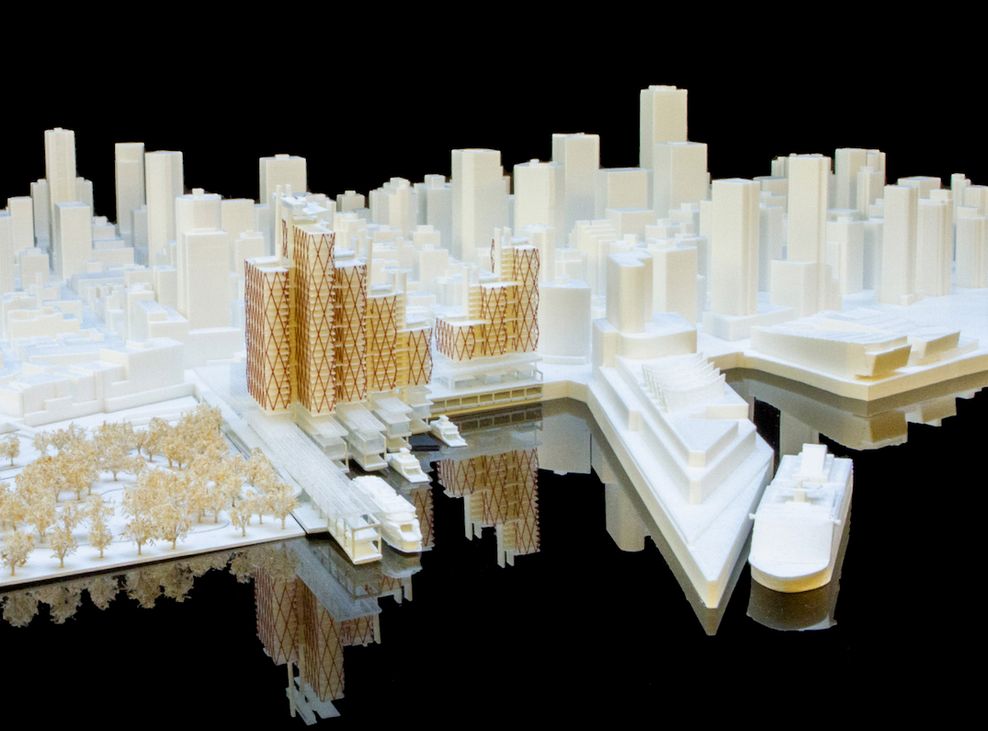
Unsolicited concept: Artistic rendering of reimagining and expanding Waterfront Station in downtown Vancouver. (Perkins&Will)
The proposal also includes a major civic and cultural component: a 500,000 sq. ft. civic and cultural hub located beneath the western cluster of office and hotel towers, replacing the existing PricewaterhouseCoopers and Granville Square tower sites. Perkins&Will suggests this space could house institutions such as the Canadian Centre for the Moving Image, the Vancouver Arts Theatre, and a central city visitor centre, further reinforcing Waterfront Station’s role as a civic destination as well as a transportation hub.
Without the Granville Square tower and its base parkade structure, the station’s new concourse would open directly to pedestrians at the foot of Granville Street, creating a seamless public realm that extends from downtown’s existing urban fabric to the waterfront. The design emphasizes uninterrupted pedestrian movement, clear sightlines, and generous public space.
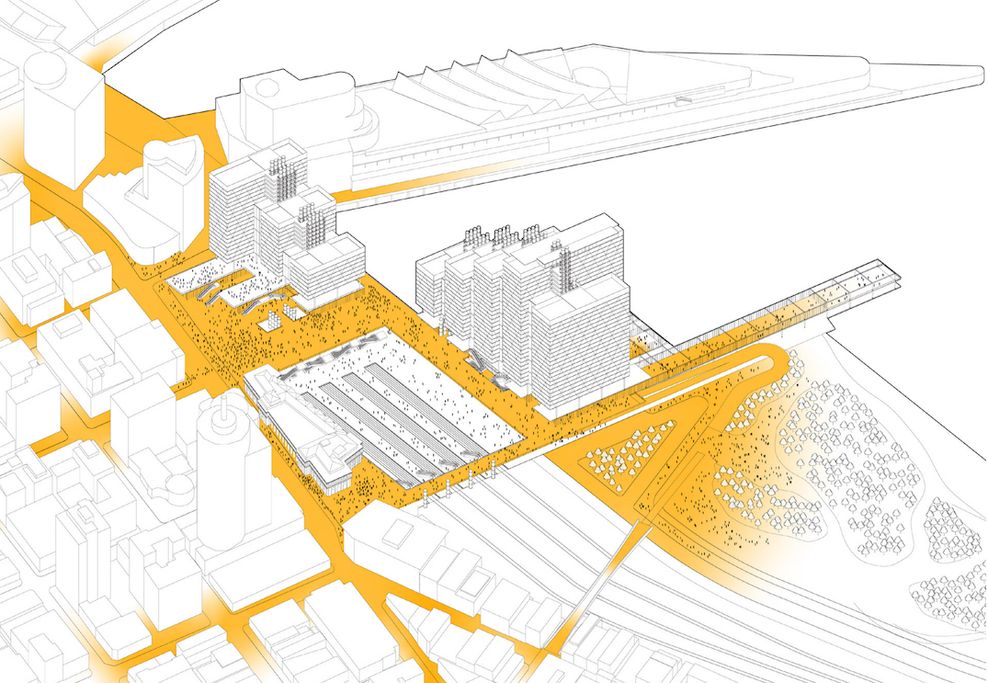
Unsolicited concept: Artistic rendering of reimagining and expanding Waterfront Station in downtown Vancouver. (Perkins&Will)
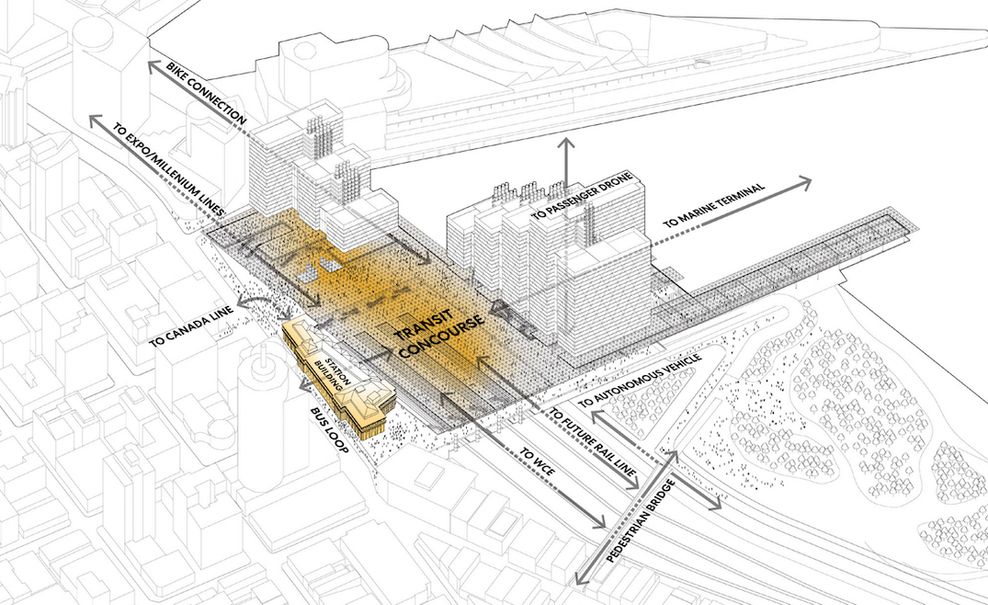
Unsolicited concept: Artistic rendering of reimagining and expanding Waterfront Station in downtown Vancouver. (Perkins&Will)
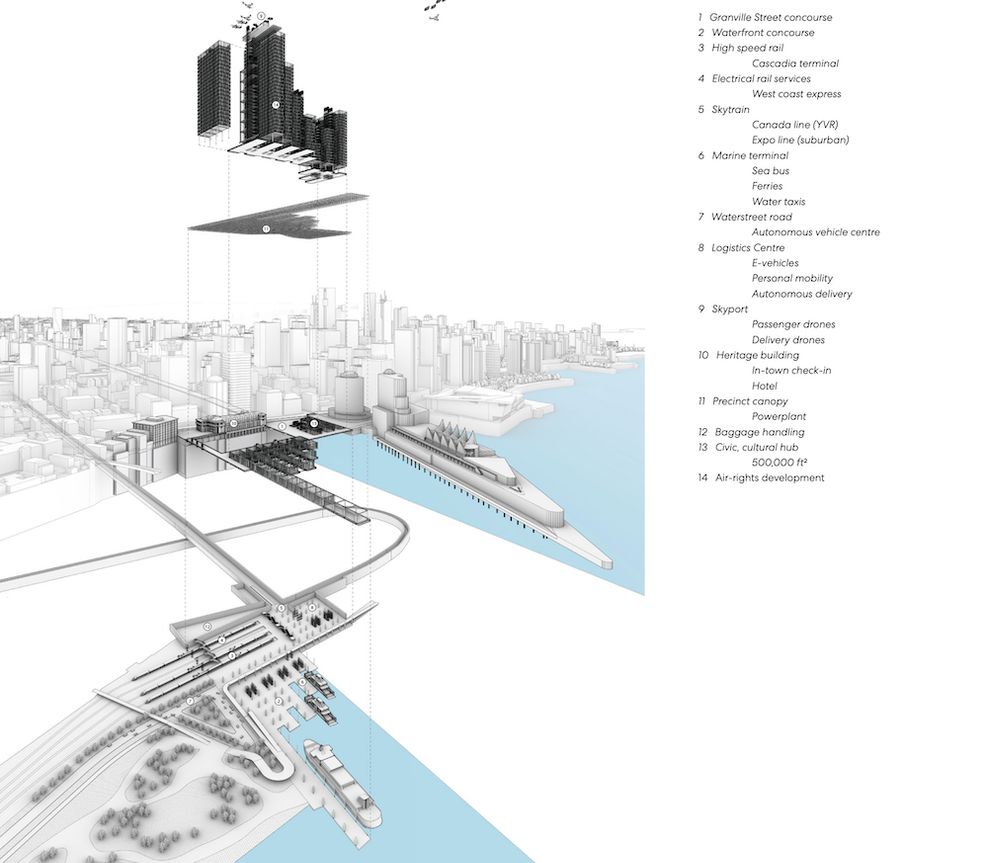
Unsolicited concept: Artistic rendering of reimagining and expanding Waterfront Station in downtown Vancouver. (Perkins&Will)
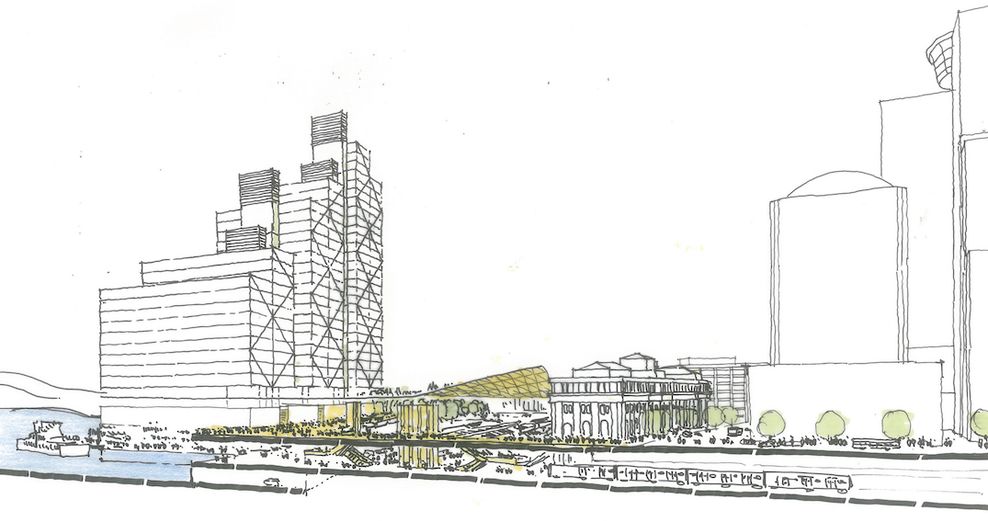
Unsolicited concept: Artistic rendering of reimagining and expanding Waterfront Station in downtown Vancouver. (Perkins&Will)
In November 2024, in an internal memo, the City of Vancouver provided a progress update on planning for the Central Waterfront District.
At that time, City staff stated that they had recently signed a memorandum of understanding (MOU) to establish a joint planning partnership for the area with landowners and key stakeholders — including Canadian Pacific Kansas City (CPKC), Vancouver Fraser Port Authority, Transport Canada, Government of British Columbia, Vancouver Convention Centre (Pavco), and private property owners Cadillac Fairview and GHD Equity Holdings. TransLink, VIA Rail, and Canadian National are also involved in the planning process. City staff previously estimated it would cost about $2.6 million to carry out this preliminary planning work.
Under the MOU, they have agreed on the following vision for the area: “Identify and advance local, regional, provincial and national goals related to economic growth, business, commerce, trade and supply chains, transportation (including people and goods movement), tourism (including convention centre and hotel capacity), housing, including opportunities for densification, First Nations history, culture and reconciliation, public amenities, the public realm, and climate change.”
The specific mention of convention centre uses is crucial, given that this site — immediately east of the East Building of the Vancouver Convention Centre at Canada Place — likely represents the last opportunity for a seamless, large-scale expansion of the Vancouver Convention Centre.
Last year, the port authority also told Daily Hive Urbanized that they had received a proposal to install a giant permanent Ferris wheel at the Canada Place pier, presumably near its northern end. However, they stated that such a project would likely need to be examined as part of the City-led Central Waterfront District planning process, along with a technical feasibility study specific to Canada Place for structure and operational considerations, given that Canada Place is highly crucial for cruise ships.
The City-led planning effort under the MOU is also expected to build on some of the concepts and ideas previously created by the municipal government in the late 2000s — the Central Waterfront Hub Framework in 2009 to expand Waterfront Station with a transit concourse over the railyard to the north side of the historic building, which was a planning process triggered by the Vancouver Whitecaps’ proposal at the time to build a soccer-specific stadium above the railyard.
In recent years, other prominent international architectural firms such as Farrells and Civitas Studio have also separately created unsolicited visions for the area to inspire planning discussions and spark public dialogue about the site’s future potential.
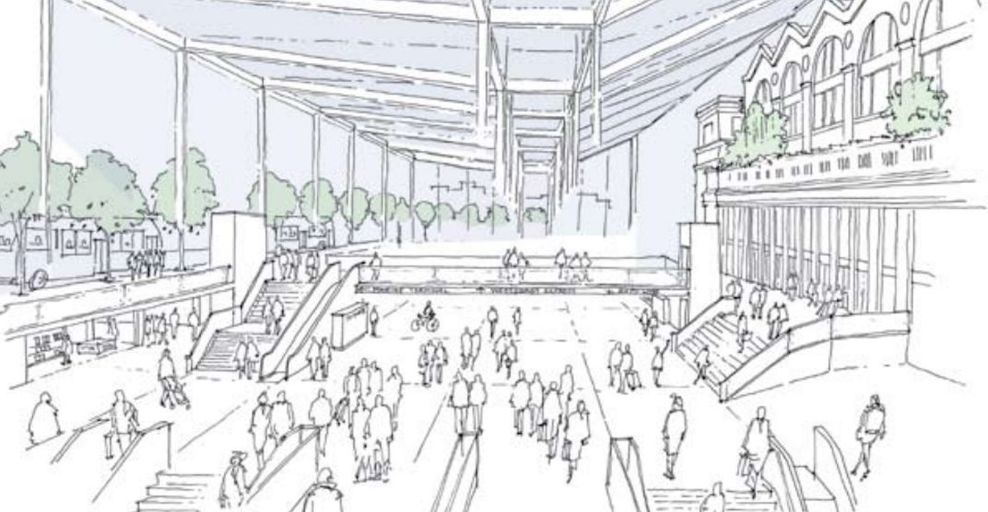
2009 Central Waterfront Framework: Artistic rendering of a new transit concourse at Waterfront Station. (City of Vancouver)
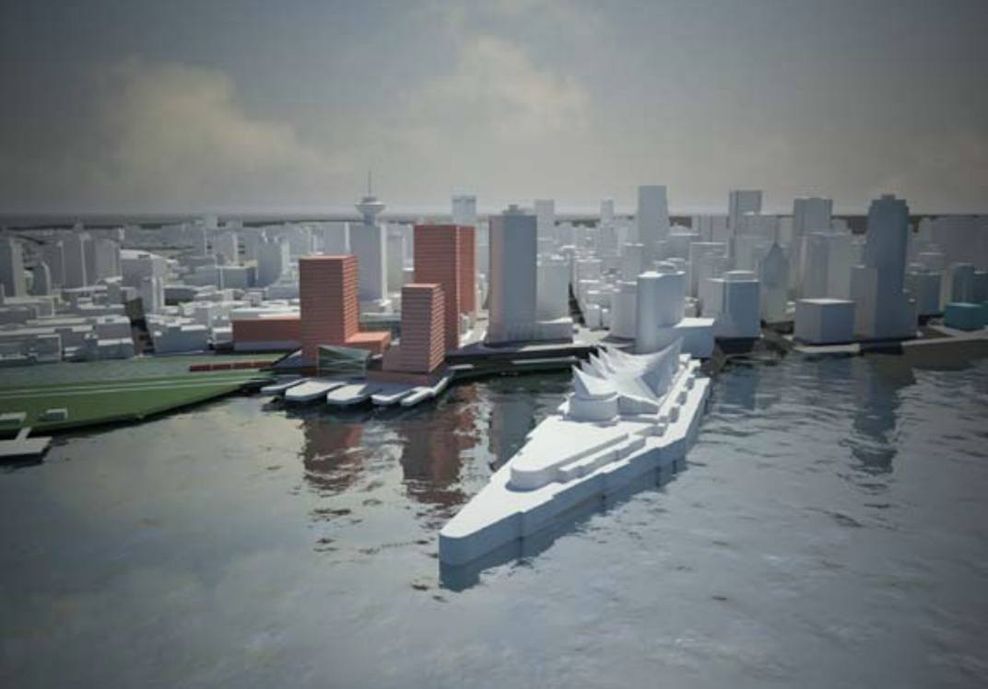
2009 artistic rendering of the Central Waterfront Hub Framework area in downtown Vancouver. (City of Vancouver)
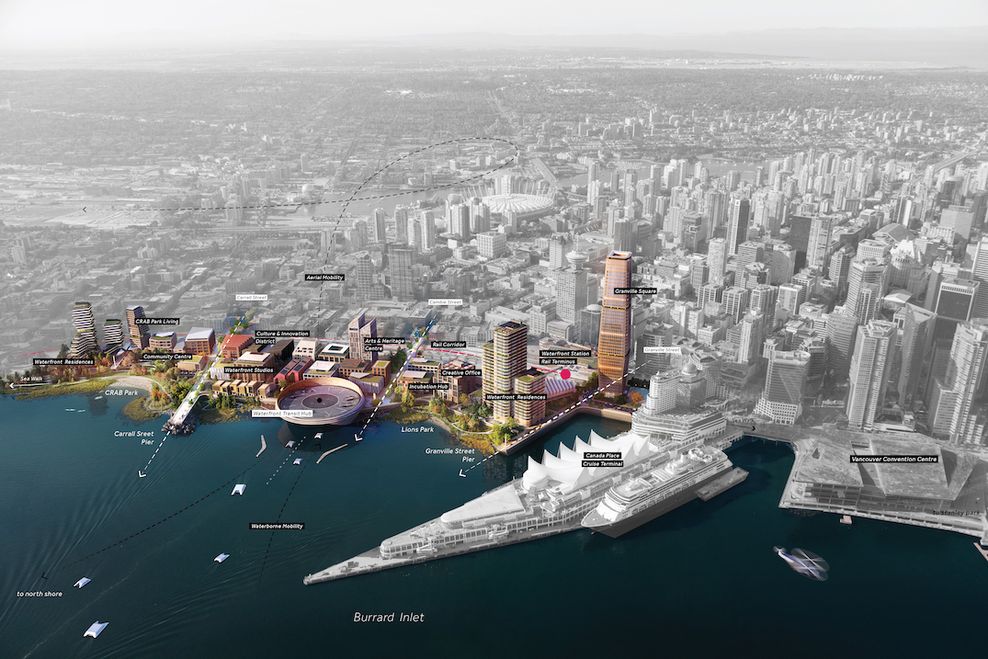
Unsolicited concept for the Gastown railyard on the Central Waterfront of downtown Vancouver. (Farrells/Arup)
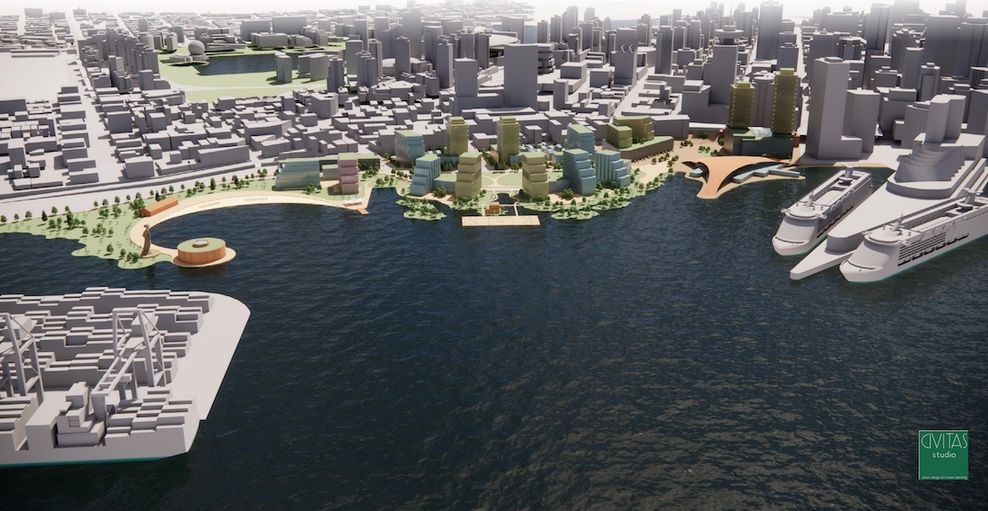
Unsolicited concept for the Gastown railyard on the Central Waterfront of downtown Vancouver. (Civitas Studio)