
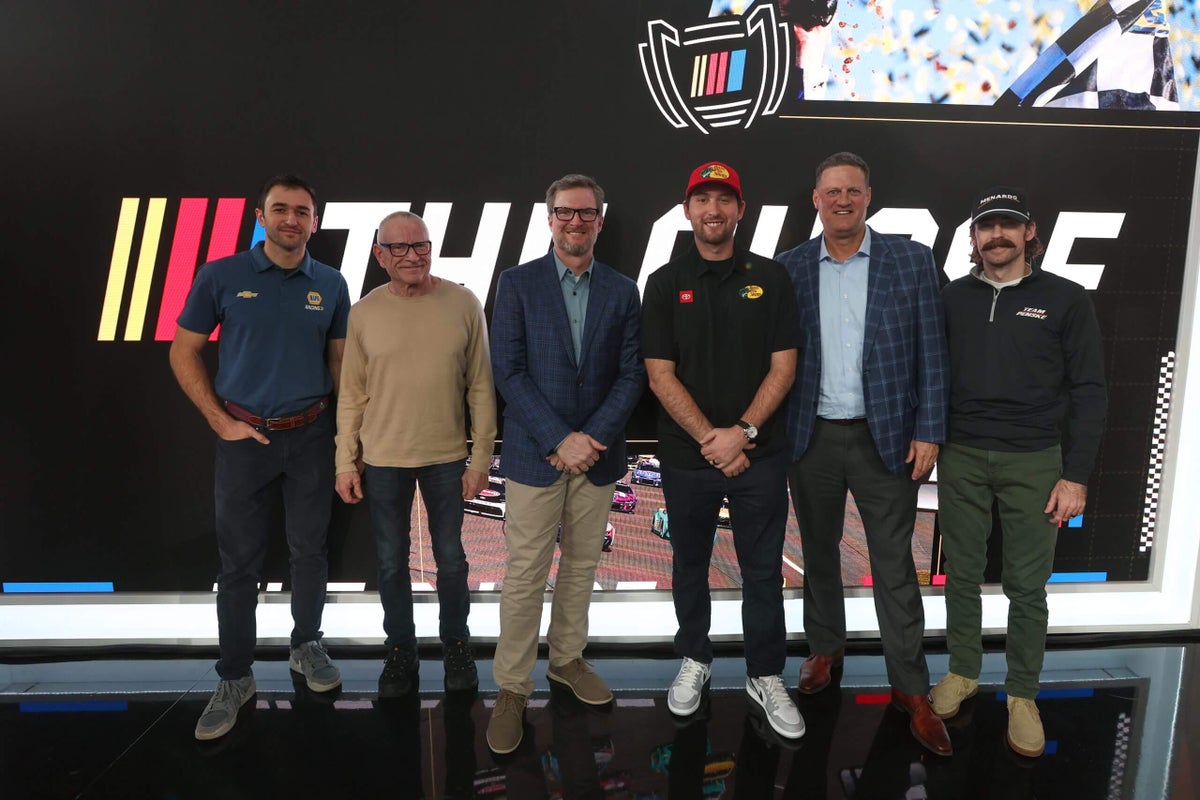
CONCORD, N.C. — NASCAR’s long-awaited championship format unveiling took place on Monday afternoon, with a return to the old 10-race Chase for the NASCAR Cup.
The revamped system is simple to explain: After 26 races, the top 16 drivers in the point standings will be reseeded and compete in a 10-week championship; whoever has the most points at the end wins the title.
Some of NASCAR’s biggest names were on hand for the news conference and post-announcement breakout sessions on Monday. Here are some highlights from their reactions.
NASCAR Hall of Famer Mark Martin, the leading advocate for eliminating the playoffs altogether, on anyone who might be upset he settled for a 10-race championship instead of 36:
Try a four-race round instead — that’s what I was sure we were going to get. That’s what the industry really wanted. And because we fought, we got something that really will work, something that will crown a super-fast, really consistent champion.
For me and those fans I represent, a four-race elimination playoff wasn’t going to fix much. It would help, but it wouldn’t fix much. This really fixes a lot. This is a win. Yeah, 36 would have been great, but this is great.
I look at it like the art of the deal. You go for it all and you go hard, and then maybe you get more than four races. And we did. The fans that don’t understand weren’t in those (committee) meetings and didn’t know how strong everyone in those meetings believed that playoffs were critical, that eliminations were critical. That’s what those fans were fighting against, and that’s what I was fighting against.
It’s a miracle we came this far, because honestly, NASCAR never listened to me when I raced. They listened to a few people, but it wasn’t me. So for me, it’s the biggest win I’ve ever had with NASCAR.
NASCAR Hall of Famer Dale Earnhardt Jr., on his level of surprise over NASCAR’s final decision:
I was shocked. This is as close as you can get to 36 while still having sort of a Chase. So I’m happy about that.
I had grown very tired of what we were doing, and as somebody who loves (NASCAR) very much, I was having a very hard time going forward with what we were doing. I want to be drawn like a moth to a flame to this sport every single week. I want to be lured into tuning in, even when I’m not working (in the TV) booth, to see what happens, who has a good day and who has a bad day, who puts himself in a hole, who digs themselves out.
Honestly, the way we were doing it, it was allowing me to take a couple weekends off and check in later, see the highlights on Tuesday or whatever. And I didn’t like that. I didn’t like that feeling. So I’m hoping this brings some consistency in my passion to follow it. I’m thankful, man. This is awesome.
Chase Elliott, 2020 NASCAR Cup Series champion:
They asked me if I wanted to come do this (news conference). I said, “Well, what is (the format)? I’m not coming unless I like it, unless I actually want to endorse it,” because I don’t want to sit here and lie to y’all about what we’re doing and tell you how great it is if I don’t really feel that way.
I’m genuinely proud to be a part of it, proud of the change. It’s a great compromise. I’m looking forward to not talking about it and talking more about the racing, and celebrate whoever wins it at the end of the day. Because we should talk more about the champion and the job he or she and their team have done, rather than complain about the format.
I think 16 (drivers) is too many. The 10 (in the original Chase) was a really good number back when they did it; it was really hard to get into that top 10. … But like Mark said, you’re not going to get everything you want. And I do think this was a great piece of middle ground for us to land in and have everybody as happy as we can, and hopefully just be able to focus on what matters.
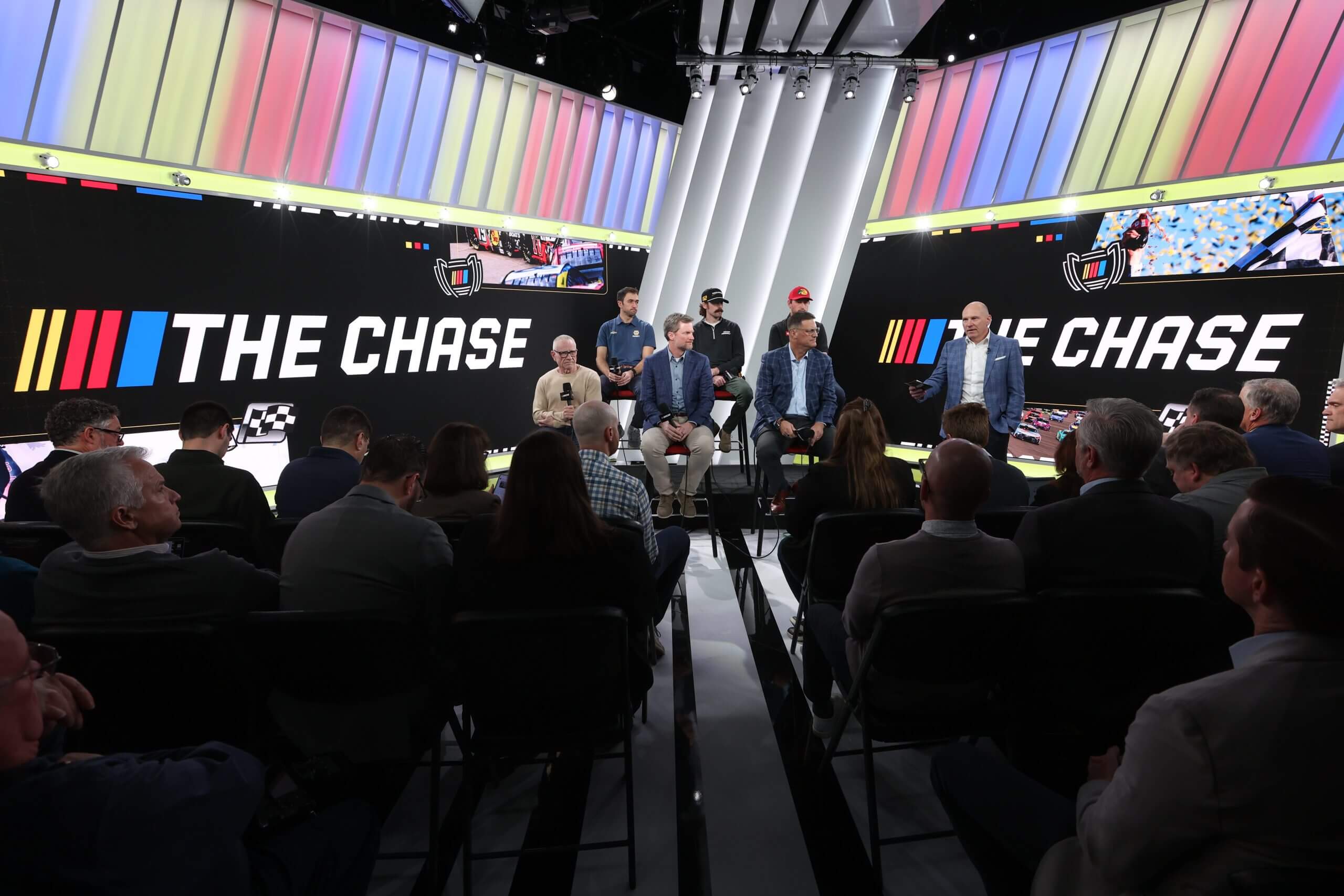
“They asked me if I wanted to come do this,” said Chase Elliott (back left). “I said, … ‘I’m not coming unless I like (the format).’” Elliott called the Chase a “great compromise.” (David Jensen / Getty Images)
Ryan Blaney, 2023 NASCAR Cup Series champion:
Sometimes we all get grief about over-aggressiveness (because) sometimes you get put in these situations where it’s a win-and-move-on type scenario (in the old format). It’s going to clean up a lot of the racing and get back to the purity side of it, to where it is a little bit more of the beautiful art form I grew up loving.
I am a huge fan of it. I appreciate NASCAR for listening. It’s just fun to be a part of it. I look forward to next year, and consistency is going to be a massive part of it. I don’t think you’re going to get guys who get out and say “good points day.” It’s still going to be winning as a huge product of it because of the increase in the winner’s points (from 40 to 55). I hope everyone is as excited as we all are to be a part of it.
Chase Briscoe, Championship 4 driver in 2025, on NASCAR eliminating the win-and-in qualifying:
It makes it more similar to the people who won the 36-race (format). Because if you have win-and-you’re-in, it doesn’t matter how you do in the other 25 races in the regular season.
I’ve been on both sides of it. I won the third race of the year, and not that you’re on cruise control, but if you didn’t win the race that day (after the first victory), it really didn’t matter. And then I’ve been on the other side where I had no chance to make it in, then I go to the final race and win and now all of a sudden, you’re in the playoffs.
I like the fact it’s not win-and-you’re-in because now it really takes the season as a whole. You have to be good every single week, and that’s what James (Small, his crew chief) and I were talking about this morning. Now, DNFs (races in which a driver did not finish) are extremely significant, even in the regular season, because the playoff seeding for the Chase, you really need to be in the top five or six to put yourself in a really good position. So it legitimately makes every race important all season long. And from a competitor standpoint, I like that.
NASCAR president Steve O’Donnell, on trying to win back fans who may have been turned off by the previous title format:
We think it’s a good compromise. At the end of the day, it’s going to be all about (whether we) are putting on great races that people want to tune in and go and see. Do they care about our drivers? Are we promoting the heroes that they are?
We were talking in the past (format), if you go to Bristol, Ryan Blaney wins the race. Chase Briscoe finishes 18th but makes the cutoff. The story was all about the 18th-place finisher instead of the winner. Long-term, that wasn’t good for us.
We wanted to build heroes. It’s hard to win these races. It’s hard to be in the top 10. It’s really important for us to get back to these storylines. We think the fans will come with us.
We’ve got work to do on this. It’s not lost on any one of us at NASCAR. We have talented people who are hungry to get back to where we were. We’re going to work our a— off for the industry to deliver to our race fans.
Justin Marks, Trackhouse Racing owner, on the impact this will have on his driver Shane van Gisbergen (who made the playoffs with the win-and-in system last year):
All in all, I think this is the 100 percent right move for NASCAR and the sport. It rewards wins still with the larger haul of points, but also the consistency of a champion and the requirement to deliver down the stretch when we close in on the season finale.
Certainly, a big reason SVG came into his Cup ride so quickly was the championship format, but more importantly, he’s in the car because he’s a world-class racing driver. He showed huge improvement on the ovals towards the end of 2025, so even with this new Chase, I still want him in the 97 car as much as ever. I believe in his ability to contend for the 16 spots after the regular season. So no real issues here at all.
Tyler Reddick, 2024 Championship 4 driver:
Some drivers would have loved to have seen it go all the way back to what it was a long time ago (with a 36-race format). But directionally, it’s a win.
For me and my approach and how I like to race, as much as it seems like I take all the big risks and throw it all away sometimes, being mindful of the season-long grind is something I’ve liked.
Kyle Busch, two-time NASCAR Cup Series champion under the elimination format:
I thought we got away from (the Chase) for some reason or another, but not really sure what that is; I’ve got short-term memory loss. So hopefully it’s better and people like it.
I remember when we had the Chase format, getting wrecked once or twice, you’re eliminated. You have no chance at a championship. With wrecks being a whole heck of a lot more these days of people running over people, maybe it’ll keep it even because everybody is getting wrecked in the final 10.
I feel like the last two years, we were knocked out of the bubble because of winners behind us that maybe wouldn’t have been there otherwise. So yeah, I feel like it gives us an opportunity to talk about 16th — but there’s no reason why I need to be talking for 16th.
Joey Logano, three-time NASCAR Cup Series champion (all under the elimination format):
There’s no doubt it’s very different. You just have to kind of go back to the drawing board and do something else. That’s fine. I don’t really care. Personally, I was one of the rare people that liked the old one just from a fan perspective. I enjoyed it, but if the majority doesn’t like that, then sure, we’ll change it and we’ll go race another way, and that’s OK with me, too.
Looking at it, if you’re 12th or so going into the playoffs, I don’t think you can win it from that far back. You’re going to be 70-plus points back, and you’re going to have to make that up against the best cars in 10 weeks. Boy, that’s going to be tough. That’s going to take a lot to make that happen. … So that just tells me you’ve got to be pretty solid throughout the regular season to make sure you’re within that top five or so when the playoffs start. The game has changed.