

Listen to this article
Estimated 4 minutes
The audio version of this article is generated by AI-based technology. Mispronunciations can occur. We are working with our partners to continually review and improve the results.
Female family physicians in Ontario spend 15 to 20 per cent more time with patients than their male colleagues for the same pay, a new study suggests.
In a news release Tuesday, the Ontario Medical Association said the quantitative study — which surveyed 1,055 family physicians in active practice across the province — found female family doctors spend nearly four minutes longer per appointment across almost all commonly billed services.
“A female physician would have to work a day that’s two hours longer than a male counterpart to get the same income,” Boris Kralj, one of the authors of the research, told CBC Toronto Wednesday. “That results, obviously, in overwork and burnout.”
The study, conducted by researchers at McMaster University and published in the Canadian Family Physician journal, has a margin of error of +/- 3 per cent. Survey respondents self-reported their service times, which the study notes could mean there are under or overestimations, recall bias or measurement error.
A total of 20 services were analyzed, and the Papanicolaou test, which is part of a gynecological exam, was the only service where time spent was the same between female and male family doctors.
Kralj said female physicians tend to have more empathetic communication styles that help to build trust.
“[Patients] expect to get more time with the female physician often and will present problems that they feel a female physician will give them more time to discuss: psychosocial issues, social issues,” he said.
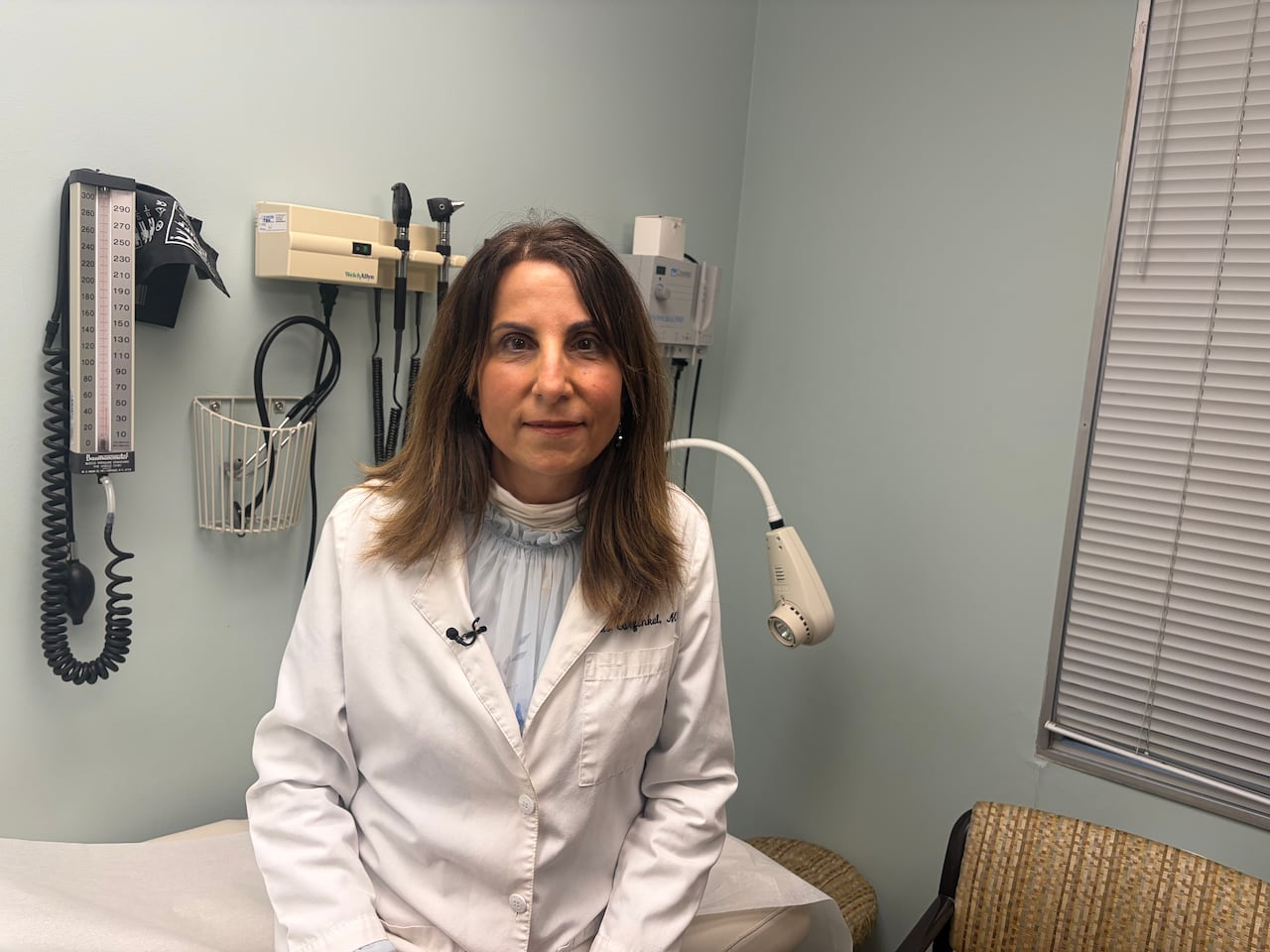 Dr. Iris Gorfinkel, a Toronto family doctor and clinical researcher, said emotional support for patients often comes in the form of extra explanations, positive words of affirmation, hand-holding and eye contact. (Naama Weingarten/CBC)
Dr. Tara Kiran, a family physician and research scientist at St. Michael’s Hospital, said patients who are women will often look to have a physician who is also a woman.
“They actually are looking for someone often to empathize with them even more and take more time with them, providing, for example, emotional support,” she said. “We know from other research that women are more likely to take care of patients who are more medically and socially complex.”
‘Medicine doesn’t come just in pill form’
Dr. Iris Gorfinkel, a Toronto family doctor and clinical researcher, said that emotional support often comes in the form of extra explanations, positive words of affirmation, hand-holding and eye contact.
“That makes a tremendous difference,” she said. “We need systems that recognize those needs.”
For Gorfinkel, the traditional forms of medicine hold the same level of importance as the unorthodox methods in which female family physicians make their patients feel heard and cared about.
“That medicine doesn’t come just in pill form or surgical form. It comes in that connection,” she said. “I don’t have regrets in spending time with patients. The regret that I have is the time that I cannot spend with them.”
For Kiran, despite this important work, the gender wage gap continues to be an issue.
“There are many factors at play underlying why this might be. And I think this study gives just one piece of the puzzle,” she said.
The OMA’s research comes after a 2021 Journal of the American Medical Association study that analyzed data from more than 30,000 physicians and found a 13.5 per cent pay gap between female and male doctors.
Kralj said that’s why the payment system must change. He suggested a tiered system, such as the one adopted in Alberta last year, which would see doctors compensated for their time, rather than the number of consultations they conduct or the services they provide at each appointment.
“We need to move away from focusing on just throughput and volume, to quality and time,” Kralj said. “The payment systems need to be modernized.”
CBC Toronto reached out to Ontario’s Ministry of Health for comment. This story will be updated with its response.