
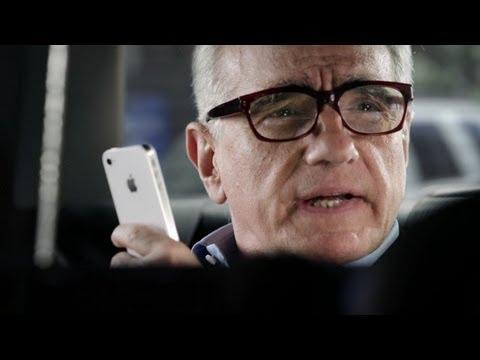
Google’s Gemini Wins Apple AI Partnership. Google is also going to be on your iPhone, and on TV. Voice is the new operating system. Geolocation, outward facing cameras, AI with a semantic understanding of the world and a continuous connection to the Internet creates what Siri has always been pretending to be, a true personal agent that can do all the things Martin Scorsese did in that commercial for the iPhone 4S 13 (!!!!) years ago. “After careful evaluation, Apple determined that Google’s Al technology provides the most capable foundation for Apple Foundation Models and is excited about the innovative new experiences it will unlock for Apple users,” Google and Apple wrote in a joint statement. If Apple can get the wearable AI part right, they are going to be more valuable than Nvidia again. Apple and Google shareholders should not pop the cork yet. Jony Ive and Sam Altman may surprise everyone with the definitive AI wearable.
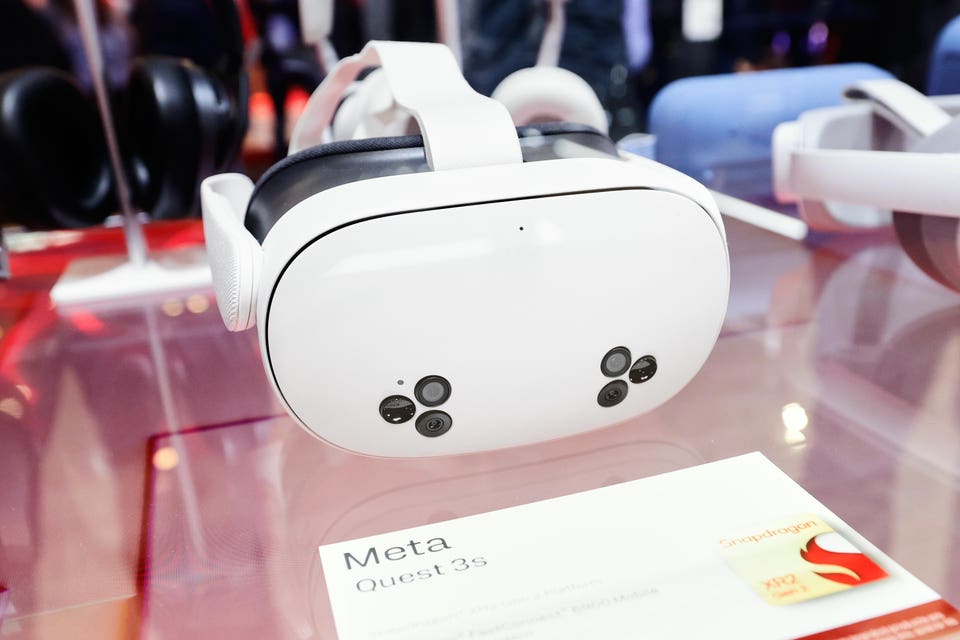
The Meta Quest 3s, the standalone virtual reality headset developed by Reality Labs, a subdivision of the American company Meta Platforms, is exhibited at the Qualcomm pavilion during the Mobile World Congress 2025 in Barcelona, Spain, on March 5, 2025. (Photo by Joan Cros/NurPhoto via Getty Images)
NurPhoto via Getty Images
Meta is laying off 10% of the Reality Labs team, apparently hitting content and owned developer studios particularly hard. Meta appears to be shifting its focus to wearables. Adios, Horizon. Supernatural, too. You want to know why? Because gamers like consoles better, and women and teens like the mobile, private smartphone. Unless we’re going to have another pandemic, VR’s killer apps training and simulation. This is from me. I love VR. Why aren’t I using it as much as I used to? Because no one is. It’ s not cool. It never became a thing. I guess things are not so bad that people would prefer the world of “Population One” to physical reality. Until then Meta is the Sega Genesis of VR. An also-ran to the Playstation.
Project Aura under wraps.
Charlie Fink
Xreal Raises the ante with another $100 million raise. It’s not easy to get the first date with Google’s first AndroidXR glasses, Aura, but it’s non-exclusive, of course. In exchange for the early action, Xreal will be in the pole position. But that doesn’t always work. Look what’s happening in VR. Maybe anything with birdbath optics is going to stay niche. Xreal’s investment is coming from “supply chain partners” and undisclosed parties, CEO Chi Xu told Bloomberg. The raise brings the company’s total outside funding to about $433 million and its valuation above $1 billion. The valuation seems low. The alleged AndroidXR Aura was under wraps at CES. Literally on a pedestal in the XReal booth, in a glass case and draped with a black cloth.
Created with Higgsfield Cinema Studio.
Higgsfield
Compare Xreal to another big funding story, Higgsfield. The foundation model for cinematography technology, camera control, and special effects closed an $80 million Series A extension, bringing its total Series A financing to more than $130 million and valuing the company at over $1.3 billion. CEO Alex Masharbov was head of AI for Snap. He was on the podcast. Alex’s company is three years old. Chi has been at this for almost a decade. Eight years.
LAS VEGAS, NEVADA – JANUARY 06: People visit Rokid booth during the Consumer Electronics Show (CES) 2026 on January 6, 2026 in Las Vegas, Nevada. The Consumer Electronics Show, the largest and most influential technology trade show, kicked off in Las Vegas on January 6. (Photo by Zhang Shuo/China News Service/VCG via Getty Images)
China News Service via Getty Images
Rokid’s latest smartglasses impressed reviewers at CES. They’ve come a long way for a company that started with crowd funding. Rokid had a very, very big presence on the show floor, with 10’ tall fiberglass glasses as its centerpiece, which must have cost hundreds of thousands of dollars. Reviewers praised the lightweight design that delivers core functionality like notifications, voice assistance, camera capture and essential AI apps while remaining comfortable for extended wear. Reviewers noted the glasses handle tasks reliably and integrate useful everyday features, even if the visual output is a tiny monochromatic display. Rokid also unveiled its display-free AI smartglasses “Style,” a voice-first wearable weighing just 38.5 grams and compatible with prescription lenses that support multiple AI engines, including ChatGPT and DeepSeek, rather than being tied to a single model. They integrate services like Google Maps and Microsoft AI translation and use a dual-chip architecture to enable 12 hours of typical battery life. For the first time, Rokid is selling Style online, starting January, with a price of $300, to compete with Meta’s RayBans and Oakleys. .
This column has a companion, The AI/XR Podcast, hosted by its author, Charlie Fink, and Ted Schilowitz, former studio executive and futurist for Paramount and Fox, and Rony Abovitz, founder of Magic Leap. This week our guest is co-founder and CEO of Moviefloai.com, a new consolidated production pipeline for AI shorts, ads, and marketing content. We can be found on Spotify, iTunes, and YouTube.