
Published on
16/01/2026 – 7:01 GMT+1
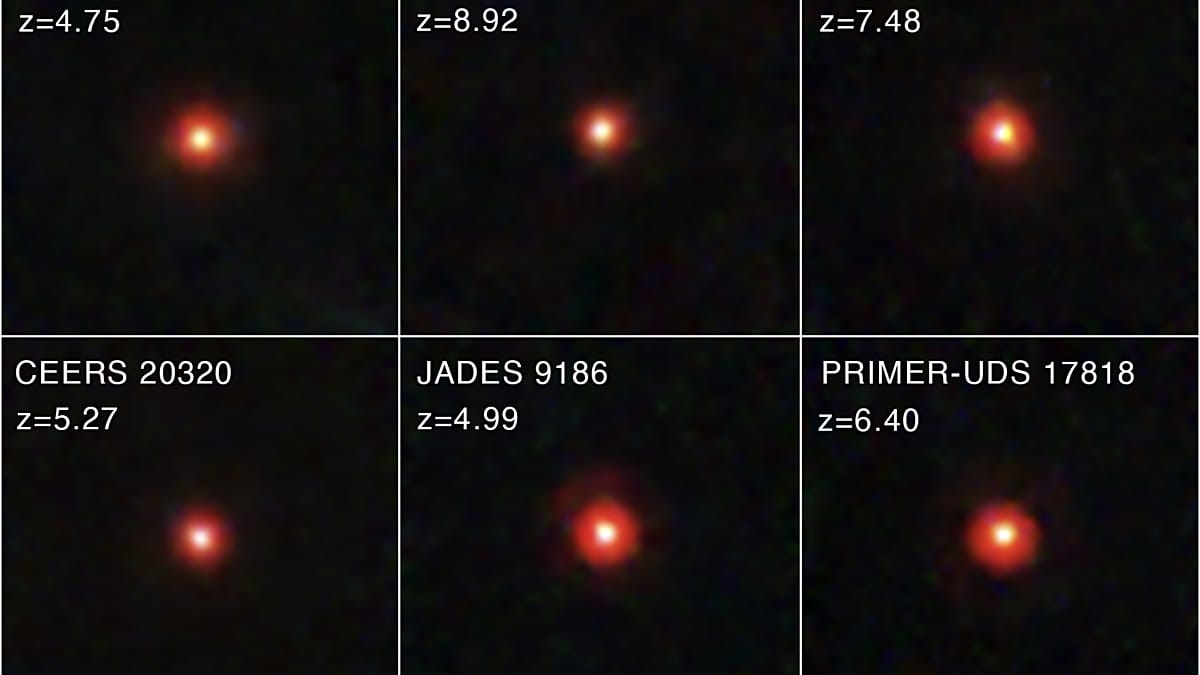
Astronomers say they have finally figured out the mysterious “little red dots,” first spotted in 2022 in images from NASA’s James Webb Space Telescope.
The objects puzzled researchers because their unusual light made it unclear what was powering them.
Early studies suggest the little red dots are extremely compact, distant galaxies and they were seen at very early times in the universe’s history, which become much rarer as the universe evolves.
The new analysis suggests the red dots are actually young supermassive black holes, a type of gigantic black hole, wrapped in gas.
Using James Webb’s advanced instruments, scientists examined how light from the galaxies is spread across different colours.
They found signs that the light is being scattered by dense, ionised gas, a process that can occur only very close to a black hole that is actively pulling in material.
As gas falls towards the black hole, it heats up and shines through the surrounding cocoon of gas, producing the red glow seen by the Webb Telescope.
The black holes are buried in dense material and therefore emit very little X-ray or radio radiation. This helps explain why they have only been seen by the Webb telescope.
The new study suggests the black holes have masses between about 100,000 and 10 million times that of the Sun.
While still enormous, they are far smaller than scientists previously thought and are the lowest-mass black holes known at such early times in the universe.
The study was published in the journal Nature.