
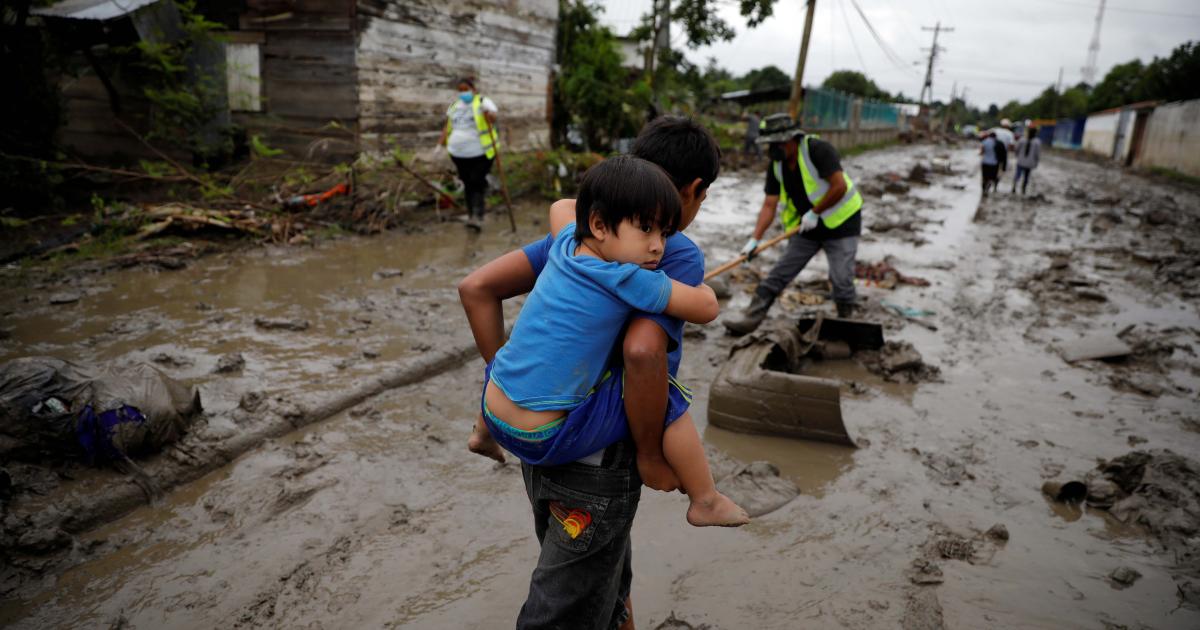
Climate change is an expensive problem. According to the insurance and risk management firm Aon, economic losses from natural disasters worldwide amounted to $313 billion in 2022 and $380 billion in 2023. The World Bank reported in 2019 that in low-income and middle-income countries, weather-related service disruptions and poor maintenance of infrastructure cost households and businesses between $390 billion and $647 billion a year. As global average temperatures continue to rise, the financial services company S&P Global estimates that annual losses from physical climate risks, including extreme weather and sea-level rise, could reach 3.2 to 5.1 percent of world GDP by 2050.
Investment in early warning systems, infrastructure improvements, alternative water storage, and drought-tolerant crops can lessen the pain. The Global Commission on Adaptation, an initiative started by two international policy organizations, has found that every dollar invested in such climate-resilience measures yields between $2 and $10 in avoided losses and economic gains. The World Resources Institute, a U.S.-based nonprofit organization, puts the median yield even higher: a 2025 study of climate-resilience projects in 12 countries around the world found over $10 in benefits for every dollar invested over a ten-year period.
And when the United States invests in climate resilience abroad, it generates benefits at home. For years, Washington has funded such programs through the U.S. Agency for International Development (USAID) and other federal agencies, making modest investments to mitigate the effects of overseas disasters. This aid has helped keep important supply chains intact and valuable markets open, reduce migration pressures, and prevent China from gaining more ground in developing countries, effectively serving as an inexpensive insurance policy for American prosperity, security, and influence.
The Trump administration has slashed these foreign assistance programs in the name of reducing costs. It cut over 80 percent of USAID’s 6,200-plus grants and contracts, including almost 100 percent of those that have something to do with climate. But Washington’s retreat from international climate-resilience efforts is a false economy. Any initial savings could quickly be erased as disasters worsened by climate change drive price increases, displace people who may show up at U.S. borders, create conditions that criminal and extremist groups exploit, and enable China to expand its footprint—turning a supposed budget cut into a costly mistake.
INVEST NOW
For decades, American leaders have recognized that investments in international development pay for themselves. In 2007, Secretary of Defense Robert Gates called for a dramatic increase in spending for foreign assistance to help address local problems before they become crises that would demand U.S. military action. In 2013, Jim Mattis, at the time the general in charge of U.S. Central Command, made the case for international engagement in blunter terms, opining that if the State Department were not funded fully, the U.S. Defense Department would ultimately “need to buy more ammunition.” The 2021 National Intelligence Estimate on Climate Change further underscored the point that climate change creates problems for Washington in the form of geopolitical tensions and instability abroad.
Modest outlays for climate-resilience projects are all the more important as continued greenhouse gas emissions make weather increasingly erratic. According to the Global Commission on Adaptation, just 24 hours of advance warning of a hazardous event can reduce damages by almost 30 percent. An investment of $800 million in early warning systems would avoid $3 billion to $16 billion in losses every year, a double-digit return, in addition to the lives saved. And according to the International Federation of the Red Cross, climate-resilient development could reduce the number of people needing humanitarian assistance because of weather disasters from 100 million in 2019 to 68 million by 2030 and just ten million by 2050.
Under prior administrations, U.S. agencies invested in climate risk reduction programs. In Malawi, for instance, USAID and NASA worked with the central government, as well as regional and local institutions, between 2019 and 2021 to strengthen an early warning system for floods. The U.S. agencies helped integrate satellite data into an existing UN-supported system that used sensors to monitor river levels upstream of flood-prone areas. After the updates, what had once provided only a few hours’ notice of a flood gave up to two weeks’ advance warning. When Tropical Storm Ana and Cyclone Gombe struck in 2022, local authorities were able to send text-message alerts to vulnerable communities three to four days in advance. According to the Malawian government, the early preparations enabled by those warnings prevented $40 million in losses. The American taxpayer supplied less than $100,000 for the technology transfer to set up this system and less than $1 million a year to operate a regional hub staffed by local hydrometeorologists.
Economic losses from natural disasters worldwide amounted to $380 billion in 2023.
A similar effort in Central America also yielded large payoffs. After Hurricane Mitch, a Category 5 storm, killed 10,000 people in 1998 in El Salvador, Guatemala, Honduras, and Nicaragua, USAID, NASA, and other government agencies helped create a regional flood monitoring network. NASA provided real-time monitoring of floods and forecasting of floodwater movement within 24 hours of rainfall. Hydroelectric dam operators in Honduras used this information to manage the release of dammed water to prevent flooding downstream. When Hurricanes Eta and Iota—both Category 4 storms—hit in 2020, the system was credited with a dramatic reduction in loss of life. The Red Cross was also able to use the flood information to inform rescue efforts in places where the organization had no previous experience, and fatalities across Central America totaled fewer than 250.
Early warning systems are particularly vital in places where disasters have become routine. In Bangladesh, where much of the land sits barely above sea level and is covered with a lattice of rivers, climate change has made flooding more frequent and intense. The U.S. government invested in early warning systems designed to help local authorities incorporate satellite data into their forecasting systems, and in 2022, USAID and NASA provided timely and location-specific weather advisories to 250,000 farmers across the country. Those advisories can determine whether a family harvests a crop before disaster strikes or loses it to rising waters. A 2023 USAID study estimated that the agency’s climate information saved these Bangladeshi farmers an average of $467 each, a significant amount in a country where the average annual income is below $3,000.
International climate assistance delivers the most immediate benefit in lives saved and economic losses avoided in the countries where disasters occur, but the United States saves money, too. For one, investments in climate resilience reduce demand for humanitarian aid. In President Donald Trump’s second term, the United States has continued to pledge disaster aid, albeit at a much lower level than before. After the Category 5 storm Hurricane Melissa hit Jamaica, the Bahamas, Cuba, and Haiti, for example, Washington announced millions in direct aid to the countries affected. In December 2025, the administration also announced a $2 billion pledge for delivery of humanitarian assistance through the UN. If the United States were to resume its investments in disaster risk reduction, it could keep future such bills as low as possible.
SAVE LATER
International climate-resilience efforts offer secondary savings for the United States, too. These programs help keep farmers who lose their harvest because of climate change from switching to illicit crops such as coca, which can end up in drugs destined for the U.S. market. They also help people preserve their livelihoods, making it less likely they will have to leave home after a disaster and try to migrate to other countries, including the United States.
In Central America, droughts, storms, and extreme heat—all exacerbated by climate change—have eroded rural livelihoods and pushed families to leave the region. A 2023 study in Scientific Reports found that droughts during the growing seasons in El Salvador, Guatemala, and Honduras between 2012 and 2018 coincided with a 71 percent rise in emigration to the United States. According to the Inter-American Development Bank, extreme heat was a particularly strong predictor of migration for Salvadoran farm families, and households lacking access to credit were three times more likely to migrate under these drought and heat conditions.
Investment in climate-resilient agriculture reduces these pressures. Through Feed the Future, a bipartisan initiative to fight global hunger, poverty, and malnutrition that operated from 2010 to 2025 across 50 countries in Africa, Asia, and Latin America, USAID supported the adoption of drought- and disease-tolerant crops, efficient irrigation, and animal and plant disease prevention. In Honduras, USAID worked to address coffee rust—a plant disease exacerbated by warmer, wetter weather that can cause crop loss, which in turn can motivate a farmer to migrate—and helped 16,000 farm families and agribusinesses adopt technologies to increase harvests in 2021. That same year, in Guatemala, USAID created 30,000 jobs across the food value chain, generated $76 million in agricultural sales, and drove an additional $10 million in public and private financing into its projects. Across all its programs, Feed the Future helped 34 million people in 2024 alone to improve agricultural practices, access financing, and reduce their farms’ climate risk, giving them less reason to leave home in search of better conditions.
Investments in international development pay for themselves.
Other Feed the Future projects benefited the United States in various ways. In 2021, for instance, USAID worked with the Department of Agriculture to stop the transmission of African Swine Fever, a highly contagious disease whose geographic spread is increasing with rising temperatures, among pigs in Hispaniola. Those efforts were pivotal in preventing transmission to pigs in the United States, where the outbreak threatened the multibillion-dollar domestic pork industry. Working with American companies, USAID also helped ensure that, even as climate change affects their crops, farmers abroad can continue to supply Americans with foods that cannot be grown in the United States, such as coffee, avocados, certain spices, cocoa, vanilla, and tropical fruits.
Many sub-Saharan countries are suffering major agricultural losses caused by climate change, making international trade in staples such as maize, wheat, and rice more volatile. In 2023, USAID and the Bill & Melinda Gates Foundation worked with more than 80 African seed companies to distribute drought-resistant seeds to seven million farming families cultivating 20 million acres. The seeds boosted crop yields by an average 25 percent, cut food costs for about 44 million people, and added around $1.5 billion to the African continent’s GDP in one year. Farmers who also adopted climate-resilient techniques such as precision irrigation and cover crops saw their incomes rise by more than 20 percent. This kind of protection for agricultural markets can reduce food price shocks, which can lead to political unrest, food insecurity, and ultimately migration.
Foreign assistance in climate resilience also helps reduce opportunities for terrorist organizations and other criminal elements to recruit. Armed insurgents find it easier to enlist new members when harvests fail and livelihoods vanish. In the Sahel, al-Qaeda affiliates and Islamic State (or ISIS) militants prey on communities that lose their farms to drought. Reducing the damage of extreme weather can stem extremist recruitment and criminal activities such as human trafficking. In 2021 and 2022, USAID worked with the World Food Program and ARC Replica, an insurance initiative launched by the African Union agency African Risk Capacity, to help the governments of Mali and Burkina Faso purchase drought insurance policies. When devastating droughts happened in 2022 and 2023, those policies triggered payouts of $15 million to affected farmers in Mali and $7 million in Burkina Faso, supporting more than 434,000 people. For less than $1 million out of USAID’s budget each year, the program likely helped protect people in the region from criminal groups that feed on hunger and despair.
Similar preventive investments have paid dividends in the Middle East. In Basra, the economic hub of southern Iraq, years of rising temperatures and declining water quality fueled public anger and sparked violent protests, including riots in 2018 that shut down much of the city. USAID stepped in to equip the Basra Water Management Committee with data systems and training to track salinity, manage resources, and improve water distribution. The result was better access to clean water, greater agricultural productivity, and fewer local conflicts—all for less than $1 million. Resilience efforts such as this can bolster fragile states and reduce the need for humanitarian intervention. A few million dollars spent early can help the United States avoid spending hundreds of millions later when state failure may require emergency relief, a counterterrorism response, and refugee assistance.
BILLS COME DUE
Just because the United States has cut its climate programs does not mean all international adaptation efforts have ceased. In many cases, China has stepped in, spending the past few months positioning itself as the provider of choice for early warning systems and climate information. Across Africa, Southeast Asia, and the Pacific, Beijing is promoting solar farms, dams, and other projects under the banner of “South-South cooperation.” Such efforts are sorely needed, but when they are driven by China, they come with costs. Many of these projects include predatory lending conditions, contributing to soaring sovereign debt in developing countries and hampering long-term economic growth. With more debt to service, these countries have less money to spend on education, food subsidies, and fresh water supplies—all of which help prevent conflict.
And while Beijing’s offers of climate assistance make China an indispensable partner, Washington’s withdrawal makes it appear apathetic and unreliable. USAID spent more than $2 million on climate resilience in Mongolia in 2022; in March 2025, after Trump shuttered USAID, China launched a climate-resilience project in the country in cooperation with the International Federation of the Red Cross. The result is that in Mongolia, whose large copper deposits give it outsized geopolitical and economic heft, China has gained clout and the United States has lost it. Influence follows investment, and soft power tends to accrue to those offering solutions.
Slashing the United States’ international climate-resilience funding and decimating the institutions that deliver it is not fiscal prudence or putting Americans first. The small savings it produces are only temporary. The costs of these cuts will resurface both at home and abroad, be it in supply chain disruptions, migratory pressures, heightened security threats, higher disaster-response bills, or reduced diplomatic options as China binds other countries more tightly into its sphere of influence. The smarter course is to invest now—in the early warning systems that save lives, the seeds that secure harvests, the insurance that cushions shocks, and the diplomatic partnerships that keep countries stable and open to U.S. global leadership.
Loading…