
TL;DR
Nothing turned an influencer idea into a full-blown phone concept, complete with a 3D model and real-world cost estimates.
The design features a unique trifold form with three separate displays, allowing a streamer to view chat, gameplay, and metrics simultaneously.
While the bill of materials is ~$1,838, the total R&D to bring it to life is estimated at a staggering $55 million.
Imagine if a phone company really paid attention to its wildest customer ideas. That’s exactly what Nothing did. In a recent video, it took a suggestion from popular streamer IShowSpeed (like it recently did with YouTuber MrWhoseTheBoss) and turned it into a full phone concept, complete with a 3D model and a surprisingly high estimated price.
The video presents the project as a fun challenge rather than a product launch. And while you can’t buy this phone, the engineering behind it offers an interesting glimpse of what highly specialized smartphones could be like in the future.
This phone isn’t like most foldables. It has a special trifold design with three separate screens. Why three? For streamers, having more screen space is essential. You can keep Twitch and YouTube chats open at the same time without hiding your game or video. It’s a productivity powerhouse disguised as a phone.
Don’t want to miss the best from Android Authority?


The standout feature is its modular design. Modular phones have failed before, like Project Ara, but Nothing’s idea seems practical for this purpose. The third screen can be removed and used on its own or as a high-quality streaming camera. There’s also a magnetic ring on the back for attaching extra lenses.
Durability was engineered for chaos
Durability was the main focus for this project. Folding phones are known for being fragile, often breaking at the hinge or having weak internal screens. Nothing tackled this problem directly. The non-folding screen is made from sapphire crystal, and the frame uses TPE (thermoplastic elastomer) at the corners, which is the same impact-absorbing material found in military gear.
Fireproofing was also important because of Speed’s history. The team considered materials like carbon and glass fiber, but in the end, they chose Kevlar set in a heat-resistant epoxy.
A phone isn’t much use if it can’t stream. Speed wants to stream from every country in the world, which makes staying connected a big challenge. Professionals usually use large bonding backpacks, like LiveU units, to combine several cellular signals.
Nothing’s engineers said it wasn’t possible to fit a full professional bonding setup inside a phone. Their solution is a special USB-C dongle that supports USB 4. This $2 accessory lets the phone send the heavy encoding and network work to outside hardware when needed, so the phone stays fairly slim.
So how much would this Kevlar-wrapped, trifold, modular phone cost? Just the parts — including two Snapdragon 8 Elite processors, three batteries, and two titanium hinges — add up to about $1,838.50.
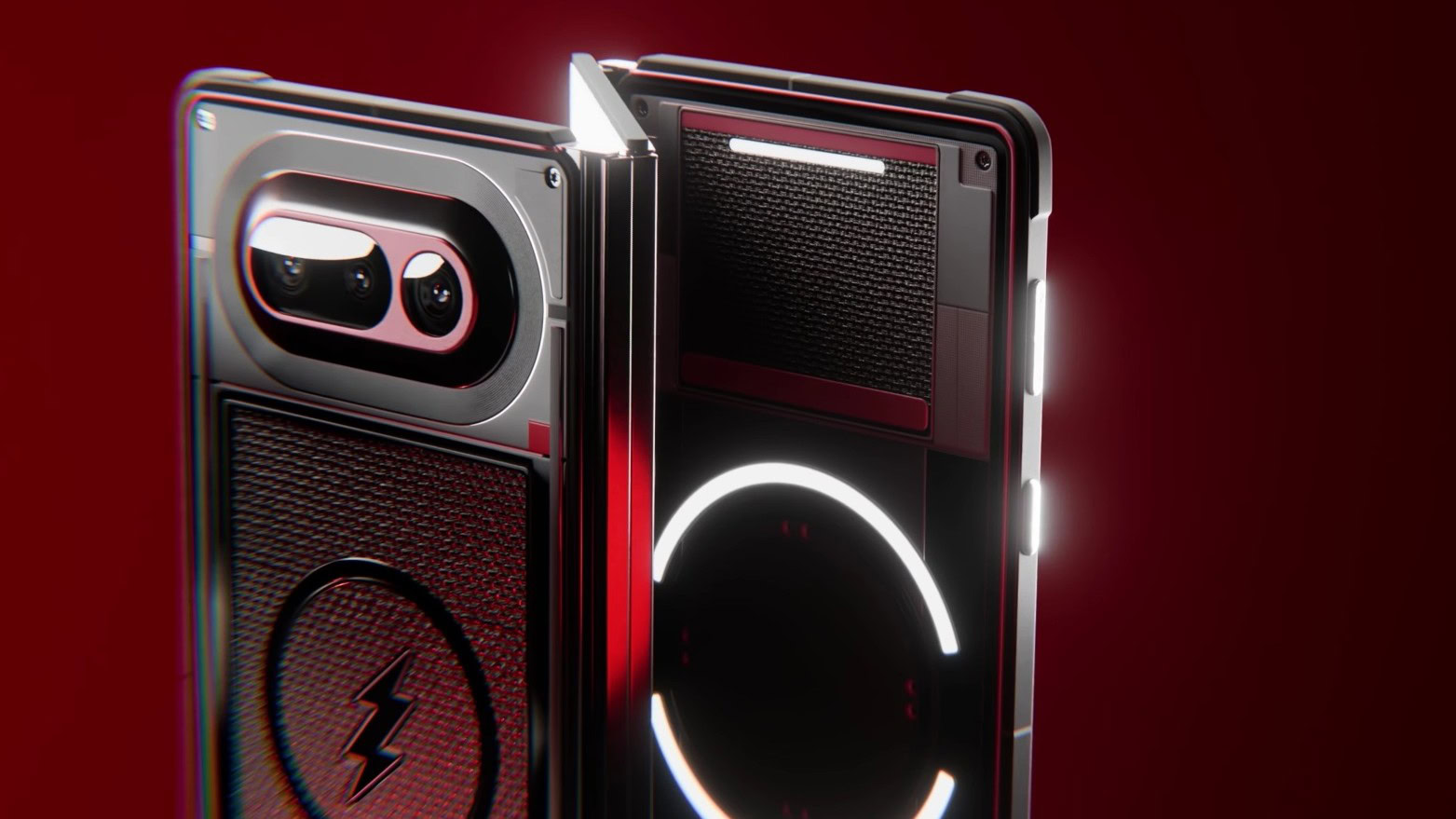
But that’s only the cost of the parts. When you add in the research and development needed to create this phone, the numbers get much higher. Nothing estimates it would take $50 million to develop the trifold platform, plus another $5 million for the modular camera system.
Nothing previously made similar conceptual phones with other creators — like MKBHD’s dream phone — pulling in parts from the Samsung Galaxy lineup and combining them with creative flourishes.
While we likely won’t see a Kevlar trifold on shelves soon, the push for better impact resistance and smarter multitasking tools is very real.
On a more practical note, there is one piece of technology from the video you can actually try. Nothing has teamed up with Subtle Computing to update the Ear (1) headphones. The new software helps pick up your voice and blocks out background noise much better than before.
Thank you for being part of our community. Read our Comment Policy before posting.