
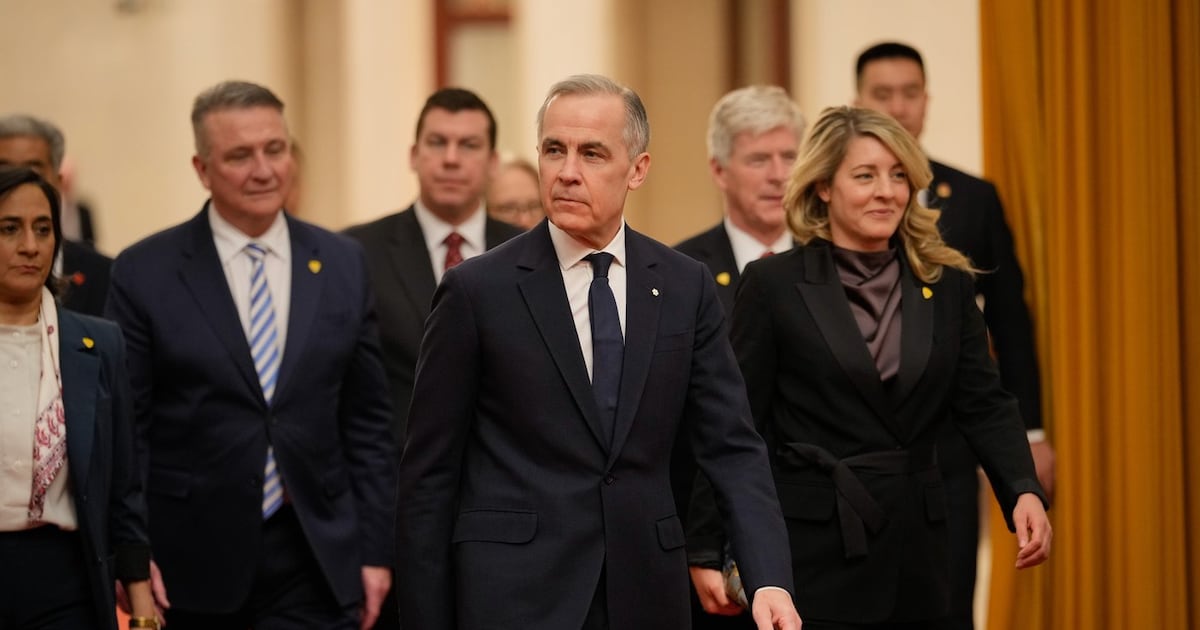
William Pellerin, partner and international trade lawyer at McMillan, joins BNN Bloomberg to discuss Prime Minister Carney reaching a deal with China on EVs.
Canada and China have reached a preliminary agreement aimed at reducing trade barriers, allowing a limited number of Chinese electric vehicles into Canada at lower tariffs in exchange for China easing duties on key Canadian agricultural products. The deal marks a potential thaw in relations after years of escalating trade frictions between the two countries.
BNN Bloomberg spoke with William Pellerin, partner and international trade lawyer at McMillan, about the scope of the agreement, its implications for Canada’s trade leverage and how it could affect relations with the United States.
Key TakeawaysThe agreement allows up to 49,000 Chinese electric vehicles into Canada at a 6.1 per cent tariff, replacing the 100 per cent duties imposed in 2024.China is set to reduce or remove punitive tariffs on Canadian canola meal, canola seed, seafood and pork, reopening access to a market worth billions of dollars annually.The volume of Chinese EVs represents less than three per cent of Canada’s auto market, limiting near-term disruption while testing consumer demand.Tariff relief for agriculture is expected to take effect March 1, though details remain unresolved for certain products, including canola oil.The deal signals a broader reset in Canada–China trade ties and carries added significance amid strained Canada–U.S. auto relations and upcoming trade negotiations. William Pellerin, partner and international trade lawyer at McMillan William Pellerin, partner and international trade lawyer at McMillan
Read the full transcript below:
ANDREW: The prime minister has reached a preliminary deal with China under which Canada will reduce those emergency tariffs imposed on Chinese electric vehicles. The agreement would allow up to 49,000 vehicles into the country at a tariff of just over six per cent, in exchange for China cutting duties on canola. Let’s get more from William Pellerin, partner at McMillan LLP. William, thank you very much for joining us. We’re only getting the outlines of the deal here, but it does appear that Prime Minister Carney is making progress on a longstanding sore point between Canada and China — electric vehicles.
WILLIAM: Yeah, that’s absolutely right. It really is threading the needle a little bit because, on the one hand, there are concerns about Chinese electric vehicles flooding the Canadian market. The U.S. is worried about this as well. On the other hand, Canada imposed 100 per cent tariffs on Chinese electric vehicles back in 2024, and China retaliated by imposing tariffs on a number of Canadian agricultural products, including canola, pork and seafood. It looks like a bit of middle ground has been found here between the prime minister and President Xi.
ANDREW: We have auto sales in this country of almost two million a year — about 1.9 million vehicles. So 49,000 vehicles is relatively small, really just a rounding error.
WILLIAM: Yeah, that’s right. It’s about three per cent, or less than three per cent, of the overall automotive market. Some in the auto sector may view this as potentially the start of something, particularly if Canadian consumers respond positively to these vehicles. Chinese electric vehicles offer low prices and good quality, and that could start to shift perceptions. That said, the hope is that Chinese producers will, over time, set up manufacturing facilities in Canada, with parts of the electric vehicle battery ecosystem moving here and creating Canadian jobs. That’s really the longer-term play.
ANDREW: You touched on this earlier — the Americans presumably won’t be happy to see Canada partially breaking ranks with them on electric vehicles.
WILLIAM: I think that’s a fair assumption. We’ll be watching closely for the U.S. reaction. Hopefully, the relatively low import volumes help manage that. At the same time, there’s already a major rift between Canada and the United States on the auto industry. We heard President Trump earlier this week say the U.S. doesn’t need Canada on autos. That relationship is clearly frayed, which makes the timing of this pivot toward China interesting. These are baby steps, but they’re particularly significant in the context of upcoming negotiations to renew the Canada–U.S. trade agreement.
ANDREW: The Chinese obviously want Canadian canola. They import billions of dollars’ worth every year, and cutting off shipments would hurt their animal-rearing industry.
WILLIAM: You’re absolutely right. There are only so many substitutes. We’ve already seen some substitution, with Australian product moving into China, which poses a threat to the long-term viability of Canadian farmers. Reopening that market is critically important for Canada. At the same time, Canada did have some leverage because it produces a global commodity that’s in high demand. Under the agreement, tariff reductions are expected to take effect March 1, allowing canola meal and canola seed to re-enter China at reduced tariff levels. We haven’t seen anything yet on canola oil specifically, so there’s still a lot of detail to come. But the existing tariffs have been extremely high and have really hurt Canadian farmers.
ANDREW: It is interesting to see Prime Minister Carney warming relations that were notably frosty under the previous government. William, thank you very much. I really appreciate it.
WILLIAM: My pleasure.
ANDREW: William Pellerin is a partner and international trade lawyer at McMillan.
—
This BNN Bloomberg summary and transcript of the Jan. 16, 2026 interview with William Pellerin are published with the assistance of AI. Original research, interview questions and added context was created by BNN Bloomberg journalists. An editor also reviewed this material before it was published to ensure its accuracy and adherence with BNN Bloomberg editorial policies and standards.