
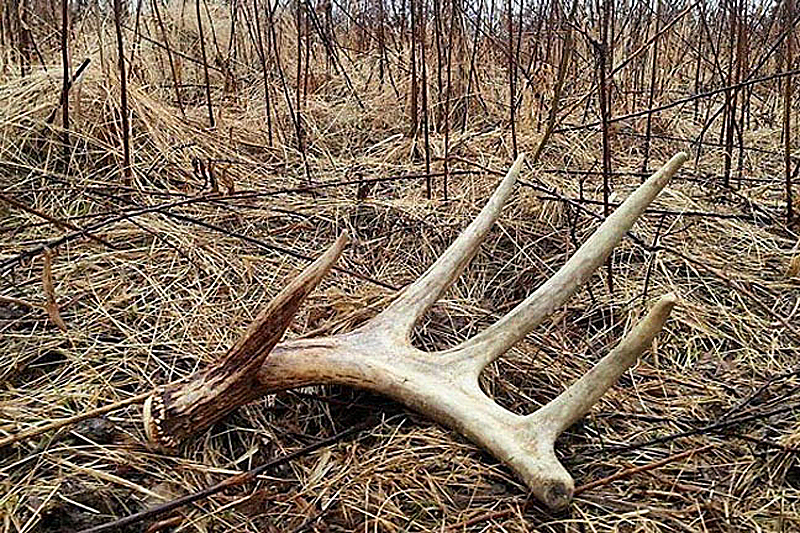
Very few consider it after the actual deer hunting season is over, but deer hunters also enjoy the sport of finding and collecting horns that aren’t on four legs…and the secrets they might share.
By Ray Reilly for Press Pros Magazine
 There’s a deer hunter in Illinois I want to tell you about.
A guy committed to his hobby and the pursuit of the next season like few you would imagine.
Olde English Outfitters proudly sponsor area sports on Press Pros Magazine.com.
He never stops. I’ve never seen anyone to beat him. He works at his passion year round – tailoring his own 64 acres of land with food plots, proper woodland cover, and plenty of forage.
He knows every land owner in three counties, and respectfully knocks on doors throughout the year to introduce himself – build relationships. He’s the community’s good neighbor.
And ethical?
He’s one of the few serious hunters that I personally know who eschews the use of trail cameras. He questions their fairness, and spends the time, personally, to scout during the off-season – old school. It earns him respect from owners, and it gets him on land where others get turned down, or so he claims.
And an important element of that off-season scouting is the time he spends looking for discarded antlers…or ‘sheds’, as they’re called. And when he invited me to go ‘shed’ hunting with him this past February I can honestly say he was as excited as any other hunter would have been with a twelve-pointer standing twenty yards from his stand on opening day!
Ben Simon has been hunting sheds for years, is rarely turned down by land owners, and credits finding discarded racks for a lot of his success come the fall hunting season.
“Sheds tell me that there are not only deer on a property, but the genetic makeup of those deer, too,” he claims. “When you find big sheds you find good bloodlines that are being passed on during breeding season. That’s all I need to know.
“And most farmers allow you to hunt because they don’t want the risk of dropped antlers ruining a tractor tire when they get in the fields come spring.”
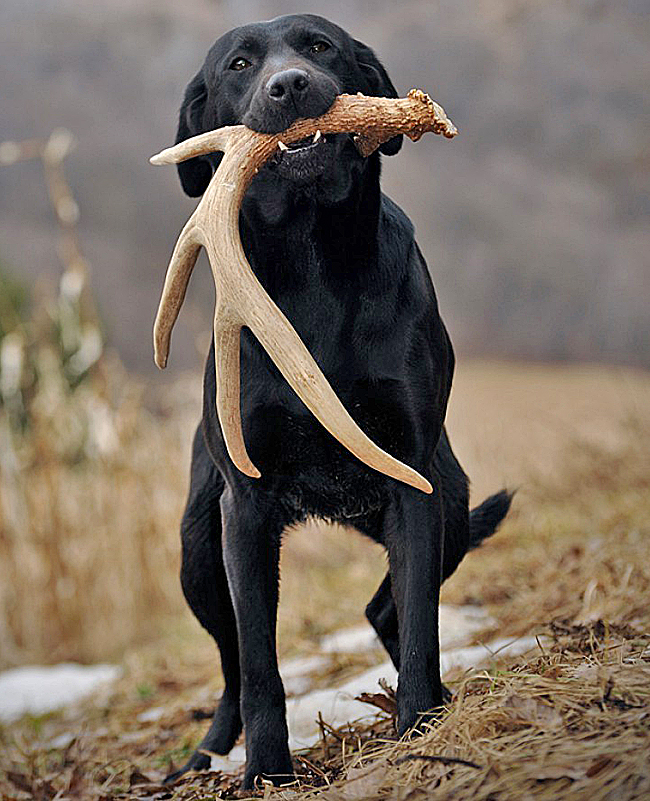
Some use popular hunting dog breeds to help find horns. (Courtesy of Gun Dog Magazine)
So on the day that we chose to hunt on his own land he pretty much knew what he wanted to find. Deer generally drop their horns during the month of January and early February in the Midwest, and if they were there in December, chances are they’re still there after the calendar flips.
“I saw a nice nine-point twice during hunting season – a big tall rack – but never got a really good shot opportunity,” he smiled. “It was a big deer…I’m guessing he was at least four years old, and if I can find his discarded rack it’ll tell me that he made it through, and how old he really is.”
Shed hunting is a growing sport among both hunters and even non-hunters – some who like to find and exhibit the antlers without actually killing a deer.
And timing is everything because there’s competition for finding a set of antlers that you would not expect. Mice and squirrels look for them, too, and eat them as a source of essential minerals like calcium, phosphorus and protein. The process of chewing bones for minerals is called osteophagia, and it helps recycle nutrients in nature’s ecosystem.
But to a deer hunter there’s a human protein called ‘adrenalin’, over finding something bigger than you might expect.
“I found the left half of a rack two years ago that was non-typical and had eight points, and had a couple of drop tines,” said Ben. “No one had ever seen that deer, even on camera. So it got everyone excited about a deer that big that was out there someplace, and unaccounted for…an old bruiser.
On this particular day we found antlers, but they were smaller and immature and not the ones that Ben was expecting to find – yearling-size, or two years old at best.
 You wonder, as a hunter…what happened to a particular deer that you encountered during the season without a shot opportunity? Did someone else shoot that deer, or did he just drop his antlers on another property? Deer tend to home in a particular area if they’re not disturbed, but they travel, too. They’re like any living thing, they go where they have the best opportunity to survive.
How it’s done is not hard at all. You just walk, and some shed hunters actually have dogs – hunting dog breeds – that scent and track them down – Labradors, in particular. But most do it alone, carrying little more than a good pair of binoculars around their neck.
And where are the best places to hunt?
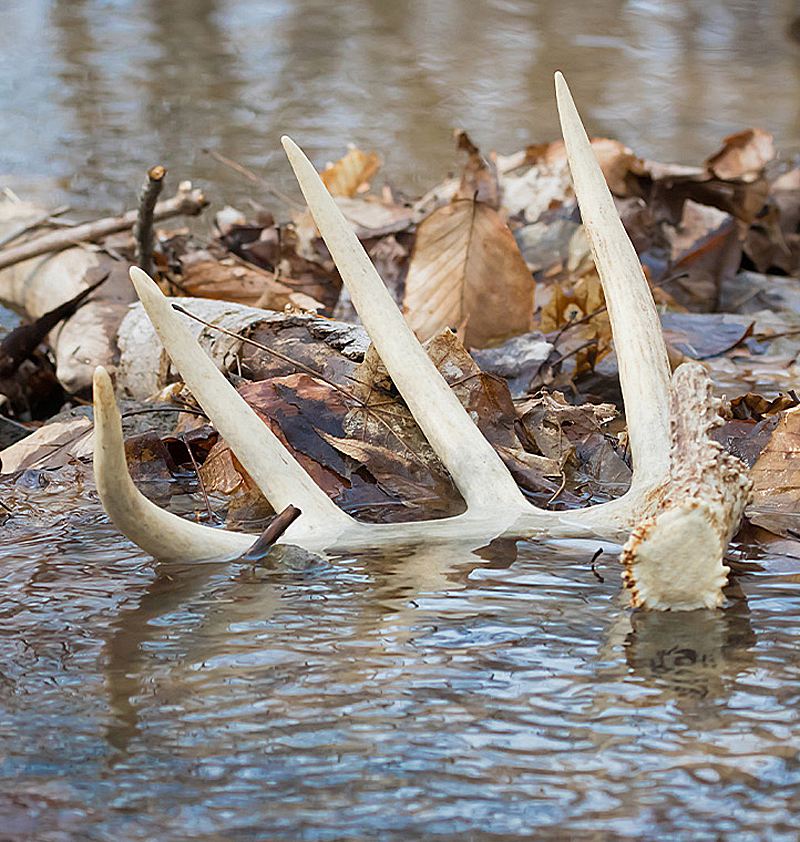
“Obviously, along the woods,” says Ben. “Because deer tend to rub trees with their horns, so look for ‘rubs’ and you’re likely to find those horns. And you find them in creeks, where they drink.
“But you also find them in picked corn fields, where deer feed…sometimes in a pasture field.”
When shed hunters find a good set of horns, it’s like Christmas. It tells them there’s a big deer out there somewhere, and if he made it this long he’ll likely still be there come next hunting season. And that’s all they need to know.
What keeps them coming back.
What makes me want to do it.
I need to knock on a few doors.
’Til next time, I’ve enjoyed it.


Olde English Outfitters proudly sponsors coverage of the outdoors on Press Pros Magazine.com.