
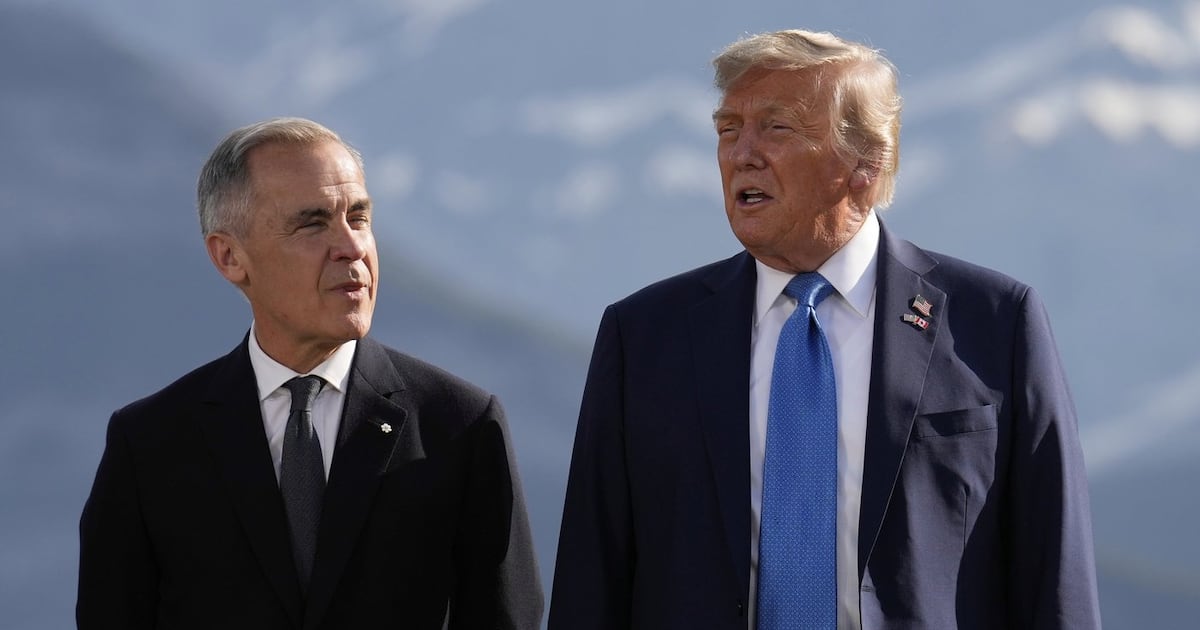
U.S. President Donald Trump was asked to respond to news that Prime Minister Mark Carney and Chinese President Xi Jinping came to an agreement on trade.
“Well, it’s OK. That’s what he should be doing,” Trump told reporters Friday at the White House. “If you can get a deal with China, you should do that.”
Earlier in the day, Trump’s own administration shared conflicting messaging regarding the deal, saying Canada may regret the decision.
CTV National News: ‘That’s what they should be doing’: Trump’s reaction to Canada-China trade deal Joy Malbon has more on U.S. President Donald Trump’s reaction to the new Canada-China trade deal the growing concern from NATO over the U.S. push for Greenland.
“I think it’s problematic for Canada,” U.S. Trade Representative Jamieson Greer told CNBC Friday morning. “There’s a reason why we don’t sell a lot of Chinese cars in the United States. It’s because we have tariffs to protect American auto workers and Americans from those vehicles.”
Speaking at the Detroit Economic Club this week, Trump reaffirmed his desire for Chinese automakers to build vehicles in the U.S.
“If they want to come in and build a plant and hire you and hire your friends and your neighbours, that’s great, I love that,” Trump said. “Let China come in.”
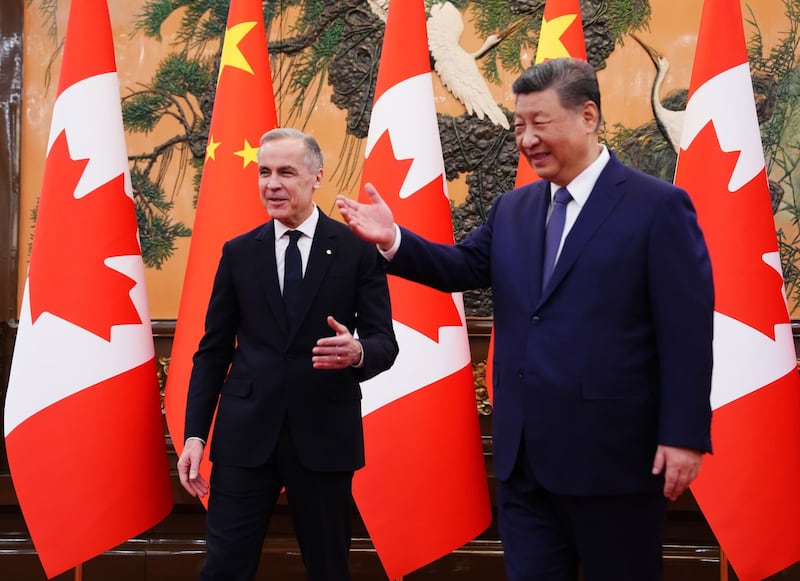 Prime Minister Mark Carney meets with President of China Xi Jinping at the Great Hall of the People in Beijing, China on Friday, Jan. 16, 2026. THE CANADIAN PRESS/Sean Kilpatrick Prime Minister Mark Carney meets with President of China Xi Jinping at the Great Hall of the People in Beijing, China on Friday, Jan. 16, 2026. THE CANADIAN PRESS/Sean Kilpatrick What is the deal?
Carney travelled to Beijing this week to help thaw relations between the two countries and secure what he called a “preliminary, but landmark” trade agreement, aimed at ending a tariff war.
The deal centres on a trade-off between agriculture and electric vehicles. Under the agreement, Canada will allow up to 49,000 Chinese EVs in the country yearly at a tariff rate of 6.1 per cent, down from the current 100 per cent.
In return, China will significantly reduce or eliminate duties on several major Canadian agricultural exports.
Carney framed the deal as the beginning of a broader strategic partnership that also includes expanding tourism, cultural ties and a commitment from China to allow visa-free travel for Canadians.
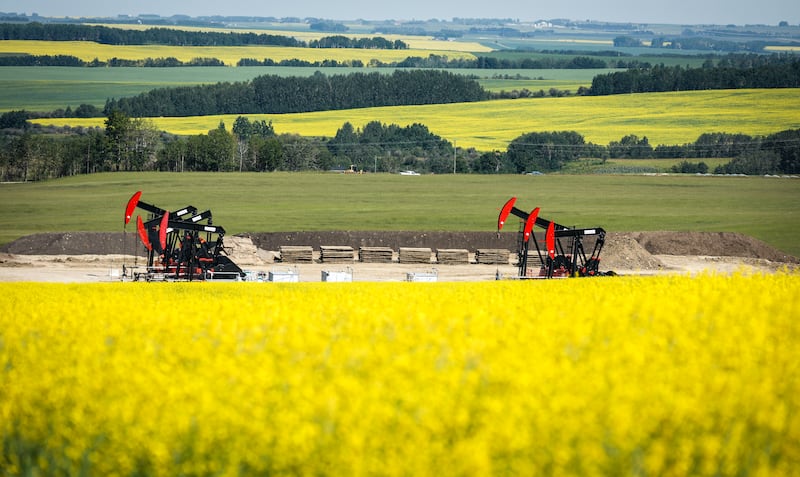 Canada Canola Pumpjacks draw out oil and gas from well heads surrounded by Canola fields near Cremona, Alta., Monday, July 15, 2024. (Jeff McIntosh/The Canadian Press)
The changes are especially significant for Canada’s farm sector. According to Carney, China is expected to cut tariffs on Canadian canola seed to 15 per cent from as high as 84 per cent by March 1, calling it “enormous progress.”
Chinese “anti-discrimination” tariffs on Canadian canola meal, lobster, crabs, and peas will be lifted from March through at least the end of the year, though canola oil will remain subject to a 100 per cent tariff.
The deal reopens access to one of Canada’s most important export markets, with China ranking as the second-largest buyer of Canadian canola after the U.S., and the world’s largest market for peas.
In exchange, Ottawa is opening limited space for Chinese EVs in the Canadian market. Carney said half the imported vehicles will be priced under $35,000 by 2030 to improve affordability and stressed the 49,000-vehicle cap nearly matches pre-tariff levels, which represents less than three per cent of the domestic auto market.
The move has divided political leaders, with Ontario Premier Doug Ford warning of risks to Canadian workers, while Saskatchewan Premier Scott Moe praised the deal as a win for exporters.