
In July 2025, Vancouver City Council unanimously approved a member motion by Green city councillor Pete Fry directing City of Vancouver staff to draft potential policy changes that would ban garburators from being installed in new building developments.
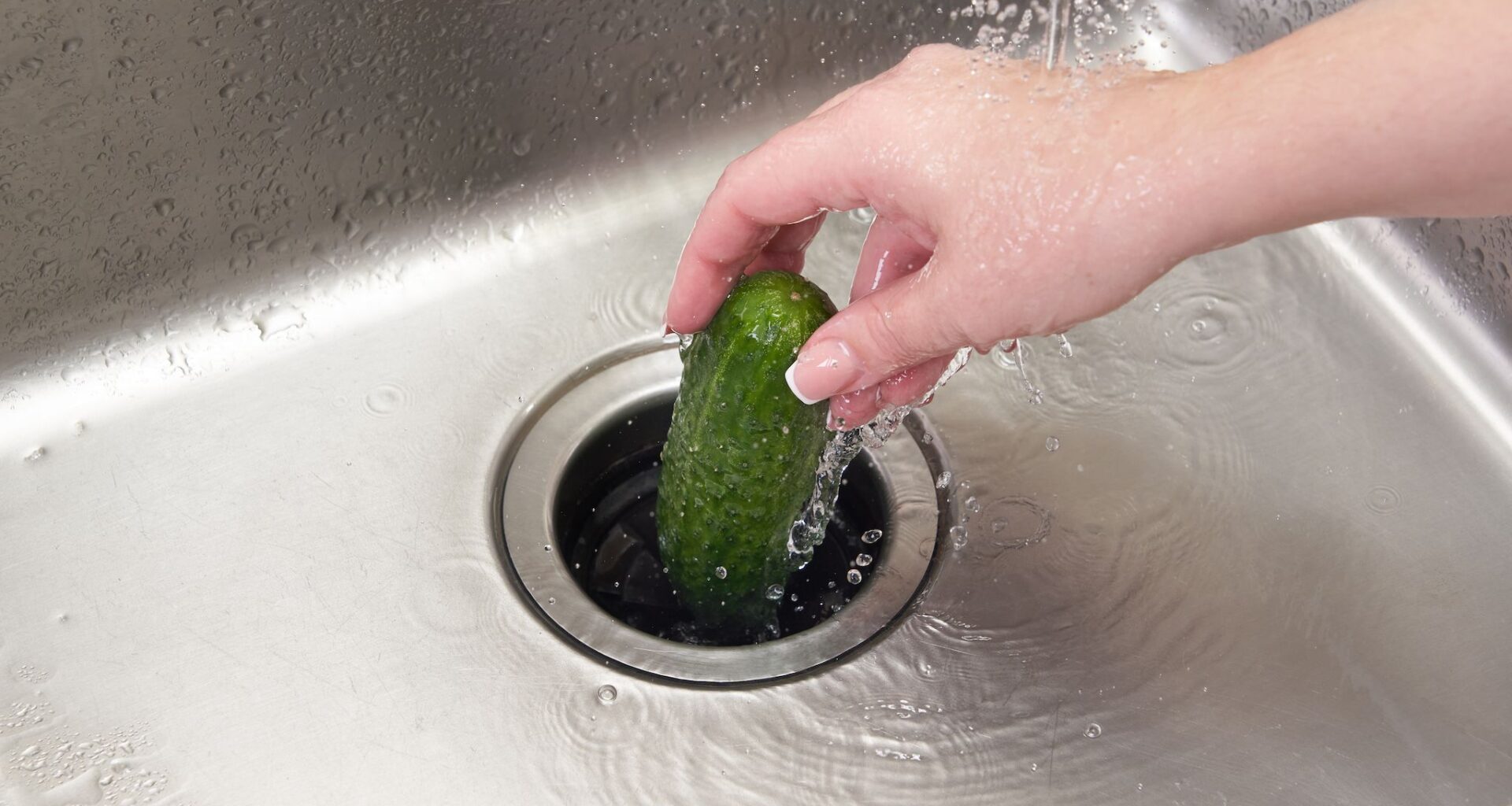
A garburator is an electrical device installed directly beneath a kitchen sink that functions much like a blender, breaking down food scraps that enter the sink hole into tiny particles that are flushed down the drain into the sewer system — rather than being placed in an organic or compost bin or thrown in the trash.
Fry’s motion was titled “A Drain on Resources and Resources Down the Drain,” and argued that garburators place a significant strain on municipal sewer pipes and Metro Vancouver Regional District wastewater treatment facilities, contribute to negative environmental impacts, and increase household water use. In addition to consideration of a municipal ban, the motion also directed City staff to advise the regional district of the “concerns over the impacts of in-sink disposal units on wastewater treatment plant costs and urging a regional approach to curtail the use of in-sink disposal units, and ban food scrap from liquid waste disposal.”
But City staff say those assertions are not supported by evidence, according to an internal memo to City Council issued in December 2025 in a direct response to the approved motion.
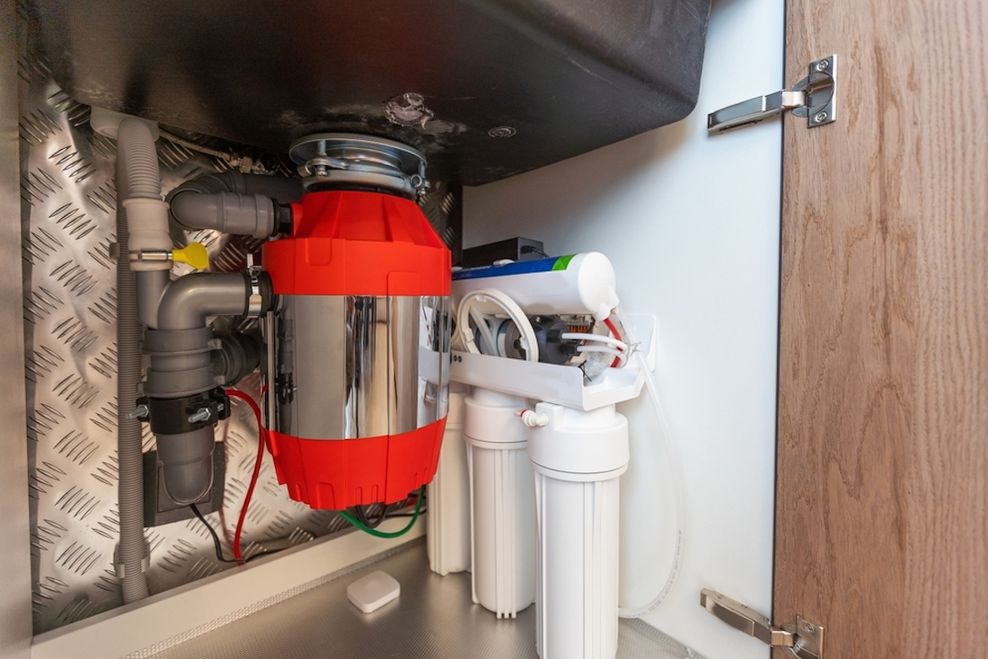
Garburator in-sink garbage disposal. (Andrew Angelov/Shutterstock)
Lon LaClaire, the City’s general manager of engineering services, wrote that a ban on in-sink garbage disposals in new residential construction would have extremely limited environmental benefits and only very modest cost savings for governments, and risks introducing regulatory inconsistencies across the Metro Vancouver region. For this reason, City staff do not recommend moving forward with a ban on new residential garburators at this time.
The memo states that the anticipated benefits of a ban would be marginal at best.
According to estimates by Metro Vancouver Regional District staff, a ban on residential garburators would reduce biological oxygen demand and total suspended solids entering the Iona Island Wastewater Treatment Plant — the regional facility dedicated to providing sewage treatment for Vancouver proper, the University of British Columbia campus, University Endowment Lands, and parts of the cities of Richmond and Burnaby, which are collectively called the Vancouver Sewerage Area — by just less than a fifth of one per cent (0.17 per cent).
Operational cost savings across the regional district’s network of sewage treatment plants would reach roughly $40,000 annually after a decade of the ban taking effect — a figure staff characterize as modest.
In contrast, the regional district’s total 2026 budget for the operating and maintenance cost of liquid waste infrastructure is $181.17 million, including $75.2 million specifically for wastewater treatment (sewage treatment plants).
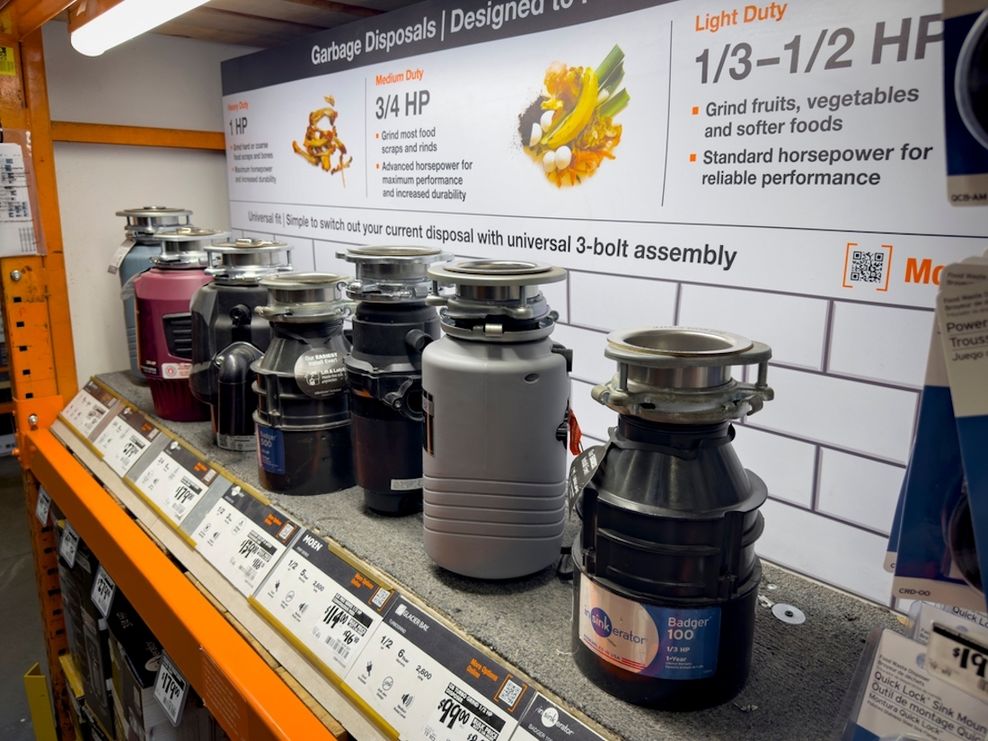
Garburator in-sink garbage disposal. (The Image Party/Shutterstock)
The memo also notes that drinking water savings from a ban would be “negligible” — equivalent to the annual water use of only three or four single-family houses after 10 years.
“Benefits to combined sewer overflows (CSOs) are also anticipated to be small as the loading reductions from a food grinder ban would be minor,” the memo continues, noting that pollutant reductions from a ban would be minor relative to overall system loads.
City staff point out that Vancouver already prohibits the disposal of solid waste — including food scraps — into the sewer system under existing bylaws. At the same time, residential food scrap collection programs for both single-family and multi-family homes are well established, diverting organic waste to composting facilities rather than sewer pipes.
Another key concern raised in the memo is consistency across the region. City staff warn that if the City of Vancouver bans garburators on its own, while the region’s other municipal governments do not, it could create a patchwork of different rules across Metro Vancouver — something builders and developers have repeatedly asked municipal governments to avoid unless there is a clear and compelling reason to do so.
“Maintaining regional alignment on requirements helps streamline approvals and supports housing delivery while still advancing environmental goals through established green waste collection and composting programs,” wrote LaClaire.
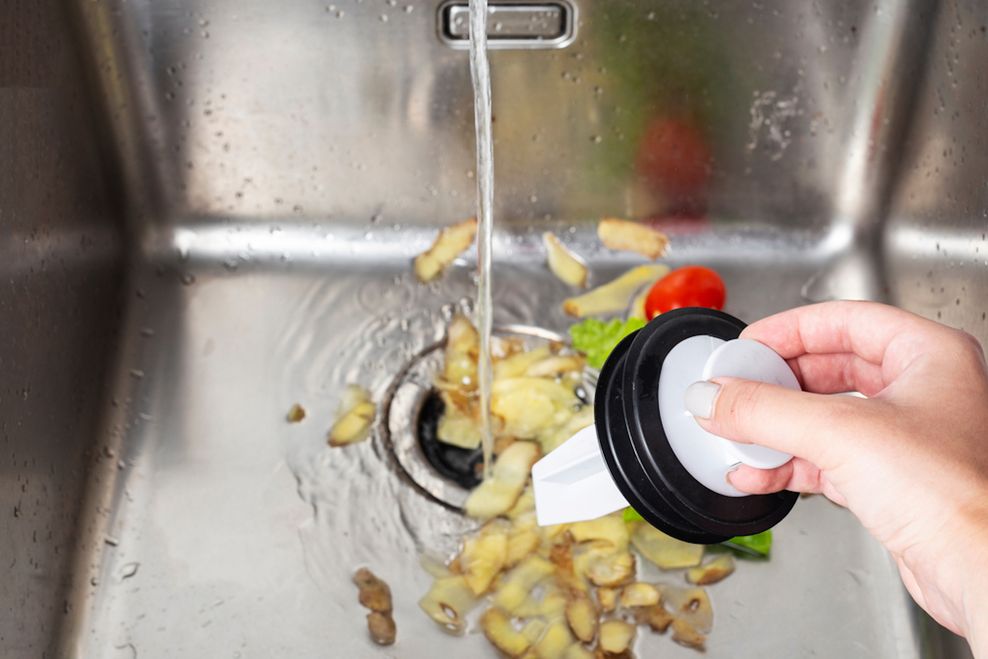
Garburator in-sink garbage disposal. (Korovina Anastasia/Shutterstock)
With all that said, sewage treatment has become a highly sensitive political issue in Metro Vancouver in recent years, driven by the escalating multi-billion-dollar costs of major sewage treatment plant projects and the resulting impact on annual household and business fees paid to the regional district. This is particularly evident in the troubled North Shore Wastewater Treatment Plant and the Iona Wastewater Treatment Plant projects, which are intended to meet the long-term demands of a growing regional population and economy, address seismic and flooding vulnerabilities in existing facilities built decades ago, and comply with new federally-regulated environmental standards.
In October 2025, in an effort to greatly reduce costs and the upward pressure on user fees in the Vancouver Sewerage Area, the regional district cut the scope of the new Iona Wastewater Treatment Plant project by retaining portions of the existing plant and deferring major components that are not deemed to be absolutely necessary to fulfill the federal government’s minimal requirements of secondary treatment compliance standards.
Currently, the existing facility operates with only primary treatment, and the original project concept incorporated tertiary treatment, which greatly contributed to its estimated project cost of up to $9.9 billion. The design cutbacks to more simply meet secondary treatment requirements have reduced the Iona project’s cost by about $4 billion — a newly recalibrated estimated cost of approximately $6 billion.
There are up to three levels of sewage treatment — primary, secondary, and tertiary.
Primary treatment loosely physically filters out 60 per cent of the larger solids in the water, such as debris and grit. Secondary treatment removes 93 per cent of the solids in the water following primary treatment, and it includes both physical and biological processes for its filtering.
Tertiary treatment is a highly advanced level of treatment that removes 99 per cent of the solids in the water, including harmful contaminants. After the completion of primary and secondary treatments, the tertiary step involves using ultraviolet treatment for disinfection, before releasing the treated water into the Strait of Georgia.