


Listen to this article
Estimated 5 minutes
The audio version of this article is generated by AI-based technology. Mispronunciations can occur. We are working with our partners to continually review and improve the results.
A Whitehorse resident says gaps in the hospital system are affecting continuity of care – and he has 2,000 pages of documentation to prove it.
Craig Brown first visited the Whitehorse emergency room last year with serious symptoms, and says he ran into problems almost immediately.
“I was wrongly diagnosed out of emergency as being chronic alcoholic,” said Brown.
After seeing the label of chronic alcoholic on his discharge papers, Brown corrected the error and started requesting all of his own documents. Nearly one year and 100-plus medical appointments later, he has collected multiple binders full of patient records.
Brown said the documents don’t lead to a definitive diagnosis, but illustrate systemic gaps. He believes those gaps have delayed his care.
“It’s very easy to see in the paperwork where delays happen,” Brown said. “Communications don’t happen in a timely manner. And no explanations, when asked by the patients, are given.”
Brown said his medical documents, obtained from the Whitehorse hospital and outside clinics, are often incomplete or have the wrong information. There are gaps in communication. He learned from his own records that his blood work results were labeled as “critical.” One medical record, faxed from the hospital to his doctor, was missing multiple pages.
“Like, where’s the accountability?” Brown said. “I’ve had a full life – so in that regard, what will be, will be – but it’s a shame to see the medical system treating patients the way they are.”
Lack of information flow between hospitals and clinics is a noted problem that’s been discussed internally between his department, the Yukon Medical Association and the Yukon Hospital Corporation, said Health Minister Brad Cathers in a phone interview.
Cathers said different service providers are using different computer systems, which don’t interface with each other. A planned territory-wide rollout of 1Health, an electronic platform for medical documents, wasn’t actually implemented across hospitals and community clinics as planned.
 Yukon Health Minister Brad Cathers says the government is adding beds to Whitehorse General Hospital and looking at ways to improve patient records. (Cheryl Kawaja/CBC)
“The Yukon system is largely dependent on paper systems, still, and that poses a problem sometimes,” Cathers said, adding that a technology upgrade and system overhaul is needed to fix the problem. He said a consultant is being hired to find a solution.
Brown said communication gaps aren’t the only issues he’s seen.
Health care settings seem understaffed, he said, and he’s been repeatedly rushed through follow-up appointments with physicians who seem too hurried to look carefully at his test results. During longer hospital stays, he noticed health-care workers seemed “under a lot of pressure.”
Whitehorse hospital tagged for expansion
The Whitehorse hospital has been widely reported as suffering from capacity issues in recent years. Cathers says the hospital is at 100 per cent capacity most of the time and major upgrades are overdue. Population growth trajectories signify that demand is only going to increase.
In the short term, Cathers said, eight new beds are being installed in the former secure medical unit. The $7.2-million boost in the territory’s supplementary budget passed in December will pay for that, as well as the replacement of surgical sterilization equipment.
“But there will still be times the hospital is over capacity, even once those [eight new beds] come online,” Cathers said.
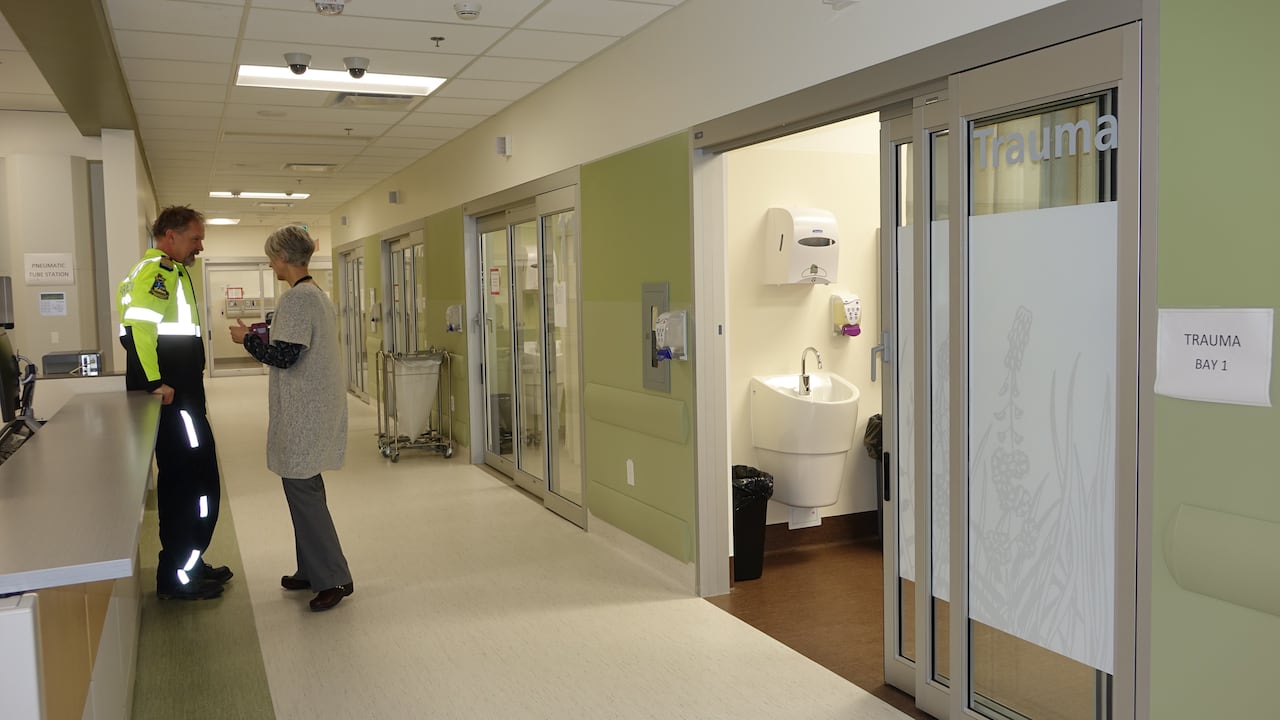 The emergency department at Whitehorse General Hospital. The Yukon Hospital Corporation says it’s adding new nursing positions at the territory’s hospitals and health centres. (Claudiane Samson/Radio-Canada)
The long-term plan is a physical expansion of the hospital, but that will take multiple years to complete. Cathers says the plan is to double surgical capacity and add 40 patient beds, but it’s too soon to guess when that could be completed.
“In the interim, we have to deal with trying to make the best use of the facilities we have, and that is, unfortunately, a challenging situation at the moment,” Cathers said.
Hospital corporation says internal changes underway
The Yukon Hospital Corporation announced earlier this week it’s introducing charge nurses to all patient care units. The position – which resembles a floor manager for units like the emergency room – will supervise patient care and provide mentorship to less experienced staff.
The position is common in other hospitals, and the Yukon stood out “not in a good way” without them, said Stefanie Ralph, executive director of patient care. She said their introduction should help with nurse recruitment and retention.
There will be approximately 13 full-time charge nurse positions in Whitehorse and one at each community hospital.
The hospital corporation is also introducing an “access and flow team” in charge of patient discharge and communication between care providers. CBC has reported previously that lack of discharge planning is an issue at the hospital.
These changes are scheduled to happen before April.