

Listen to this article
Estimated 3 minutes
The audio version of this article is generated by AI-based technology. Mispronunciations can occur. We are working with our partners to continually review and improve the results.
Manitoba health officials say 11 new confirmed measles cases and one probable case were recorded during the first full week of January.
There have been a total of 333 confirmed cases and 30 probable cases of the highly contagious disease reported in Manitoba since February 2025, according to provincial data updated on Friday. The data covers the period up to Jan. 10.
Twenty measles cases since February have required hospitalization, including 16 children under the age of 10, according to the province.
In an update earlier this week, the province warned people might have been exposed to measles at the C.W. Wiebe Medical Centre Teen Clinic at 385 Main St. in Winkler on Jan. 8 from 12:15 p.m. to 2:45 p.m.
Health authorities are asking people who were at the health-care facility during that time to monitor for symptoms until Jan. 30.
Canada reported 5,425 measles cases in 2025, following an outbreak that began in October 2024, the latest federal data says. The country lost its measles elimination status last fall.
Manitoba had no reported measles cases in 2024, according to federal data.
Measles spreads through droplets formed in the air when someone coughs, sneezes or talks. Even a few minutes in the same space as a sick person poses infection risks, as the virus can linger on surfaces for two hours after an infected person leaves.
Symptoms generally appear seven to 21 days after exposure, and may include a fever, runny nose, drowsiness and red eyes. Small white spots can also appear on the inside of the mouth or throat, the province said.
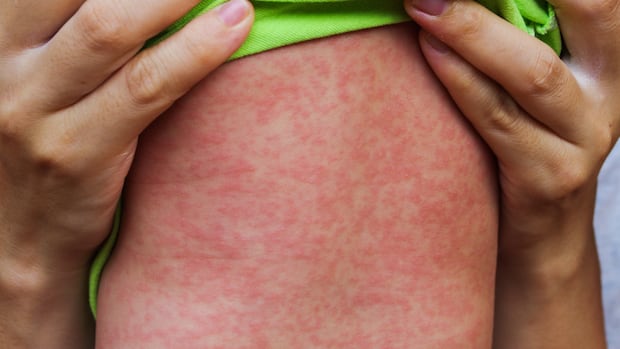
Several days after the initial symptoms, a blotchy red rash appears on the face and progresses down the body.
Immunization is the only way to protect people from contracting measles, Manitoba Health says.
In Manitoba, a two-dose vaccine program for measles, mumps, rubella and varicella (chickenpox) is routinely provided for children at least one year old, and again between ages four and six. If a child is exposed to measles, the province said, a second dose can be given earlier.
Just over 86 per cent of reported measles cases in Manitoba involved people who had no doses of the vaccine against the virus, according to the province’s data. Vaccination status was unknown for another six per cent.