
With the ever-increasing population, water, an essential resource for life, has become a global concern. Water scarcity remains one of the defining challenges of the 21st century, but so do unsafe drinking water, unpredictable rainfall due to climate change, industrial water needs, and more.
An atmospheric water generator is a widely adopted solution that addresses all these problems. A machine capable of directly extracting drinkable water from humid air can provide water in drought-prone areas such as remote villages, islands, and mining sites.
It can help reduce dependence on bottled water and serve as a worthy sustainability solution. Using technologies like UV purification, reverse osmosis, and carbon filtration, the water produced by AWGs can also be cleaned for consumption.
Here’s a peek into the seven leading atmospheric water generator companies shaping the future of water access.
1. AirJoule
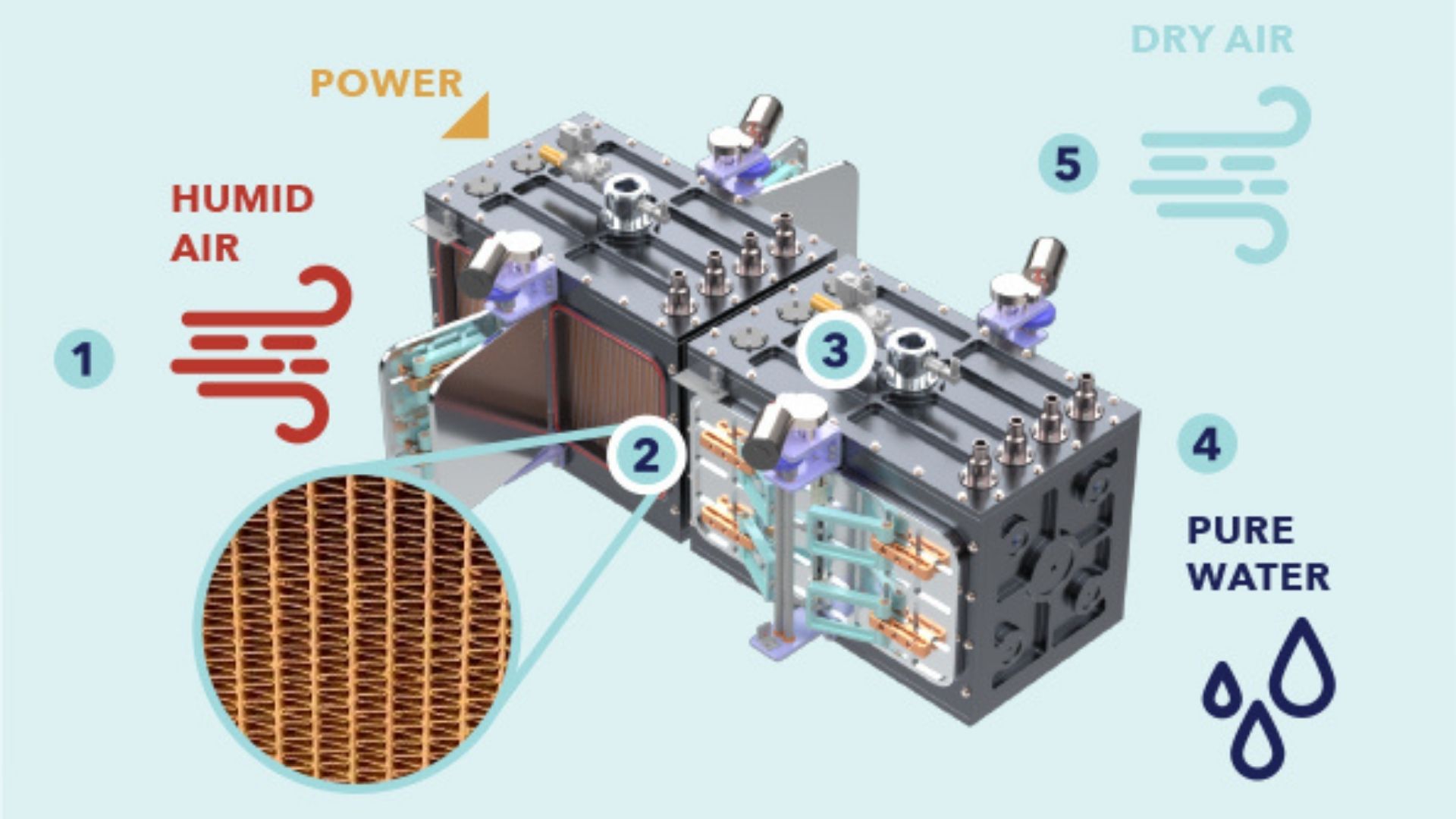
Delaware-based startup AirJoule is developing a novel approach to AWG that goes beyond traditional cooling-condensation. Their system uses MOFs, known as metal-organic frameworks (MOFs), which are known for capturing and releasing water vapor efficiently.
After drawing air across MOF-coated contractors, water vapor is directly adsorbed at the molecular level. Once saturated, the system uses a vacuum-induced desorption process to release and condense the moisture into liquid water without harmful refrigerants.
This kind of energy-efficient, chemical-free extraction is particularly promising for both arid climates and urban settings where traditional AWGs underperform.
2. Aqua Ubique
Aqua Ubique, based in Birtinya, Australia, is an AWG company dedicated to solving water insecurity with machines that handle the full process from air intake to drinkable water. First, these AWGs draw humid air, cool it until condensation occurs, then filter and remineralize the water – making it safe and tasty.
Unlike many systems designed solely for individual households, Aqua Ubique’s technology aims to eliminate plastic bottles and long transport routes, thereby reducing the carbon footprint associated with traditional water supply chains.
3. Untap!
Headquartered in Sollentuna, Sweden, Untap! focuses on off-grid atmospheric water solutions that do not require any infrastructure to function properly. Their technology combines condensation-based extraction with multi-stage purification, including UV sterilization, to ensure the water meets safety standards.
Untap! stands out due to its focus on sustainability and autonomy. They use solar, wind, and bioenergy, making them ideal for rural or disaster-affected areas with limited electricity. This is particularly important for communities where traditional water supply networks are unavailable or unreliable.
4. ATMOS
Founded in Hyderabad, India, ATMOS addresses water shortages at scale, ranging from residential units to industrial AWGs.
They use a comprehensive purification stack that includes UV treatment, ultrafiltration, and disinfection together to remove contaminants, microbes, and unwanted chemical compounds. The result is clean, mineralized water with balanced pH levels suitable for daily consumption.
Because India faces both water scarcity and high humidity in many regions, solutions like ATMOS’s have significant potential to reduce dependence on groundwater and bottled water.
5. AERstream
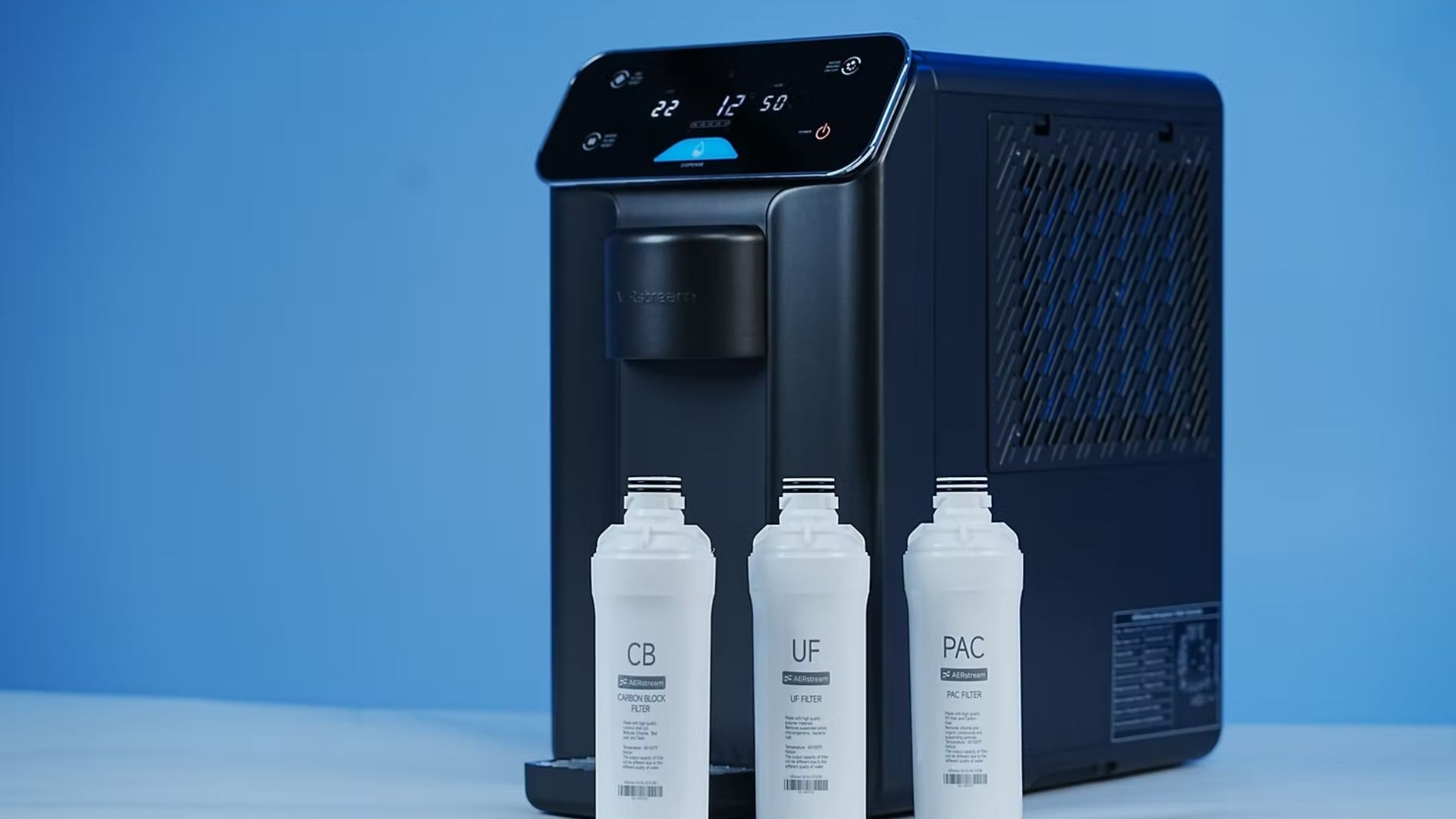
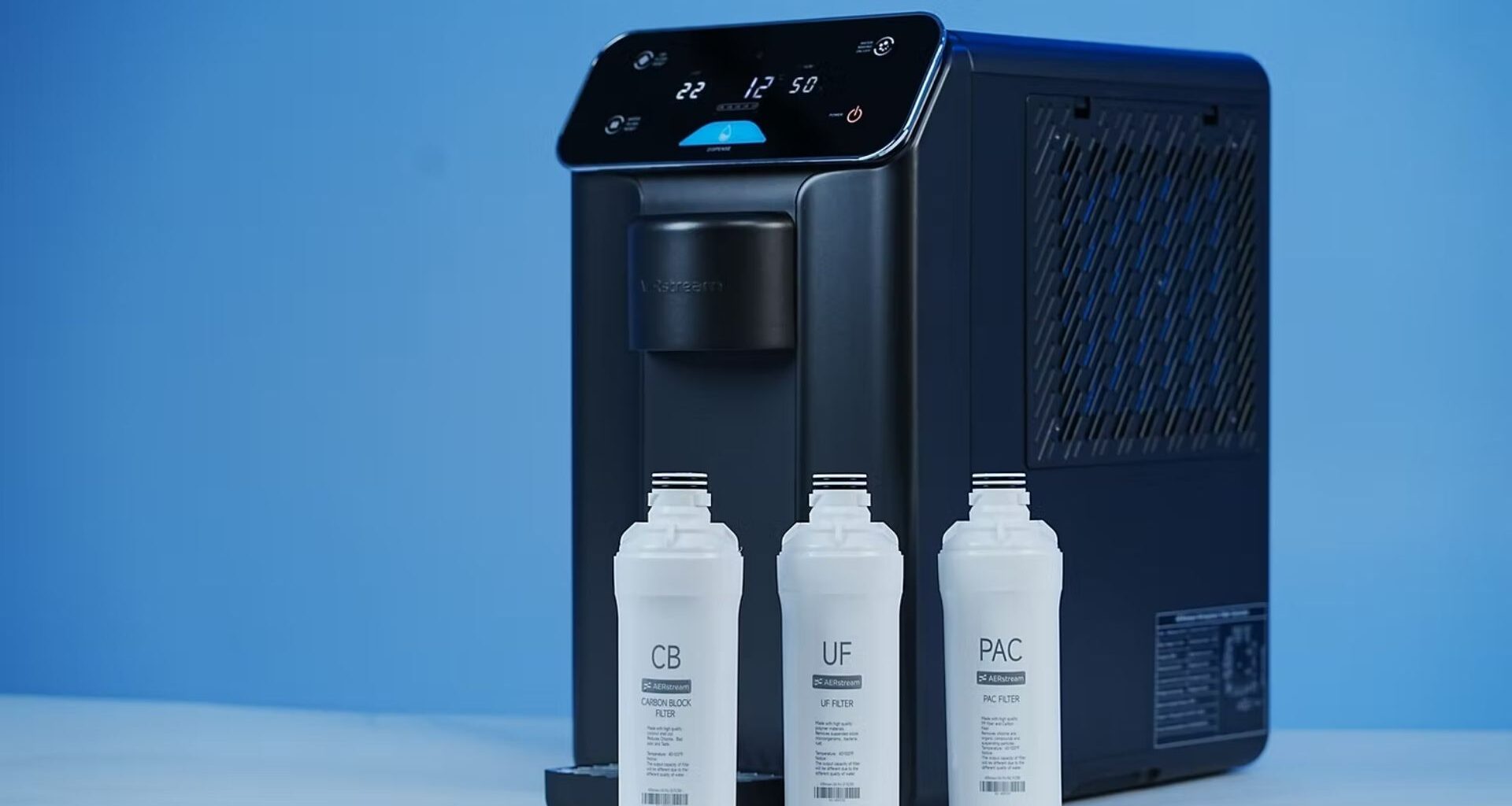
AERstream, based in Miami, Florida, is working to bring AWG technology into everyday use with its countertop atmospheric water generators. These machines emphasize ease of use, portability, and accessibility, ideal for homes, offices, and small businesses.
The company’s patented air and water filtration system tackles common airborne contaminants, bacteria, and toxins, ensuring water is safe to drink with replaceable filter cartridges for convenient maintenance. This model shows that AWG is not just for large installations but can also be compact and user-focused.
6. Hydrexa
Hydrexa, located in Dubai, UAE, blends AWG with energy-efficient air conditioning technologies. Its systems harvest water vapor from the air and use it for water production and humidity regulation, offering a dual benefit in hot, arid climates.
By incorporating AI and IoT monitoring, Hydrexa’s platform can adjust performance in real time and provide operators with data on water quality and energy usage – a step toward smart, integrated building systems that manage water and cooling together.
7. ExaWater
Based in Seattle, Washington (USA), ExaWater produces AWG systems that extract drinking water from ambient air, with an emphasis on energy efficiency and adaptability. Its technology is designed to operate reliably across varied climatic conditions, making it suitable for rural, remote, and infrastructure-limited areas.
ExaWater’s proprietary approach depends on reducing the power demands that have traditionally hindered many AWG systems – a critical factor in expanding adoption in regions with limited electricity.
Conclusion
Collectively, these seven companies illustrate the breadth and innovation in the AWG ecosystem: from advanced materials and off-grid renewables to home-friendly and industrial-scale solutions.
Whether through MOF adsorption technologies, integrated air conditioning systems, or solar-assisted water generation, each startup helps transform water scarcity into a solvable engineering challenge.
As global freshwater stress grows, atmospheric water generation is poised to become a mainstream water solution — especially in regions where traditional supply infrastructure is absent, unreliable, or environmentally damaging.