
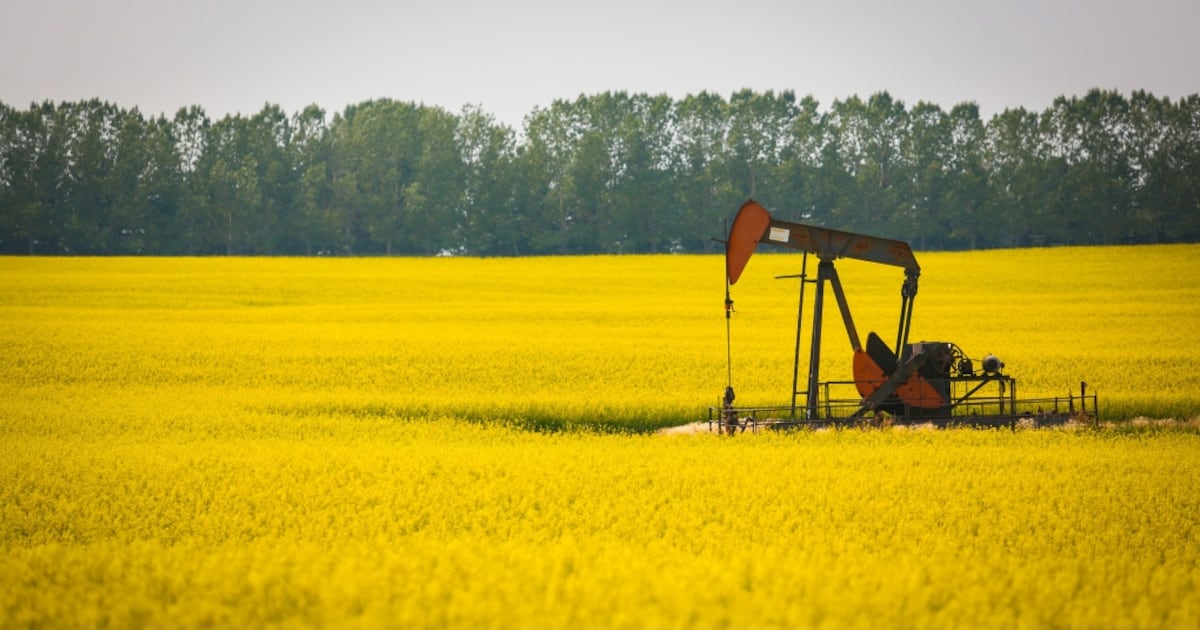
Rick White, CEO and president of the Canadian Canola Growers Association, joins BNN Bloomberg to discuss trade deal with China and it’s impact on Canadian canola growers.
Canola farmers can finally begin recovering from the significant losses suffered under tariffs imposed by China, said the head of the Canadian Canola Growers Association.
That comes after Prime Minister Mark Carney reached a deal with China during his visit this week, joined by Saskatchewan Premier Scott Moe.
Carney said tariffs on Canadian canola are expected to drop in some cases to about 16 per cent, in return for Canada allowing about 49,000 electric vehicles from China into the country each year at a tariff just over six per cent.
“We are very hopeful and optimistic to some degree, that the success of this will be determined by the movement of canola, the sales of canola going back into China,” Rick White, CEO and president of the Canadian Canola Growers Association, told BNN Bloomberg.
“The value recovery can start now.”
How much tariffs dropped on different canola products
There are three main canola products in the industry: seed, meal, and oil. Each is affected by tariffs differently.
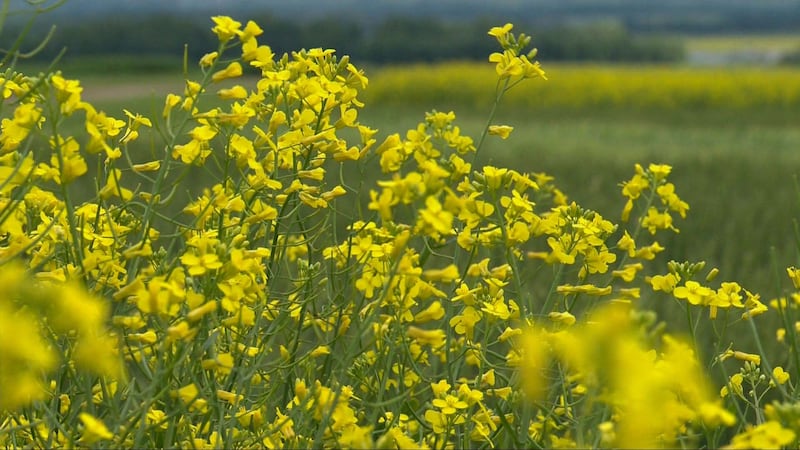 Canola in a field Ottawa expects Beijing to drop canola seed duties to 15 per cent from 84 per cent by Mar. 1, 2026.
Canola seed is by far the biggest component of the trade with China, and tariffs are expected to drop from 76 per cent to 15 per cent, White said.
“That’s a significant drop,” he said, adding the industry sends about six million tonnes of canola seed into that market, worth roughly $4 billion.
Canola meal tariffs have dropped from 100 per cent to zero starting March 1. The product is a byproduct of crushed canola seeds used to extract oil.
They’re used for livestock and poultry feed around the world, and “China has heavy demand for proteins like canola meal and other meals of oilseed products like soybeans,” White said.
Canola oil is the smallest part of the industry, and tariffs remain at 100 per cent.
How hard did tariffs hit the industry?
White said canola farmers saw a significant decline in crop value after China imposed tariffs in retaliation for Canadian levies on electric vehicles last year.
He said the tariffs weighed heavily on futures prices, which are agreed-upon prices for delivery later.
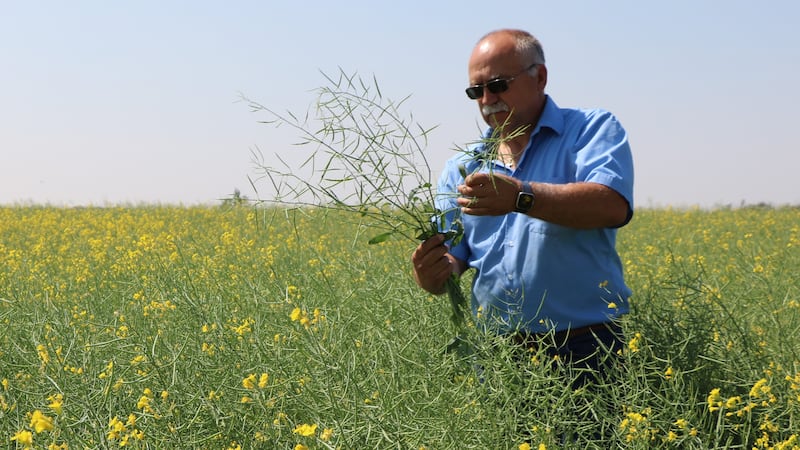 Farmer Bill Prybylski stands in a canola field Farmer Bill Prybylski stands in a canola field on his farm near Yorkton, Sask., in this 2023 handout photo. THE CANADIAN PRESS/Handout – Agricultural Producers Association of Saskatchewan (Mandatory Credit) (HO/The Canadian Press)
He explained farmers were suffering because the difference between the futures price and the cash price they actually receive, called the basis, widened even more as futures prices fell.
“At the end of the day, what happened was there was significant value deterioration of the canola that was grown by farmers,” White said. “Farmers had all this production. It’s in their bins right now, and the values were tumbling.”
The U.S. and China are Canada’s largest Canola buyers
In a regular year without tariffs, Canada produces about 21 million tonnes of canola seed, and about six million tonnes typically go to China, said White.
“It’s very, very important to us,” he said.
Canola production is heavily concentrated in Saskatchewan, Alberta, Manitoba and the Peace River region of British Columbia, accounting for 99 per cent of all seeded area, according to Statistics Canada.
The U.S. market is the top export destination for Canadian canola products, with a total export value of $7.7 billion in 2024, and more than 7.4 million tonnes shipped to the U.S according to the association.
“We can’t have problems with our two major export markets without having a substantial negative impact on the livelihoods of western Canadian farmers,” White said.
He said canola products are moving smoothly under the CUSMA deal, with no tariffs in place.
‘What got us here were political decisions’
White said the canola industry was the subject of the political decision that triggered this in the first place, and that getting trade back with China, Canada’s second-largest export market for canola, ultimately came down to political decisions too.
“But we are very, very supportive and very thankful to the group of the delegation that went over there, that politically went over there, because that’s what it took to get this done,” said White.
“Canola is a major contributing factor to the western Canadian economy, and farmers in particular.”