
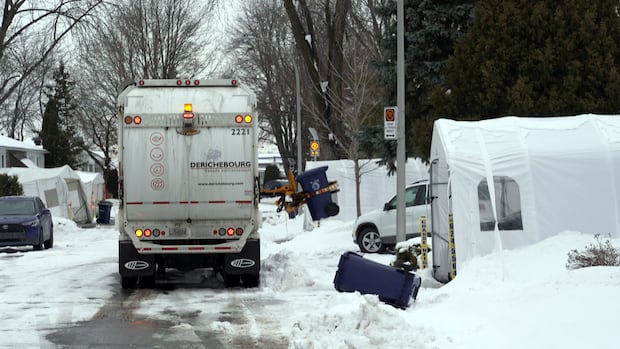
Quebec’s third-largest city is switching from weekly garbage and recycling collection to every two weeks in a cost-saving move it says is better for the environment. But the plan is getting mixed reaction from residents and opposition councillors.
David De Cotis, who represents the Saint-Bruno district in Laval, Que., said the move reduces services at a time when property taxes are going up.
“There’s still going to be the same amount of garbage,” he said, noting not all organic waste can be diverted to composting.
“There’s diapers. There’s pet waste. There’s meat packaging and so on. This kind of waste, over two weeks, will decompose in the summer. There’s rodents. There’s insects.”
Picking up recycling and garbage every two weeks on an alternating schedule begins April 1. It’s a system already used by many municipalities in the Montreal metropolitan area.
WATCH | How do people feel about biweekly trash pickup?:
Trash pickup every 2 weeks is slowly becoming the norm. Are people OK with that?
Laval, Que., is modifying its garbage schedule to biweekly pickup in a bid to reduce waste. While the city is confident residents will adapt like in some other cities, there is pushback — the kind that forced another nearby jurisdiction to abandon similar changes.
De Cotis, with Action Laval, proposed a motion demanding public consultations, but it was defeated. Some Montreal-area municipalities have backtracked on the decision to collect every two weeks, he said.
“Each region of Laval lives a different reality. Let’s consult these different regions of Laval. Maybe it’s fine. Maybe everyone is happy and collecting garbage every two weeks is the way to go. But maybe it’s not,” De Cotis said.
“It’s such a major decision that impacts the citizens of Laval. We owe it to them to consult them.”
An online petition against the decision has already garnered more than 5,000 signatures. It says weekly pickups are essential to prevent odours, health risks and pest infestations. It calls on the city to reconsider the decision in the interest of public health and the environment.
Laval defends decision
On the other hand, Laval says on its website that the move is a responsible, environmentally driven decision that aligns with provincial and metropolitan requirements.
It says the change will cut greenhouse gas emissions, reduce landfill waste and lower transportation and operating costs by an estimated 22 per cent, while helping meet its target of 200 kilograms of waste per resident annually.
Laval says the shift builds on years of waste-reduction measures, noting additional support and education planned to ease the transition.
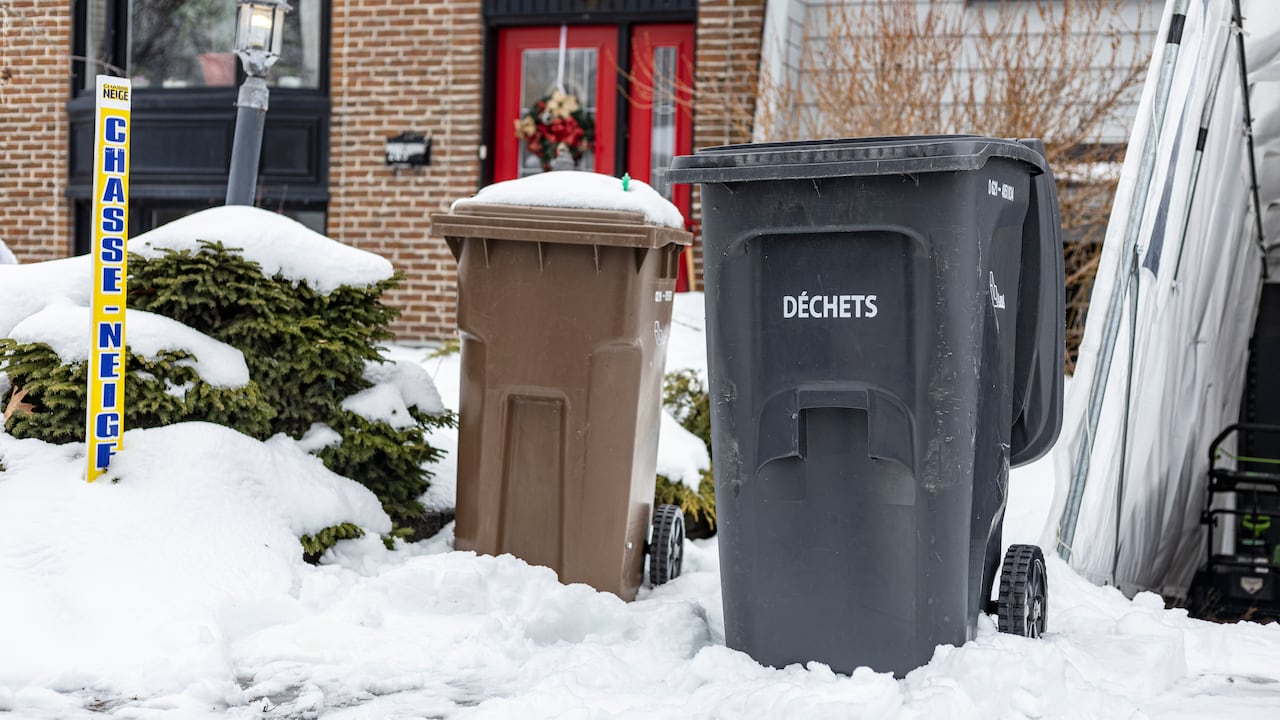 Laval, Que., will be collecting garbage and recycling every two weeks starting in April in a move the city says will save about $3 million and reduce pollution. (Natalia Weichsel/CBC)
Ray Khalil, a city councillor with the governing Mouvement Lavallois party who represents the district of Sainte-Dorothée, said local cities are making the switch because dumps are filling too quickly.
“We have a tendency to throw our garbage and forget about it. But in reality, it doesn’t just disappear. It essentially goes into a big hole,” he said.
He said the city is going to save about $3 million per year, and the aim is for people to compost and recycle more. He said compost collection will be weekly during the warmer months to avoid hygiene issues, which many are worried about.
“Anything that smells, anything that rots other than diapers, honestly, all of the rest pretty much goes in the brown bin,” said Khalil.
Concerns about smell
But diapers are among the things that resident Constantinos Alexiou worries about.
“I’m sorry, but I’m thinking of a new family with a newborn that’s changing diapers six times a day or more, having a garbage bin that’s half full with diapers for two weeks,” said Alexiou, who expressed concerns about the lack of public consultation before making this decision.
“And it’s going to stink like nobody’s business.”
Meanwhile Benoit Beauchamp, who operates a recycling collection truck in Laval, said the weekly pickup is overkill as bins are usually half full.
“So for us, it’s going to be ideal because instead of collecting nothing, we’ll actually collect a bin that has stuff in it,” he said.
In Quebec City, garbage is collected every two weeks during the winter. The city says in the summer months, weekly pickup reduces unpleasant odors and vermin. On Montreal’s South Shore, Longueuil has been doing biweekly garbage pickup since 2021.
The same is true in Toronto, with compost picked up weekly.
But it has not been a roaring success everywhere. Montreal’s Mercier–Hochelaga borough tried this, but residents pushed back, saying they noticed overflowing trash bins and an increase in rats.
After about a year, the borough returned to weekly pickup during the summer months.
Still, some Laval residents are looking forward to the change. Sainte-Dorothée resident Anis Kouteich says he supports the plan because it’s not only better for the environment, but it also saves taxpayers money.
“We’re lucky we have a recycling bin and a compost bin,” he said. “Personally, at home, we barely have any garbage at the end of the week. ”
He said it’s just a matter of properly separating compost, recycling and garbage. Even with four people in the home, he said, there’s been no effort to consume less. He said other residents just need to adapt to these changes to prevent waste from going to landfills.
“This is how the city saves money, and this is how our taxes do not increase a lot,” he said. “It’s a step in the right direction.”