
Getty
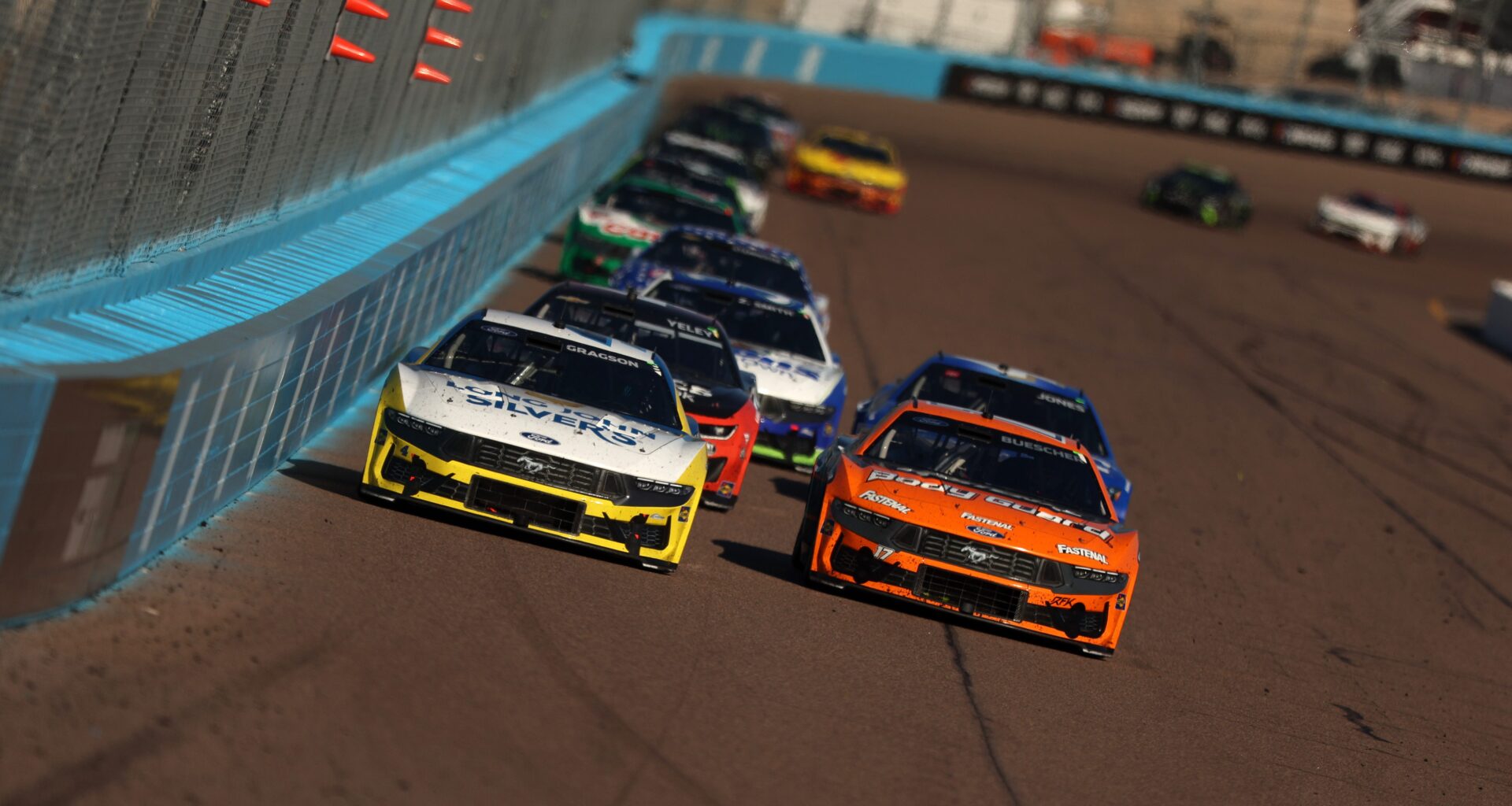
AVONDALE, ARIZONA – NOVEMBER 02: Noah Gragson, driver of the #4 Long John Silver’s Ford, and Chris Buescher, driver of the #17 Body Guard Ford, race during the NASCAR Cup Series Championship at Phoenix Raceway on November 02, 2025 in Avondale, Arizona. (Photo by Meg Oliphant/Getty Images)
NASCAR Rule Changes have been officially announced ahead of the 2026 season, with updates set to impact the Cup Series, the NASCAR O’Reilly Auto Parts Series, and the NASCAR Craftsman Truck Series.
According to Bruce Martin of Forbes, the rule changes focus on fair competition, clear driver rules, better manufacturer support, and tighter technical control. NASCAR officials said they want more consistent rules across all national series, with safety and performance as priorities. The sanctioning body confirmed the changes are final and will take effect at the start of the 2026 NASCAR schedule.
NASCAR Rule Changes: Fastest Lap Bonus and Penalty Updates
One of the biggest rule changes affects the fastest lap bonus in the O’Reilly Auto Parts Series. NASCAR confirmed that once a car enters the garage during a race, it can no longer earn the fastest lap bonus point. If a driver records the fastest lap before entering the garage, the point will still count.
Nate Ryan of NASCAR.com reported that the change followed several 2025 races in which damaged cars returned to the track after lengthy garage repairs only to chase the fastest-lap bonus. Mike Forde, NASCAR’s managing director of communications, explained the decision on the Hauler Talk podcast.
“It was something that we talked a lot about last year, and it didn’t feel exactly right or fair that teams working on the car in the garage for a while, specifically just to lay down that fastest lap.” “It didn’t feel super in the spirit of competition, so we decided to change it.”
Forde also explained how the rule works after an accident.
“If Larson ripped off a fastest lap and wrecks, he gets to keep that fast-lap point. He can’t get it after working on his car in the garage after an incident.”
NASCAR also updated lug-nut penalties in the O’Reilly Auto Parts Series and the Craftsman Truck Series. According to Forbes, teams will face lighter penalties for small violations but stronger penalties for serious issues. Sanctions can include fines, loss of pit selection, or disqualification from the race.
Updated Age Rules for Developing Drivers
Another rule change lowers the minimum age for drivers in the O’Reilly Auto Parts Series at certain tracks. Drivers can now race at age 17 on tracks that are 1.25 miles or shorter and on all road courses. The previous minimum age was 18.
NASCAR aligned this rule with the Craftsman Truck Series, where drivers can compete at age 16 on similar tracks. Officials said the update creates a clearer path from Trucks to Xfinity to Cup and gives teams more flexibility with young drivers.
Mike Forde explained the thinking behind the move.
“We look at the truck and the O’Reilly Auto Parts series as ladders to get to the Cup series, so it felt, from a consistency’s sake, kind of like a literal ladder. So it felt like the right time to do it.”
NASCAR will still require drivers to be at least 18 years old to race on longer ovals in the O’Reilly Auto Parts Series. The rule aims to balance development with safety while keeping the progression system clear.
Manufacturer Support and Chase Format Details
NASCAR also added support for new manufacturers entering the sport. According to Forbes, NASCAR can award up to four provisional starting spots to a new manufacturer during its first three races if it fails to qualify on speed. These cars will earn championship points but will not receive prize money.
NASCAR explained the purpose of the rule in clear terms.
“The spirit of this rule is to help ease the onboarding of a new manufacturer into national series racing.”
The 2026 season will also bring the official return of the Chase playoff format. The Chase will include a 10-race postseason with no eliminations. The top 16 drivers will qualify based on regular-season points. The driver with the highest total after the final race will win the Cup championship. NASCAR also increased race-win points from 40 to 55, placing more value on victories.
Dogli Wilberforce is a sports writer who covers NASCAR, Formula 1 and IndyCar Series for Heavy Sports. With bylines at Total Apex Sports and Last Word on Sports, Wilberforce has built a reputation for delivering timely, engaging coverage that blends sharp analysis with accessible storytelling. Wilberforce has covered everything from major football transfers to fight-night drama, bringing readers the insight and context behind the headlines. More about Dogli Wilberforce
More Heavy on NASCAR
Loading more stories