
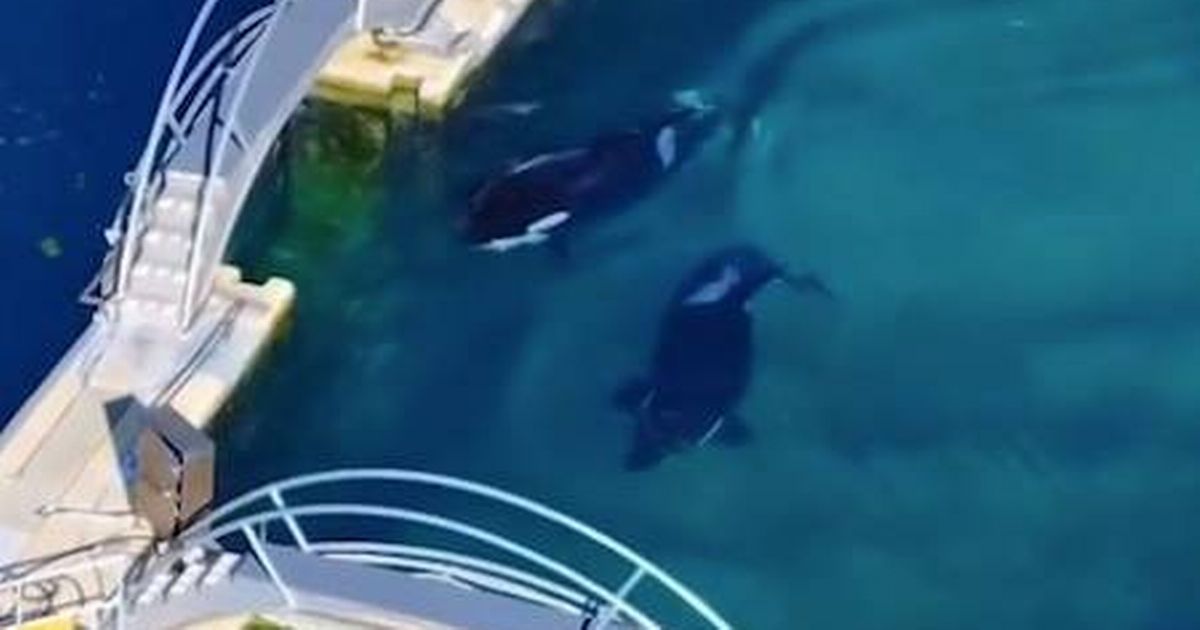
Wikie and her son Keijo are the last killer whales living in France and have been left in deteriorating conditions since Marineland Antibes closed to the public in January
11:13, 17 Jan 2026Updated 11:13, 17 Jan 2026
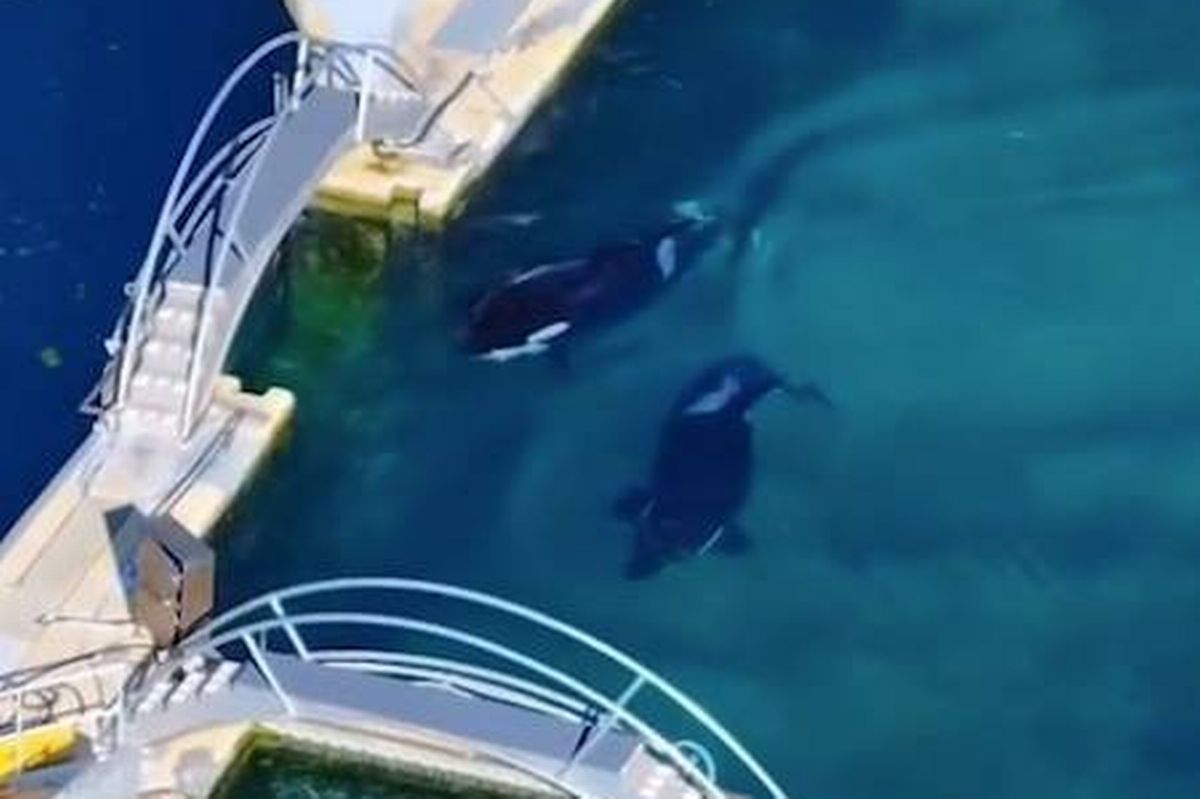
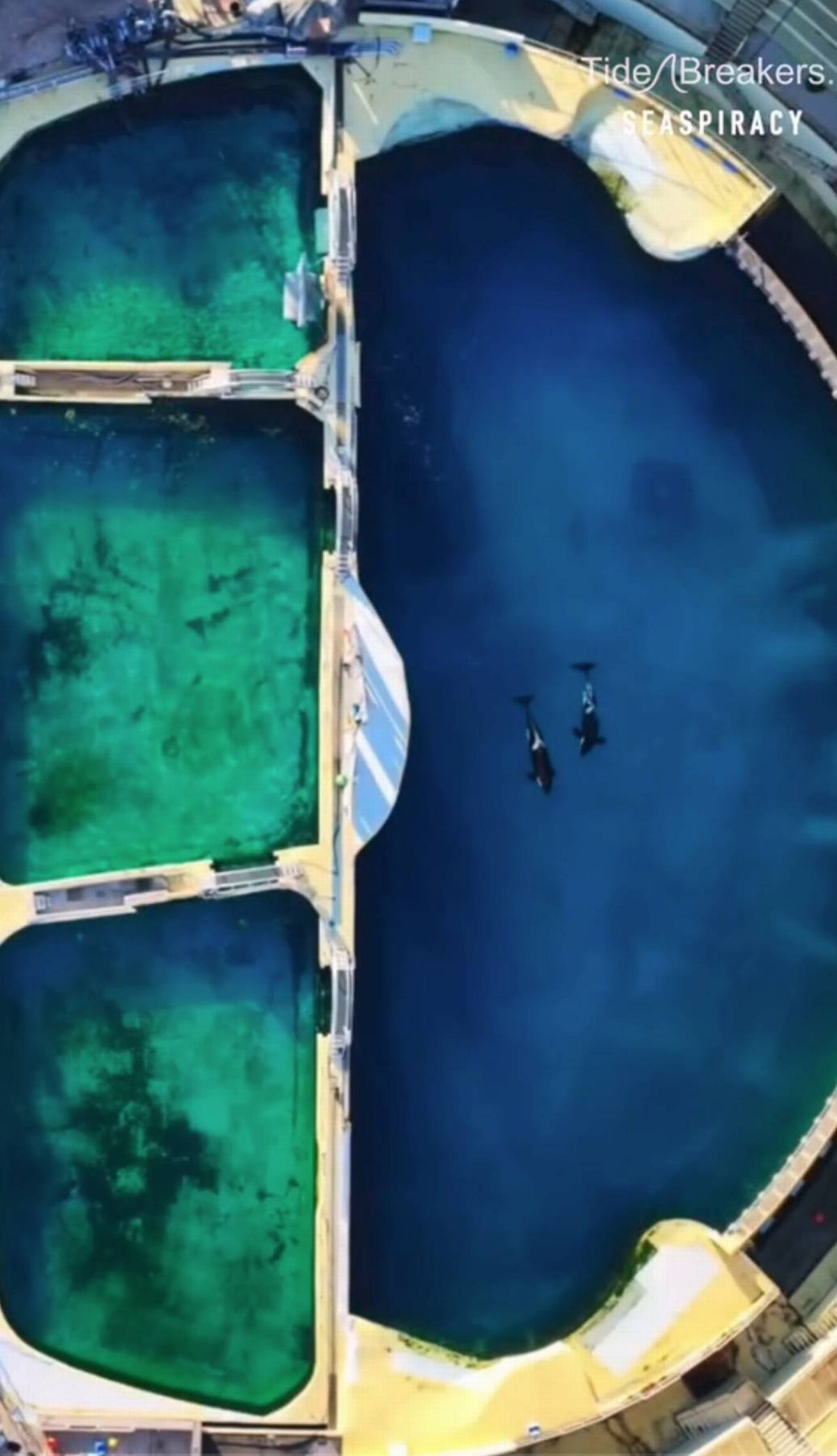
The killer whales have been abandoned in their decaying tank(Image: )
The final two orcas in captivity in France could be destined to perish due to governmental inaction regarding their deserted marine park, activists have warned.
Wikie and her son Keijo are the last killer whales residing in France and have been left to swim in their desolate, decaying tank after Marineland Antibes permanently shut its doors in January this year.
Since then, the heartbroken orcas spend their endless days without any stimulation, longing for the connections they had with their now-deceased family members. They are the last two survivors of their original group of four.
Now that the park is closed to the public, their surroundings are deteriorating, with the water in their concrete tank becoming filthier each day and foul-smelling green algae spreading across the site. While a bare-bones staff come in to feed them and offer minimal human interaction, Wikie and Keijo have been largely forgotten by the crowds they once entertained.
READ MORE: Europe’s ‘sunniest winter destination’ has beautiful beaches and 21C weather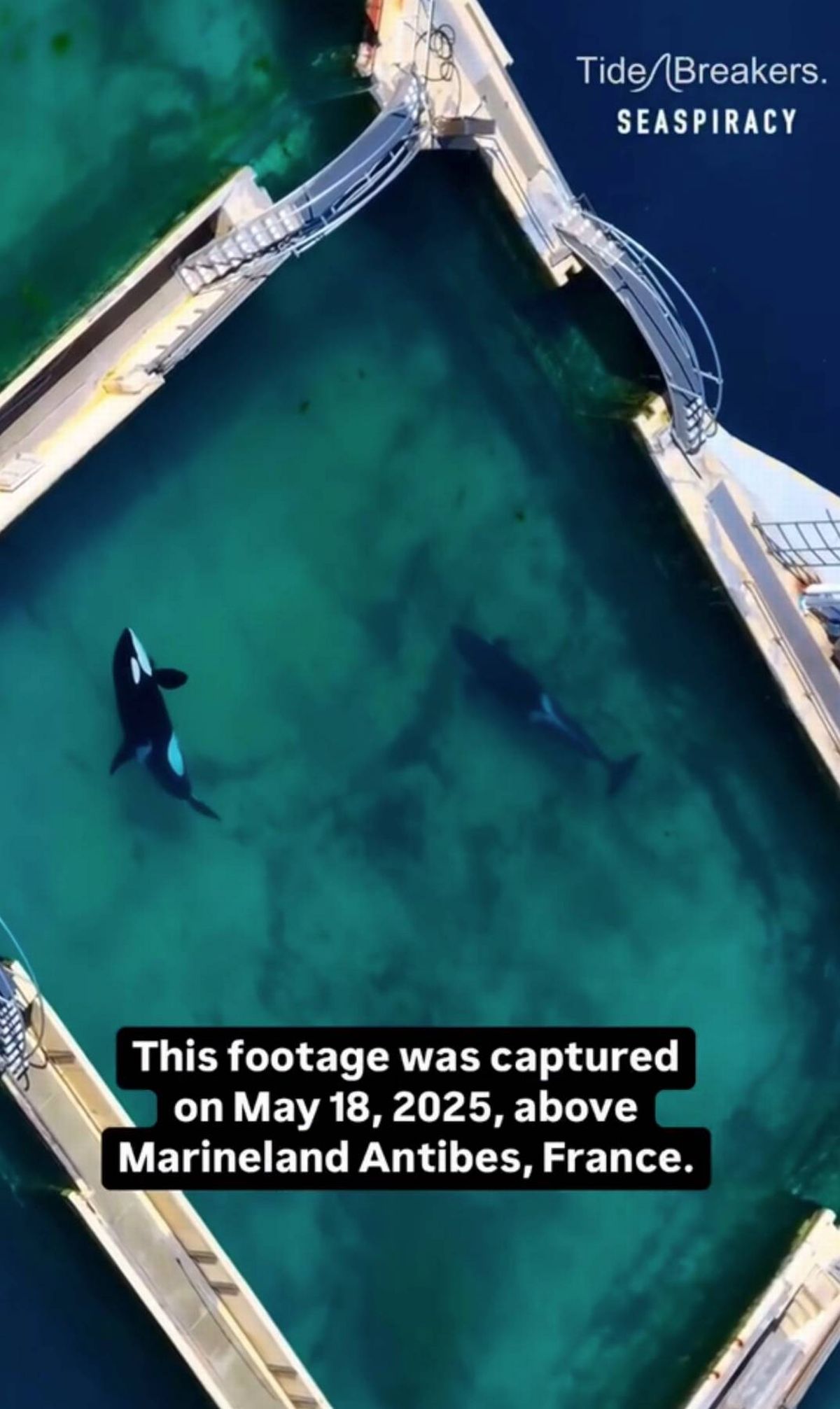
The orcas have been left in their decaying tanks after the park closed down(Image: )
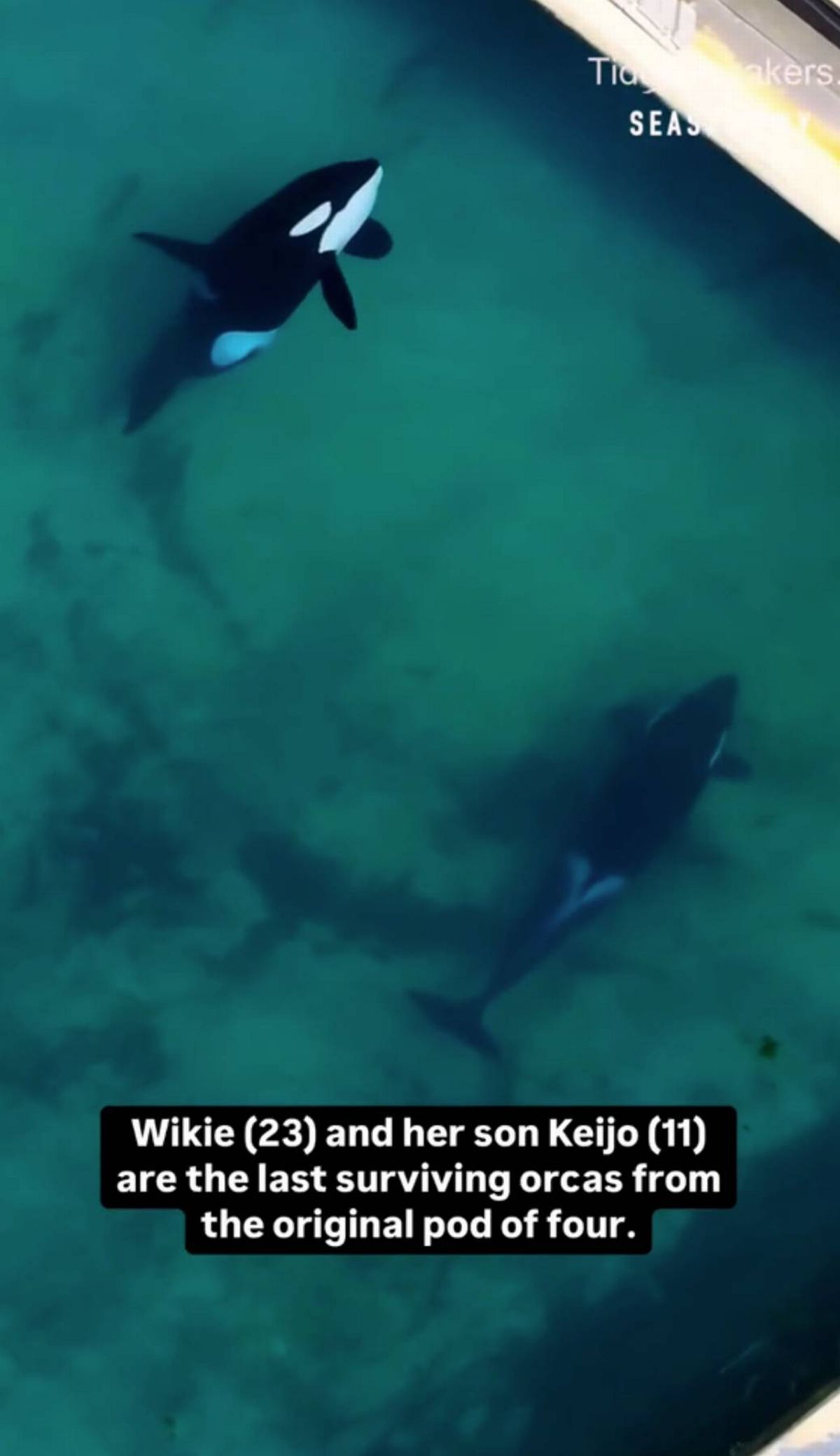
They have been forgotten by the crowds they used to entertain(Image: )
In a much smaller tank nearby, 12 bottlenose dolphins are the only other residents of the decaying park – and time is also running out for them. Cetacean advocacy group TideBreakers have been pressuring the French government to take immediate action and rescue the animals from the park before it’s too late.
Its closure followed years of campaigning by PETA and other animal protection associations, including protests at the park, petitions, letters, exposés, collaborations with high-profile celebrities like Pamela Anderson, and more.
However, a dispute between French officials and the marine park’s management – who still hold a legal responsibility for the cetaceans’ welfare – could continue until all of the animals have succumbed to their tragic fate.
Legislation introduced in 2021 outlawed entertainment shows featuring whales, dolphins and porpoises, and imposed a firm December 2026 deadline for Marineland to relocate their animals to safety.
However, government ministers have since rejected two proposals to rehome the orcas: one to a marine zoo in Japan, and another to a whale sanctuary in Canada – which hasn’t yet been constructed. The Japanese proposal was turned down due to animal welfare concerns, whilst the Canadian Whale Sanctuary Project’s offer was dismissed in favour of a potential European sanctuary, because of the arduous journey required to transport the orcas to North America.
The French government said the pair should be transferred to Canada(Image: )
A third possibility, to transfer the dolphins and two orcas to Loro Parque in Tenerife, was ruled out by an expert panel, who stated the proposed tank “would not meet the minimum requirements in terms of surface area, volume and depth necessary to house the specimens in optimal conditions”. Loro Parque already houses four captive orcas of its own, including a calf born in March 2025.
The French Ministry of Ecology confirmed the government are continuing to search for alternatives – whilst campaigners insist there is no time to waste.
“To date, with the exception of orcas and dolphins, all the animals have found a new habitat suited to their needs,” a government spokesperson said. “With regard to the orcas and dolphins, an assessment by the Spanish Scientific Authority led the latter to oppose the transfer of the orcas and dolphins to Loro Parque (Tenerife) and the transfer of ten dolphins to the Madrid aquarium: the Authority concluded that the facilities did not meet the requirements in terms of surface area, volume and depth to house the specimens in optimum conditions.
“This unfavourable opinion means that authorisation cannot be granted to transfer these animals to Spain.” They added: “Pending their transfer, the Minister for Ecological Transition, Biodiversity, Forestry, Sea and Fisheries is asking Parques Reunidos, Marineland’s owner, to ensure that the animals continue to be cared for pending a future solution.
“At the same time, discussions have been held with the Italian, Greek and Spanish ministers to find a satisfactory solution that will ensure the animals’ welfare. Although no solution has yet been found, discussions with the Italian minister have shown that the Taranto sanctuary project has the support of the authorities and could be ready within a year.”
However, TideBreakers warn that Wikie and Keijo may not survive another year if they remain in their unsafe and unsanitary tanks. Wikie celebrated her 24th birthday on June 2, marking nearly a quarter of a century in captivity.
The orca has already endured the heartbreaking loss of her son Moana, who passed away in October 2023, and her brother Inouk, who died last March after swallowing a piece of metal that had come loose in his enclosure.
“Wikie has spent her entire life in the concrete tanks at Marineland Antibes,” said TideBreakers. “Our wish for Wikie is to see her thrive in a clean, safe environment as soon as possible, where she can live a long life alongside her son, Keijo.”
In December 2025, The French government announced that Wikie and Keijo, should be transferred to the Whale Sanctuary Project’s proposed sanctuary in Nova Scotia, Canada.
While the move still depends on Marineland’s approval, this decision marks a major step toward giving these social, complex animals the spacious, natural home they’ve been denied since birth. The French government called the sanctuary “the most credible, the most ethical and the only one that complies with the requirements of animal safety and welfare,” and confirmed that the orcas are “destined” to join it – potentially as soon as summer 2026, according to the PETA website.