
By Victor Spiteri and Maurizio Cappello
Teva Malta is one of Malta’s major pharmaceutical manufacturing hubs and a part of Teva Pharmaceutical Industries, a global leader in generic and specialty medicines. The Malta site focuses on large-scale pharmaceutical production, packaging and quality testing of medicines for export around the world. Within this context, there are many areas for industrial research and innovation.
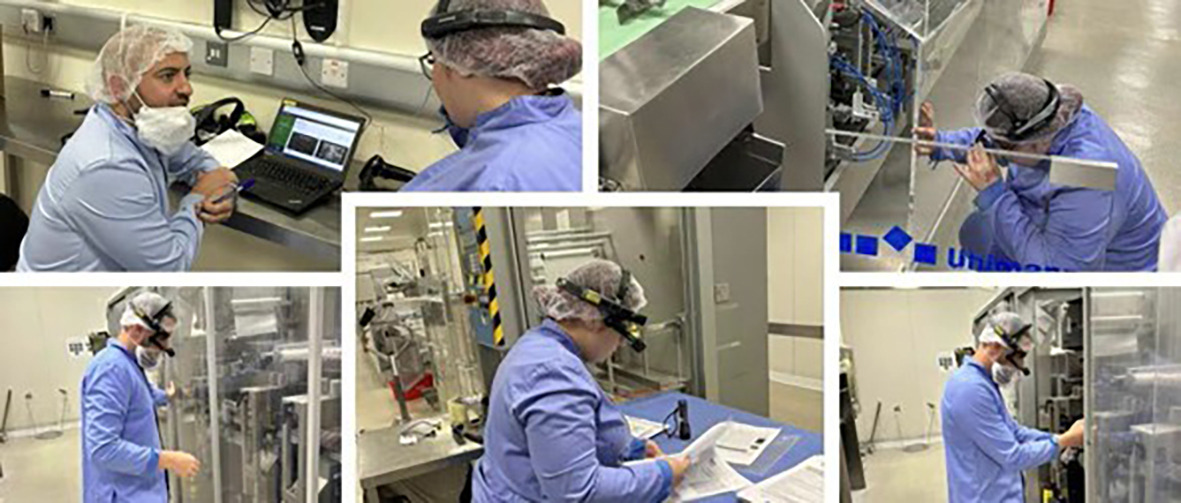
In a bold step towards modernising pharmaceutical manufacturing, Teva Malta has introduced augmented reality (AR) technology into its packaging operations, making it the first site in the global Teva network to do so.
The project, which earned Teva the Industrial Excellence Award 2024 during that year’s Malta Engineering Excellence Awards hosted by the Chamber of Engineers, is transforming how workers carry out changeovers. A changeover is the process of switching production from one medicine to another. These changeovers are critical in ensuring product safety and quality; it is very important, for instance, to ensure no tablets from a previous run end up in the subsequent production run. Due to the wide variety of medicines Teva produces, these changeovers happen very frequently.
Traditionally, changeovers involve a lot of paperwork, manual checks and operator experience. But now, thanks to AR glasses and smart software, operators can follow step-by-step instructions displayed right in front of their eyes. This means a guided process resulting in fewer mistakes, faster transitions and better documentation.
“We’ve seen a big improvement in consistency and speed,” said Victor Spiteri, senior manager of maintenance in packaging at Teva Malta. “Operators are guided visually, which helps them avoid missing steps and ensures everything is done properly.”
The AR system breaks down the changeover into clear phases: preparation, cleaning, verification and machine set-up. Operators can even take photos and record notes during the process, which are automatically added to the system for review.
In just 14 weeks, augmented reality usage jumped from 8% to 80% of all changeovers. The results speak for themselves:
• 693 hours saved in changeovers from January till December 2025.
• 420 hours saved yearly in document review time.
• 31 fewer manual signatures required per checklist.
• 9% reduction in documentation errors.
Such technology also helps new employees learn faster and ensures that even experienced staff follow the same high standards consistently. Beyond pharmaceuticals, Teva believes this technology could benefit other industries in Malta like food production and aviation where quick and accurate changeovers are essential.
The project has not only improved efficiency but also empowered workers with cutting-edge tools, preparing them for the future of manufacturing.
“This isn’t about only saving time,” Spiteri adds. “It’s about raising the bar for quality and giving our people the tools they need to succeed.”
With its successful rollout in the Malta site, Teva is now looking to expand AR technology to its other global sites, setting a new standard for excellence in pharmaceutical packaging.
How is AR transforming medicine boxes?
Augmented reality (AR) and pharmaceutical packaging might seem like they live in different universes, but they’re being integrated to reshape how we understand and interact with medicines.
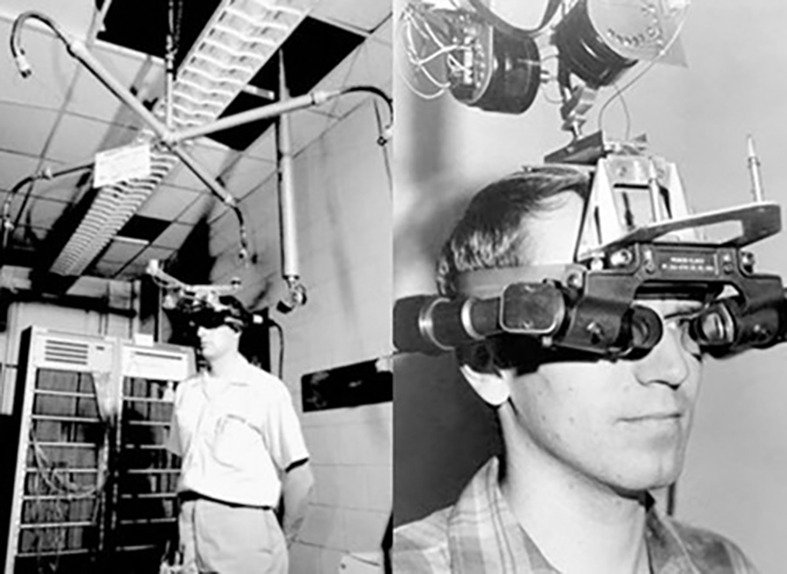
AR first appeared in 1968, when computer scientist Ivan Sutherland built the ‘Sword of Damocles’, a head-mounted display so heavy it had to be bolted to the ceiling.
Today, the same concept powers apps on your mobile device that let you scan a medicine box and instantly see dosage animations, safety warnings or 3D instructions floating above the pack.
Pharmaceutical packaging itself has a surprisingly dramatic history. The first child-resistant cap was patented in 1967, and within a decade it helped reduce accidental poisonings by more than 90%.
Blister packs, now everywhere, were originally introduced to protect sensitive drugs from humidity and oxygen. Some modern blisters even include micro-printed codes invisible to the naked eye, used to authenticate products and fight counterfeiting.
AR is now being tested to verify those same security features. A smartphone camera can detect patterns or markers embedded in the packaging and confirm authenticity in seconds. In clinical trials, AR overlays are being used to guide participants through complex protocols, reducing errors and improving adherence.
So, the next time you open a blister or scan a QR code, you’re interacting with decades of innovation quietly working behind the scenes.