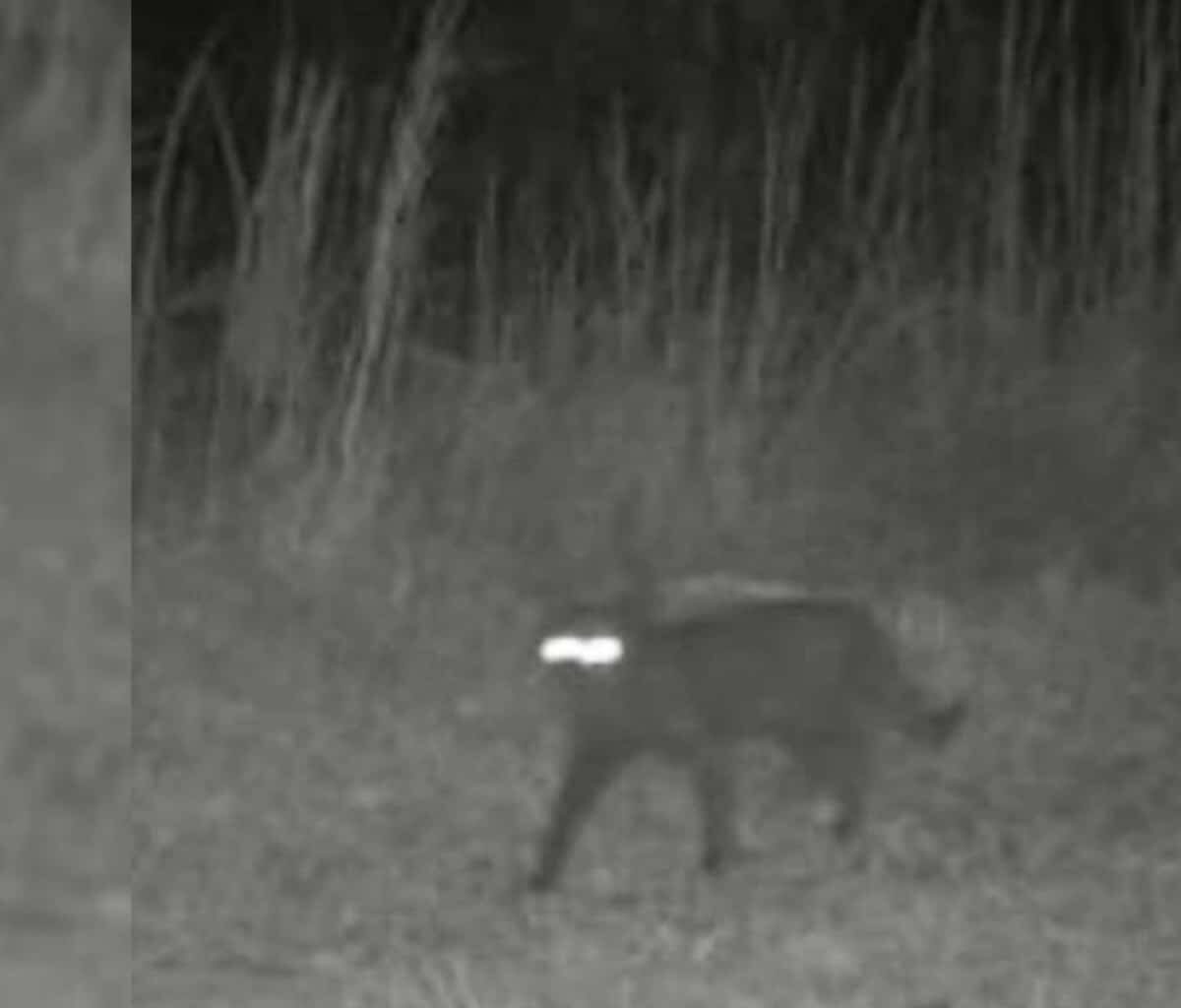
A mysterious, bright-eyed creature captured by a surveillance camera in southwest Florida is stirring curiosity among experts and the public. The nonprofit South Florida Wildlands Association shared the image on social media, asking users to help identify the enigmatic animal. What does this fleeting encounter reveal about the region’s wild biodiversity?
Cameras placed in natural habitats keep delivering fascinating surprises to biologists and environmental advocates. In Florida, a nighttime photo shows an animal with intriguing traits that specialists struggle to classify with certainty. Discoveries like this highlight how important monitoring cameras are for studying wildlife in remote places where direct human observation is limited.
The feline mystery dividing experts
The South Florida Wildlands Association posted on Facebook a striking image of a nocturnal animal with glowing eyes. “It looks a bit like several different species, without perfectly matching any of them,” the group noted, a description that sparked a lively debate among observers.
Several hypotheses are circulating about the creature’s identity. Some commenters see nothing more than an adventurous house cat, as Ronnie Engelhard suggested by calling it an “elusive domestic cat.” Others point to native wild felines such as a bobcat or even the endangered Florida panther.
The association hopes to get daytime images of the same animal soon to make a precise identification easier. The advantage of automatic trail cameras is their ability to capture animals without disturbing or frightening them, offering an authentic glimpse of natural behaviors.
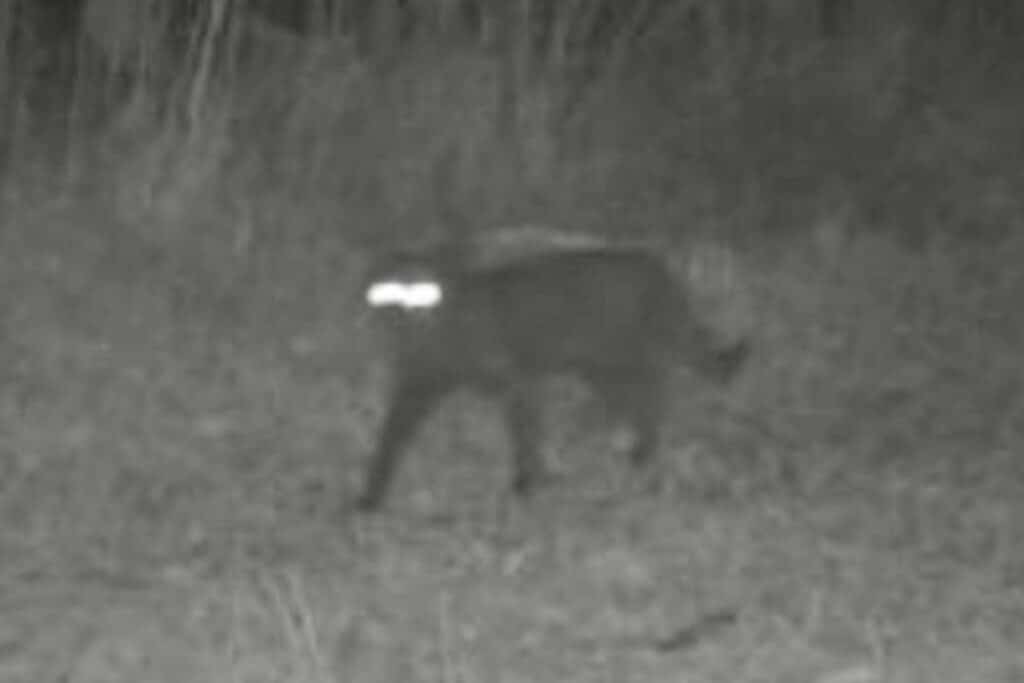
Surveillance cameras captured the silhouette of a strange animal with glowing eyes. These discreet observation technologies allow us to better understand wildlife. © South Florida Wildlands Association, iStock
Electronic eyes serving biodiversity
Environmental surveillance cameras have become indispensable tools for ecological research. In Alaska, government agencies consider these devices extremely valuable for documenting wildlife where human presence would be hazardous or would disrupt sensitive habitats.
Researcher Diana Raper, who collaborates with Alaska wildlife managers to study scavengers, underscores their importance: “These cameras give researchers the opportunity to glimpse animal life like never before.”
These discreet observation technologies have enabled several significant findings around the world:
• Rare black wolves filmed crossing a river in Poland
• Packs of wolves feeding on carcasses in Alaska
• Bears hunting in their natural habitat
• Nocturnal species rarely observed by humans
Sound and visual monitoring for ecosystem health
Beyond images, sound also reveals crucial information about ecosystems. Bioacoustics now complements visual monitoring by recording the songs, calls, and other noises produced by wildlife. These sound data provide researchers with valuable insights into the health, abundance, and types of animals present in a given habitat.
Biodiversity monitoring is becoming ever more important in the face of today’s environmental challenges. According to the World Wildlife Fund (WWF), habitat loss is the primary threat to 85% of species that are threatened or endangered, and this environmental degradation directly affects our food system.
The World Economic Forum identifies several interconnected factors threatening our food supply:
Disappearance of essential pollinators
Accelerating deforestation
Soil erosion
Climate change
Each unexpected observation, like this mysterious Florida animal, reminds us how vital it is to preserve natural habitats. These brief encounters invite us to reconsider our relationship with nature and to support efforts in conservation of wild areas—the last refuges of a imperiled biodiversity that remains largely unknown despite our technological advances.