
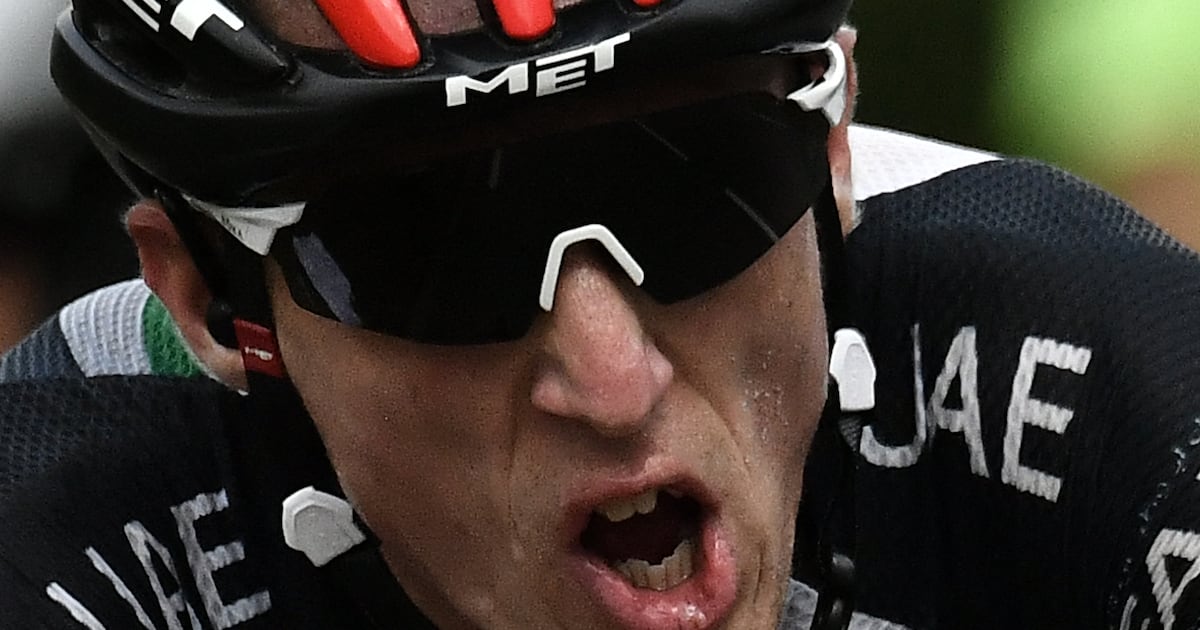
These are strange and conflicting times for exponents of the pain barrier. Maybe it is still out there, somewhere between a rock and a very hard place, the point when suffering becomes your only ally and it hurts like nothing else matters.
Either way there is no easy way to explain it, because the only people who really know where the pain barrier is are the ones who have broken through it.
Pardon that bit of sentimental babbling, it just all came to mind when one barrier after another was broken in a relatively inconsequential 10km road race in Valencia last Sunday morning. Although maybe pain had a little less to do with it.
Staged in bright sunshine and in zero wind – as you’d expect in Valencia even in January – the top 35 men all broke the 28-minute barrier. Championship medals or not, it’s the first time that’s happened in any single 10km race, on the road or track. The top four women also all ran under 30 minutes, the once daunting barrier in women’s 10km running.
It also felt as if records were being broken just for fun. Andreas Almgren from Sweden, the 30-year-old who last year became the first European in history to break the 59-minute barrier for the half-marathon, improved his own European 10km road record when taking the win in 26:45. That improved by eight seconds the time he set in Valencia last year, despite him running the last 4km all on his own.
Behind Almgren there were another eight national records, bettered or equalled, among the top 15 men, including Efrem Gidey, who lowered his own Irish 10km road record by five seconds, finishing 12th in 27:38. Jack O’Leary also improved his best to 27:41 when finishing 18th. Although more importantly for him, his time was also inside the 27:50 qualifying standard for the European Championships in Birmingham in August.
Despite the lack of any decent prize money or even small honour, Valencia has been drawing in some of the best European distance runners in recent years. Not surprising given its reputation for ideal running conditions on a pancake flat course. But these once rare times are certainly much less wonderful.
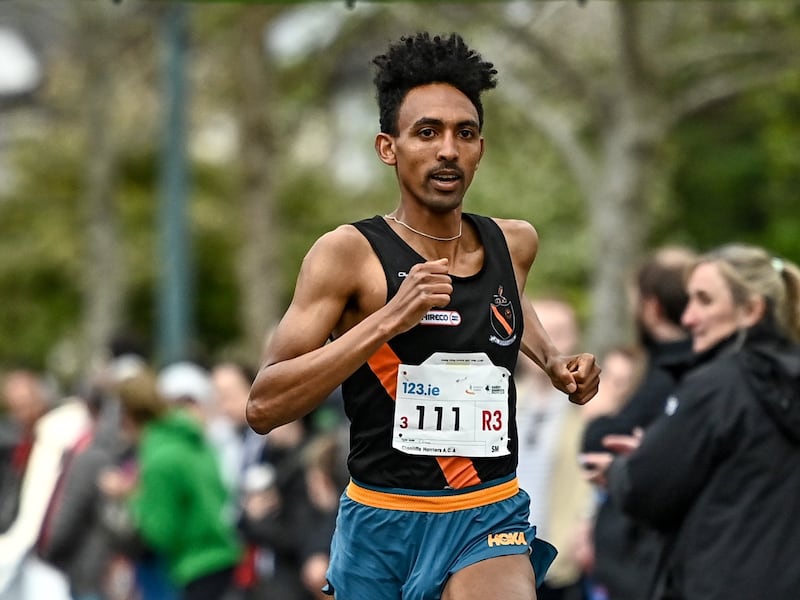 Efrem Gidey competes in the senior men’s event during the 123.ie National Road Relay Championships in Dublin in 2023. Photograph: Sam Barnes/Sportsfile
At the World Cross Country Championships in Tallahassee the day before, no runner broke the 28-minute barrier. Jacob Kiplimo from Uganda won his third successive men’s title in 28:18, motoring all the way, and even if that 10km course had some testing man-made obstacles it was also pancake flat.
Maybe this plethora of fast times on the road shouldn’t be in any way surprising, not when the sound of carbon-plated running shoes bouncing off the road is a constant reminder of how the improved running technology of the last few years has skewed all previous comparisons. Some people still consider this as some sort of technological doping, although they need to get over themselves.
Another relatively fast finisher in Valencia was Dan Martin, who retired from professional cycling at the end of the 2021 season, then aged 35. Martin rode for 14 seasons in the peloton, during which time he became only the third Irish rider to complete a rare hat-trick of Grand Tour stage wins, in the Tour de France, the Giro d’Italia, and the Vuelta a España (after Shay Elliott and Sam Bennett).
Now aged 39, Martin has taken to distance running for different reasons, primarily to stay fit and as an occasional training partner to his wife, Jess. Her background was already in running, when as Jess Andrews she represented Britain in the 10,000m at 2016 Rio Olympics, before injury cut short her career in 2017, aged 24.
Now married, and with three daughters, they’ve been showing up at various road races together for the last couple of years. Martin ran 32:03 in Valencia last Sunday, finishing one second ahead of Jess, who is making a competitive comeback, and a satisfying result for both given he was her designated pacemaker for the day.
Martin had already broken through the 30-minute barrier when running 29:53 at the Cursa dels Nassos in Barcelona on New Year’s Eve. That was good enough for 16th place among the almost 11,000 finishers, leaving some cycling enthusiasts scrambling for comparisons.
It’s true Martin’s time would have got him close to the podium at Irish 10km road races in the past, although they can be far more tactical affairs. Still his 29:53 is clear evidence of his enduring ability to break through the pain barrier.
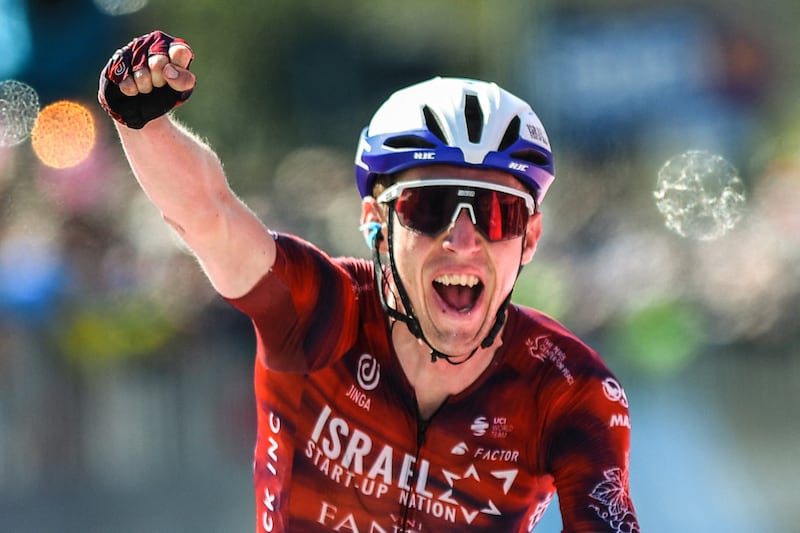 Ireland’s Daniel Martin celebrates as he crosses the finish line to win the 17th stage of the 2021 Giro d’Italia. Photograph: Dario Belingheri/AFP via Getty
“When I retired and started running I set myself the target of running sub-30 minutes for 10km,” Martin said on Instagram. “Ambitious? Yes! But following the same gradual build up process as Jess on her comeback and training has been great focus post-cycling. Excited to see how fast I can run in the future … ”
It does gently beg the question of which is harder, perceived or otherwise, competitive cycling or distance running?
That was briefly touched upon in my conversation with Ben Healy, when he was in Dublin for the Cycling Ireland awards in November. Healy is no stranger to pain barriers given his swashbuckling and aggressive tactics on the bike, which last July saw him complete a 42km solo breakaway to win stage six of the Tour de France, followed by a similar breakaway four days later, which saw him take the leader’s yellow jersey.
“At least cyclists don’t have to worry as much about stress fractures,” Healy said, admitting he’d run cross-country as a youngster, found that tough, and that one of his mates who was into competitive running was repeatedly getting injured.
“I also think on the bike you can lean into the pain a little bit more.”
Which reminded me of what another Irish cyclist, Shane Connaughton, once told me when trying to compare the two.
“They’re both as tough in their own right, and when you’re flat out, it’s like asking if you’d rather have a drill put through your ear or through your hand. Though not many cyclists have made a successful switch to running.”
Indeed, Martin breaking the 30-minute barrier for 10km is impressive, especially for a former cyclist, painful as that might be for some runners to admit.