
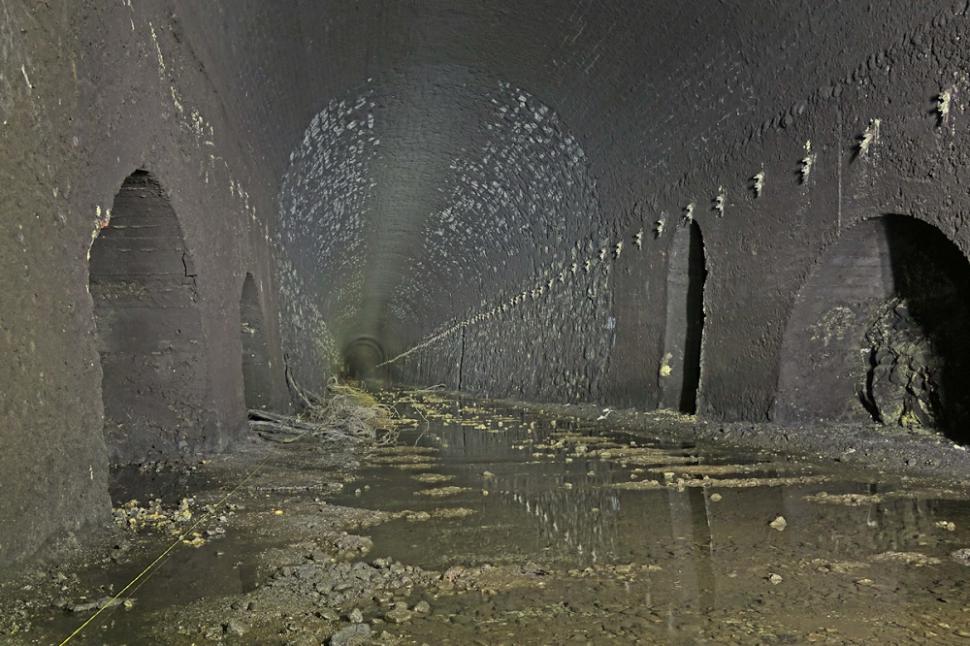
Plans for converting the historic Rhondda railway tunnel, closed for nearly 60 years, into Europe’s longest cycle tunnel have taken a step forward.
The 3.1km tunnel links Blaengwynfi in the Afan valley to Blaencwm in the Rhondda valley but closed due to safety concerns. Rhondda Cynon Taf Council have granted permission for campaigners to excavate the buried Blaencwm entrance. The Rhondda Tunnel Society say the excavation will allow easier access for inspection and maintenance work.
The society has already taken ownership of the nearby Glenrhondda Colliery site and welcomed the council’s decision. Their long-term objective is to move the dug up spoil to the colliery site and landscape it into a country park that borders the Afan forest park.
“The reason that this is significant is we can start getting machinery into the tunnel and start maintenance for it,” society chairman Stephen Mackey told ITV Wales.
“It’ll be another couple of years before the tunnel opens completely, but this phase is absolutely crucial”.
The Rhondda tunnel was opened in 1890 to transfer coal from the valleys to the port at Swansea Bay. It was initially closed in 1968 on safety grounds due to severe distortion caused by mining exploitation. The train stations on either side of the tunnel were also closed and replaced by a bus service until 1970. Plans to repair and re-open the tunnel were subsequently scrapped.
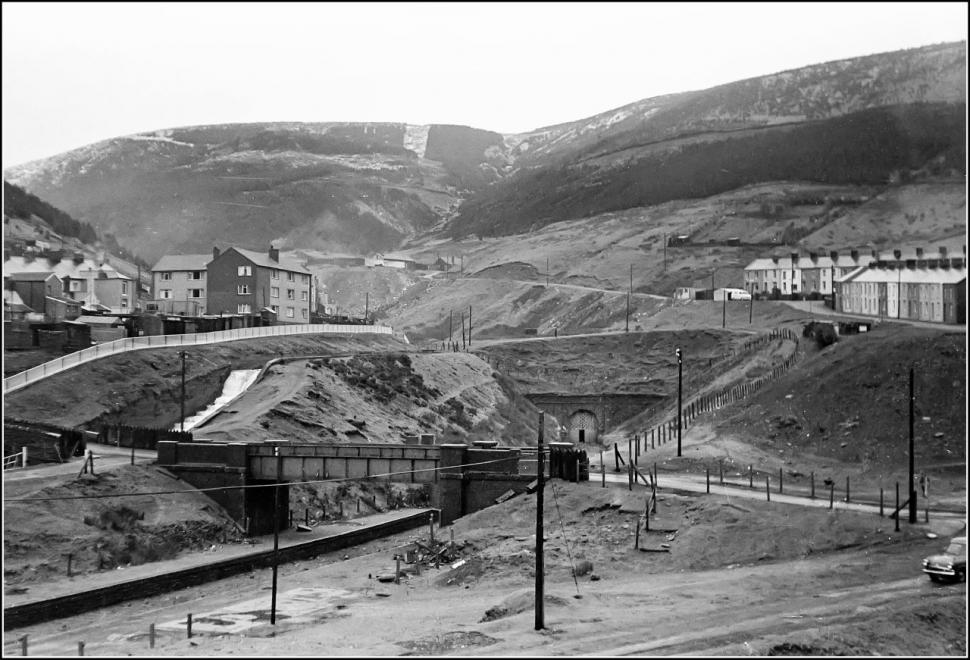 Blaengwynfi station and the entrance to the tunnel before it was filled in (CC BY 2.0 Ben Salter:Flickr) (credit: road.cc)
Since 1980, both ends of the tunnel have been covered. The tunnel is owned by Highways England through its Historic Railways Estate but the Rhondda Tunnel Society have the long-term objective of taking ownership of the site, in partnership with the charity Railway Paths.
> Wales’ longest disused rail tunnel may become a cycleway (2015)
> Assembly Members back plans to reopen abandoned railway tunnel for cyclists and walkers (2015)
Should the site go-ahead, the cycling tunnel would be the longest in Europe and the second longest in the world. A 2016 economic analysis by Sustrans (now the WalkWheelCycling Trust) estimated that the cycle lane could bring an economic impact of between £7-14 million “over the next 30 years”. A 2018 Balfour Beatty survey estimated that the cycle tunnel would cost an estimated £13.1 million. Both those figures will likely be revised up.
The project has been welcomed by local Senedd and Westminster politicians for more than a decade and the Society has attracted the support of celebrities such as actor Michael Sheen and television presenter Martin Roberts. In December 2021, the Telegraph reported that the Transport Secretary Grant Shapps had approved in principle the transfer of ownership from Highways England “to a local group, the Welsh Government or the local council, with money for the purpose.” But no funding or ownership change was made.
> Report that Wales will get Europe’s longest cycling tunnel premature, say campaigners
Despite the progress, the National Highways website describes the project as still being at “an early stage” and awaiting a transfer of ownership to be authorised by the Welsh Parliament. Once that transfer is given, the Rhondda Tunnel Society and Railway Paths plan to seek funding for the construction work. Construction is then estimated to take 18 months.