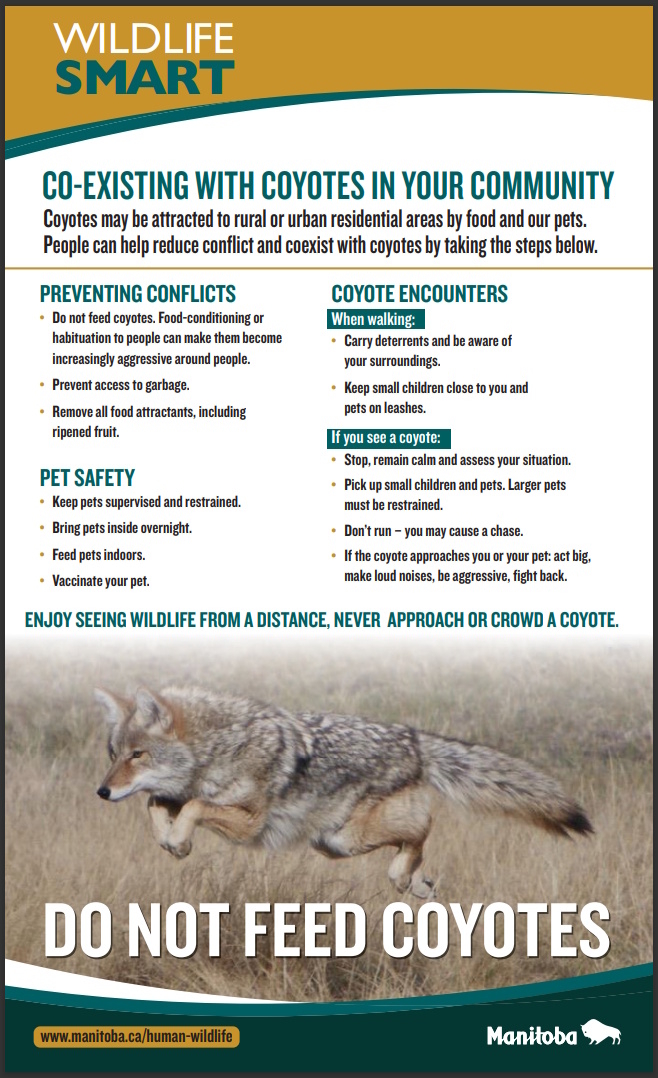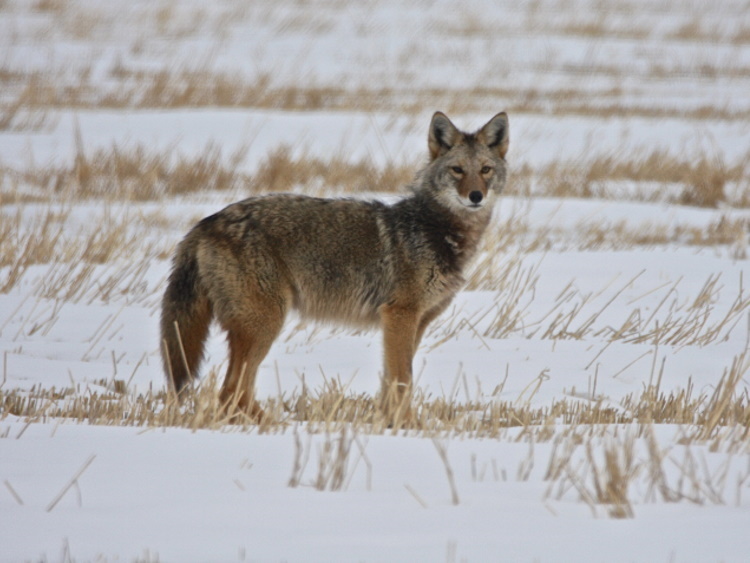
If you think you’re seeing more coyotes out on the prairie landscape more than usual, you’re right. Landowners are seeing, and hearing, more coyotes in and around their yards and pastures than is typical for a Manitoba winter.
So, why the population explosion? There are a few factors in play.
First, the coyote fur market has dropped out of the bottom. Where in previous years, coyote fur was used as trim for jackets, boots, mitts and hats. But fashion has changed and the coyote furs are no longer in demand.
Killarney area trapper, John Dietrich has tended to his trap line on the eastern edge of the Turtle Mountains for nigh-on 35 years and has seen a lot of coyotes in his day. But trappers aren’t putting in the time, money or effort to go after coyotes anymore, simply because they’re not worth anything.
“I guess because the value of them has gone to zero. Nobody is willing to spend the money to do it because they get nothing,” says Dietrich.
“I’ve trapped so long that I’ve found, you know, the fashions change about every ten years. And the short hairs will come in and then long hair like coyote go out. And so, the prices just go way down on one and way up on the other. Coyotes have been up for probably 20 years now or something like that. It’s been a real long, good stretch. But we have never seen it drop so that they won’t even buy them anymore. They don’t want one in their auctions.”
The other problem with coyote furs right now is that the majority of them are infected with mange, which is caused by a mite, an arachnid that burrow into the skin and causes severe itching and hair loss.
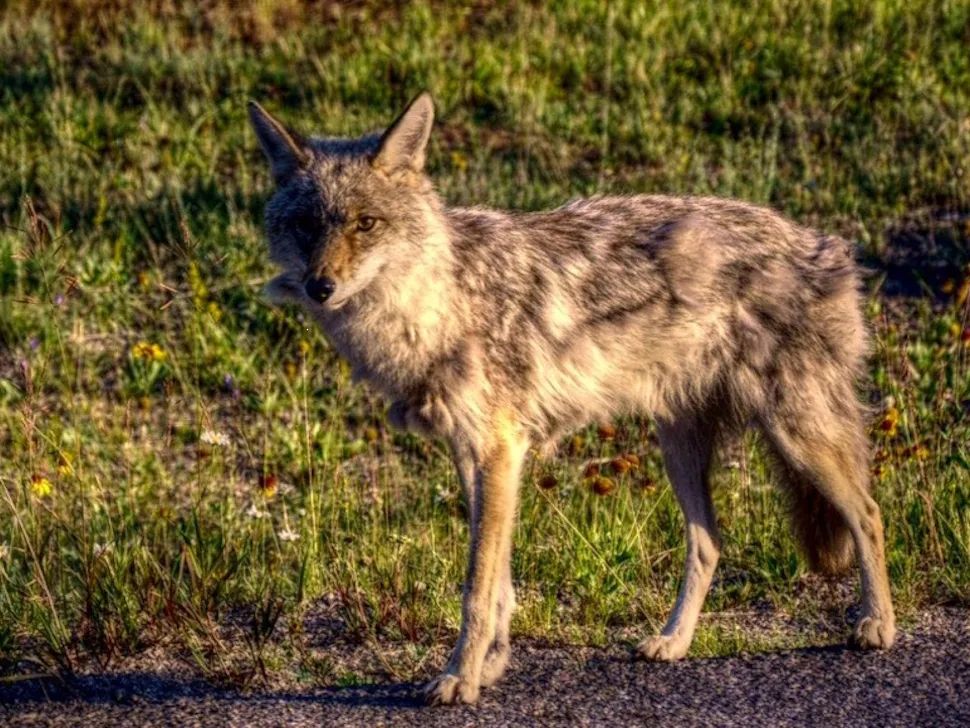 File photo
Dietrich snares on his own quarter section of land southwest of Killarney. With high populations of coyotes, mange is being transferred throughout the population of coyotes. The worry is that the greater the population, the braver they are becoming, and then you have them being out and about on more farmyards, potentially infecting domestic dogs with the mite.
“It’s crazy where I am,” shares Diestrich. “I snare on a quarter section of land. I used to do a lot more, but now just a quarter section. But last year I caught 72 coyotes and only three of them weren’t showing the mange. And the three that weren’t showing it probably had it. It just wasn’t visible yet, but they probably were infected, almost guaranteed they were.”
Research show that infected coyotes may exhibit strange behaviour, such as being more active during the day while searching for food while struggling to hunt effectively with the disease. Mange can lead to other bacterial infections potentially resulting in dehydration and starvation.
So, what do we do with them?
As a fur-bearing animal you can only harvest coyotes if you have a trapper’s license, and only in season, or you have a big game license and hunt them during hunting season. Dietrich says even though the pelt is virtually worthless, he still continues to trap coyotes simply because they’re a nuisance and are detrimental to the deer population.
“My way of looking at it is that if I catch 100 coyotes and take them out, then in the spring the fawns have a better chance. By fall, the coyotes are there. But then the fawns have grown up a certain amount too, and they can run away. But the fawn population … that’s where the coyotes are really hard on the deer. They kill a lot of fawns,” he adds.
This problem becomes greater when you know calving season is just around the corner. If the coyote packs are numerous sickly and thus braver, there are more desperate predators for our cattle producers to watch out for.
Dietrich suggests the province put a bounty on the coyote, at least to help pay for the expenses of trapping or hunting them to cull the population as a way of wildlife management. However, this trapper says coyotes are very difficult to manage as they have the same ability as a wolf; when their numbers go down, they have a greater number of pups.
“Like I can go out and catch 100 coyotes and next year they just have more pups and there’s the same amount there next fall. And you have to catch a whole pack before the next pack will move in,” he adds. “So, a pack might only be 4 or might be 6, you know? So, once you catch them all, another one moves in. And that’s why you can catch so many on a small area.”
 File photo
A spokesperson for the Province of Manitoba confirmed the department manages coyote populations through hunting and trapping opportunities only and have no plans on facilitating a bounty program.
‘Bounty programs are not an effective long-term tool for coyote population management,” states the Province’s response to our request on this very matter, sharing exactly the same information our local trapper friend, John Dietrich shares on these crafty canines. They’re very adaptable.
‘Scientific research and wildlife management reviews have demonstrated that coyotes are highly adaptable species. They use compensatory mechanisms such as higher reproductive rates, immigration from surrounding areas, and earlier breeding, etc. in response to increased harvest pressure and can quickly replace removed animals. Due to high adaptability of coyotes to the increased harvest pressure, the current modern wildlife management practices generally rely on regulated trapping and hunting along with targeted damage control, and landowner education rather than bounty programs.’
‘A licensed hunter can harvest a coyote under the authority of a big game hunting license. In addition, licensed trapping during the trapping season allows for the harvest of coyotes. There is no limit on the number of coyotes that can be harvested during the trapping season.’
‘Fur prices fluctuate for all fur bearing animals and therefore, bring varying numbers of trappers on the landscape each year,’ the Province has stated. ‘For those that would be interested in learning to trap, a person must first be certified by taking the Trapper’s Education Course prior to obtaining a trapping license. The Manitoba Trapper’s Association can be contacted to register for a course.’
What about landowners, livestock producers and farmers? What can they do to protect their herds?
‘Under The Wildlife Act, landowners are able to protect their property from coyotes and must report the taking of coyote to a conservation officer within 10 days of the kill.
While landowners are provided the option to address coyote depredation, an alternative is to invite an experienced trapper onto their property during the trapping season. This provides opportunity for trappers to also benefit from the sale of furs and assists in targeting species that may be causing depredation concerns,” states the provincial spokesperson.’
For more information, please review the Coexisting with Coyotes document here: https://www.manitoba.ca/nrnd/fish-wildlife/wildlife/wildlife_human/publications.html.
To watch the YouTube video on Co-existing with Coyotes, click HERE!
For more information on co-existing with other wildlife species, visit the Province of Manitoba website page HERE.
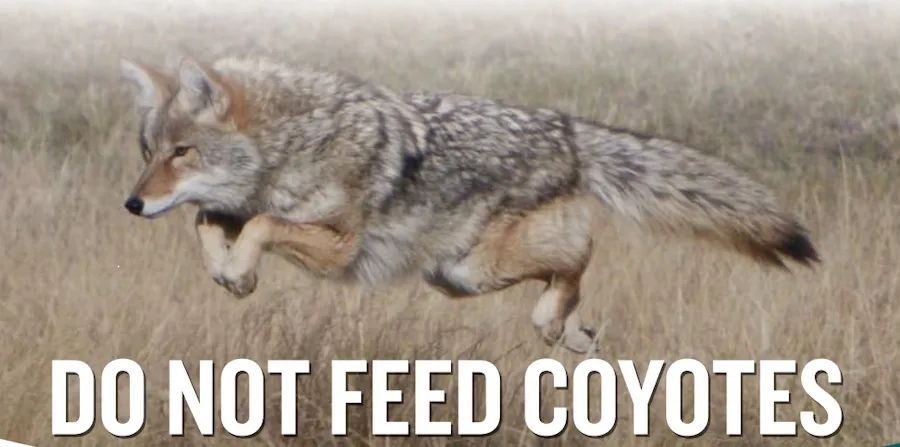 Photo credit Province of Manitoba website page – co-existing with coyotes