
The National Hockey League’s adoption of the 3-on-3 overtime format in the summer of 2015 was well-received, and in the following years the altered extra frame satisfied the league’s dual mandate of reducing the number of regular-season games ended by a shootout while providing a more entertaining product.
The concept of the five-minute, 3-on-3 overtime was simple: pulling skaters off the ice would force an up-tempo type of hockey, one that would see flurries of scoring chances at both ends of the ice.
The format hasn’t been flawless; I’ve long argued that to dramatically reduce the number of games decided by shootout, the 3-on-3 format necessitates about 10 minutes of game time.
In recent months there has been increasing debate about the staleness of the format; fans have noticed it has grown a bit trying, and there is data suggesting the players are thinking about 3-on-3 strategy differently now than they did in years past. We’ve also seen other leagues start to experiment with tweaks to 3-on-3 overtime.
The Champions Hockey League implemented a “no return” rule for its format after initial trials, prohibiting teams with possession and control of the puck in the attacking zone from retreating back into the neutral zone. Violations result in dangerous defensive zone faceoffs, and the threat of losing possession and being forced back onto the defensive side of the puck has kept teams aggressive and on the attack.
This one change increased the percentage of games being completed in overtime, identical to the NHL’s goal. The early returns have been encouraging: an additional 12 per cent of games are now ending in overtime.
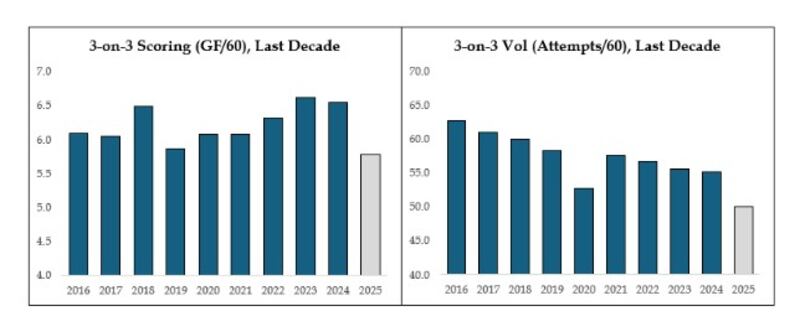
Bringing this back to the NHL: if it feels like the pace during 3-on-3 has felt painfully slow and methodical relative to years past, you’re not wrong. What we are seeing in the data suggests a meaningful change in approach from teams, generating far less offensive volume (and scoring far fewer goals) than anything from the past decade:
 Yost1
Yost1
Both scoring and offensive shot volume per 60 minutes are at 10-year lows, and the offensive shot volume year over year is the type downtrend no league wants to see. If the league’s mandate was to create a high-tempo, offensive product that kept games out of the shootout format, the current structure is failing to accomplish its goals.
The numbers speak for themselves. This season, 27 per cent of games – more than one in every four games played – is requiring extra time, in line with prior seasons. What’s quite different is how frequently the league is requiring the shootout to resolve these games again, up considerably versus prior periods and surely correlated with the offensive slowdown we are seeing in 3-on-3 play:
 Yost2
Yost2
It’s fair to say the NHL is aware of the growing concerns with the current format and listening to potential tweaks to bring offence back to the forefront, but nothing serious has manifested yet.
I do wonder if a season like this – one where the product has clearly taken a step back – facilitates more serious conversation about the structure and any corresponding rule changes, not dissimilar to my hope the Central Division finishing with the three best teams in the league would force decision makers to seriously consider a playoff-format overhaul.
Data via Natural Stat Trick, NHL.com, Evolving Hockey, Hockey Reference
Related Stories