
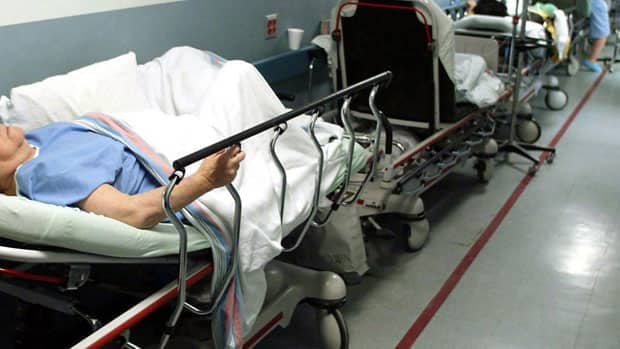
A St. John’s emergency doctor says urgent care centres (UCCs) are a good idea but they won’t reduce wait times at hospital emergency departments.
“They do have value, but their value is not to reduce wait times in emergency medicine,” said Dr. Scott Wilson, a member of the Canadian Association of Emergency Physicians who works at St. Clare’s Mercy hospital.
Newfoundland and Labrador health officials have repeatedly said UCCs will help doctors treat emergencies more quickly.
“It will allow emergency rooms to focus on emergency care and the urgent care centres to focus on urgent care, moving people through the emergency department more expeditiously,” said then-health minister Tom Osborne in 2024 when the UCC on Stavanger Drive was being developed.
Dr. Greg Browne, Newfoundland and Labrador Health Services’ senior medical director for the eastern-urban zone who was at the 2024 announcement, reinforced that message.
“[An urgent care centre] reduces the kind of backlog and clog in the emergency departments. So for folks with very acute illnesses, it should improve access for them too. So, this is good news all around,” said Browne.
 Dr. Scott Wilson, a member of the Canadian Association of Emergency Physicians who works in St. John’s, says urgent care centre’s won’t address overcrowding inside hospitals. (Mark Quinn/ CBC News)
Wilson agrees UCCs are a good thing for patients who need urgent care, such as a few stitches, care for a sprain, or an ear ache, but they won’t reduce wait times at emergency departments because patients who need urgent care or primary care aren’t causing the problem.
“It will be a benefit for patients to have some primary care assessments and if they are too difficult to be dealt with in the urgent care, they’ll be referred to the emergency room anyways,” said Wilson.
He said the problem isn’t that waiting rooms are filled with patients who don’t have family doctors or don’t need emergency care. Wilson said research shows those people account for less than five per cent of the people who show up at emergency departments.
The problem is overcrowding inside the hospital, said Wilson, with beds inside the hospital are filled. Some of those beds have patients who need emergency care and others are waiting to move to long-term care.
“Over 90 per cent of the beds designed to see emergency room patients are filled with admitted patients. So we simply cannot do the job that we’re expected to do when we don’t have the space to do it because of overcrowding. That’s causing long wait times, the fact that we don’t have beds to admit people to,” said Wilson.
“Patients who are admitted to hospital remain in our space. That is the number one, two and three reasons why people have long waits, of ten, 12 and 24-hour waits in emergency rooms. So the overcrowding has to be addressed. Urgent care centres will do nothing to do that.”
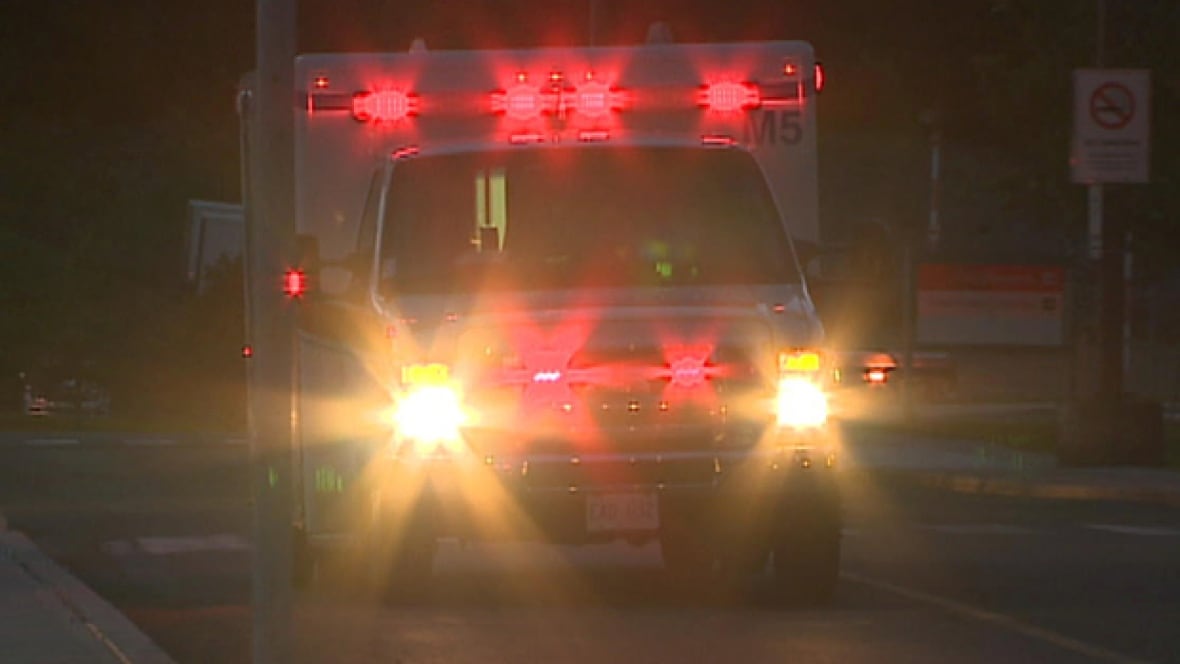 Overcrowding means some patients must wait in ambulances for care. (CBC)
It has a ripple effect causing problems like offload delays where patients wait in ambulances outside hospitals. Those patients don’t get the care they need and the first responders who stay with them can’t respond to other emergencies.
Physician fears tragedy
Over the past three decades Wilson has worked in twelve emergency departments in two provinces. He’s seen first-hand patients in Newfoundland and Labrador waiting for unacceptable times in emergency departments. While it’s not a new problem, Wilson said it’s especially bad now.
Last Week, Alberta’s government ordered an inquiry into the death of a man waiting in an emergency room. Wilson fears it’s something that could happen in Newfoundland and Labrador.
“We’ve already had lots of cases across the country of patients dying in waiting rooms of emergency departments. The numbers game is, is eventually going to catch up to us,” said Wilson.
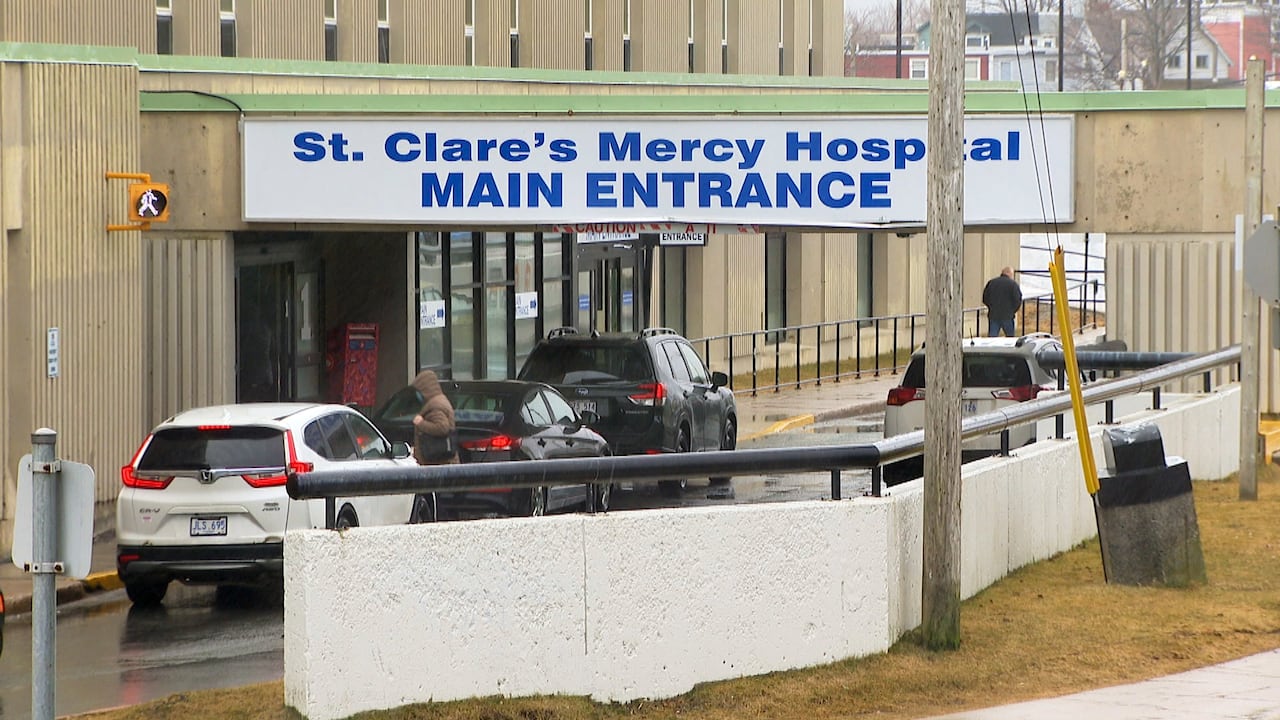 St. Clare’s Mercy Hospital has one of the busiest emergency department’s in St. John’s. (Danny Arsenault/CBC)
The Canadian Association of Emergency Physicians is calling for an overhaul of the emergency care system and has written a comprehensive report called Em:power: The Future of Emergency Care. The more than 300-page report details the challenges facing emergency departments and offers recommendations to make them function better.
Wilson has a message for Newfoundland and Labrador’s government and its health authority.
“If things don’t change, we are going to see unfortunate circumstances happen in this province. That’s why we’re imploring authorities and people and with the decision capacity to act,” he said.
“Our national body is willing, able and anxious to partner with you so that we can try to avoid these future, avoidable deaths,” said Wilson, a member of the association’s public affairs committee.
Wilson ‘dead right’: NLHS CEO
In an interview with CBC News on Monday afternoon, NLHS CEO Pat Parfrey said Wilson was right in his assessment of overoccupancy in acute care beds.
“He’s dead right about that. The core problem in getting people to the emergency room is getting into a bed in the hospital. And if there’s 100 per cent occupancy, there’s no bed, and as a consequence the person stays in the emergency room and then they continue to build up,” Parfrey said.
“We are certainly very active in the arena of trying to get more acute care beds and trying to improve discharge facilitation within the hospitals.”
Dr. Dick Barter, the physician lead for clinical efficiency, said teams are working to shorten wait times in emergency rooms and tackle what he calls “bed block.”
“Once the decision is made to admit you, the likelihood is that you’re going to be in the emergency department for 24 hours or more,” he said. “We are trying to reduce that time to no longer than 12 hours, that would get us back down to national benchmarks.”
In a statement, the provincial government said another urgent care centre is expected to open on Topsail Road later in 2026 and planning work is also beginning on a new urgent care centre for Conception Bay South.
Download our free CBC News app to sign up for push alerts for CBC Newfoundland and Labrador. Sign up for our daily headlines newsletter here. Click here to visit our landing page.