
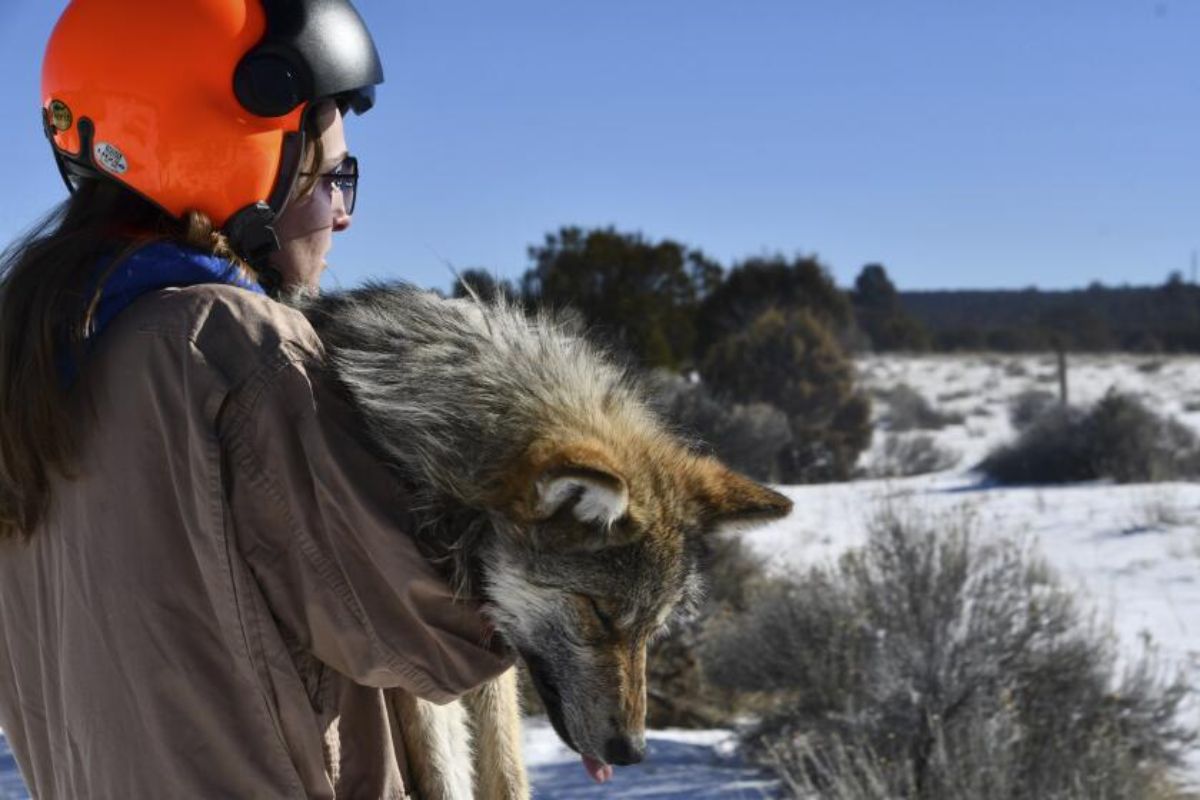
On the Albemarle Peninsula in northeastern North Carolina, reintroduced red wolves are once again putting pressure on mesopredators and rebalancing the forest. The recovery area covers approximately 6.000 km² between refuges and private properties. By 2026, orange GPS collars and coyote management will support expansion beyond official boundaries.
Os red wolves They are returning to northeastern North Carolina in 2026, with an estimated wild population between 29 and 32 individuals At the beginning of the year, it was concentrated on the Albemarle Peninsula. It is the only confirmed free-ranging population, closely monitored in a recovery area that combines federal, state, and private lands.
The return restores the balance in the region’s coastal forests and wetlands by reducing pressure from opportunistic predators and reorganizing the food chain. When red wolves occupy territories, the effect appears on the forest floor., from vulnerable nests to molts that finally manage to grow, in a type of ecological reconstruction which depends on permanent management.
Where red wolves are in the wild and the size of the monitored area.
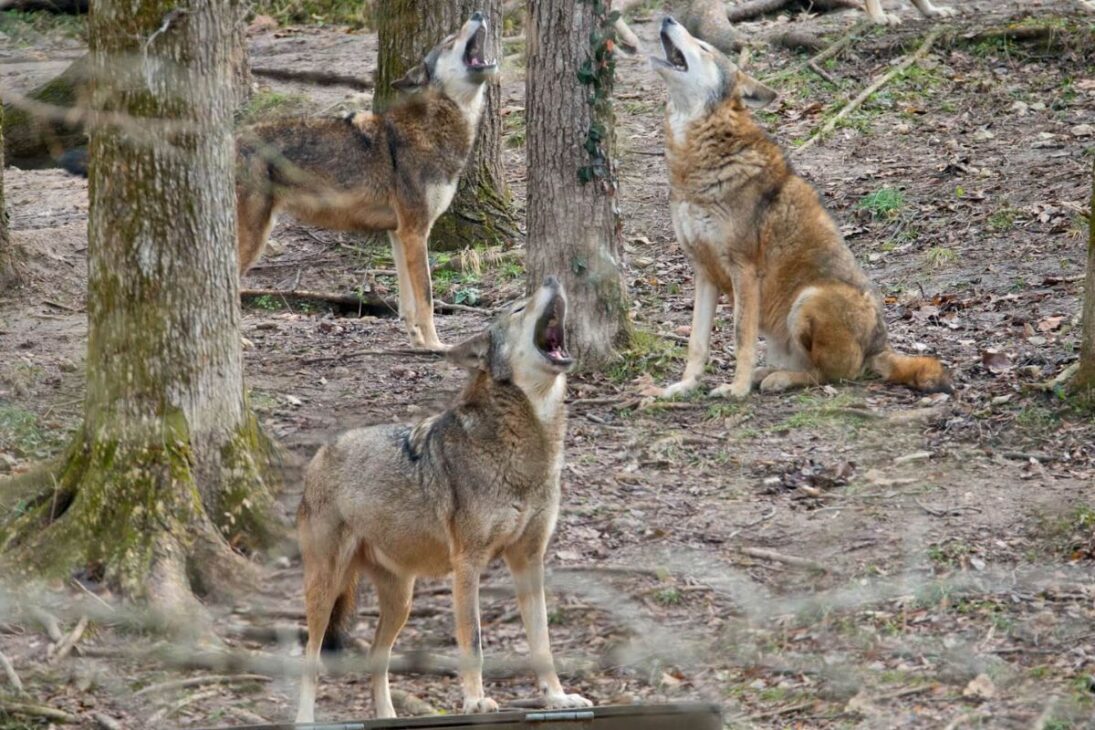
In 2026, the red wolves those at liberty are focused on northeastern North Carolina, the Albemarle Peninsula.
— ARTICLE CONTINUES BELOW —
The monitoring core includes the Alligator River National Wildlife Refuge, considered the heart of the wild population, where family groups are monitored as territorial units.
Another central point is the Pocosin Lakes National Wildlife Refuge, which houses the Red Wolf Center, used for the education and acclimation of new pairs before release.
The recovery extends for approximately 6.000 km², including adjacent private properties and areas in the counties of Beaufort, Dare, Tyrrell and Washington, where family groups have also been documented living outside formal boundaries.
Why red wolves change the game against coyotes and raccoons.
The effect begins with the pressure on mesoppredators, medium-sized predators that benefit when the top of the food chain disappears.
With red wolves Presently, the region is beginning to see regulation of opportunistic species as coyotes, raccoons e possums, which, without a superpredator, tend to multiply and increase predation on smaller fauna.
This reorganization strikes at the most sensitive point in the ecosystem: The fauna that depends on the ground to survive and reproduce..
When raccoons and other opportunists are pushed down by competition and risk, the pressure on ground birds, small mammals, and amphibians decreases, opening up space for layered recovery.
Nests on the ground, rabbits and amphibians: the visible impact on smaller fauna.
Reducing the number of opportunistic pests especially benefits species vulnerable to attack on the ground.
In 2026, with red wolves By reoccupying territories, the dynamic described is one of indirect protection: less nest raiding on the groundThis means less pressure on chicks and a more viable environment for terrestrial birds that depend on vegetation cover and tranquility to complete breeding cycles.
The same reasoning applies to rabbits and other small mammals.
When the landscape is no longer dominated by uncontrolled intermediate predators, the permanent risk decreases and survival increases, reinforcing the food base for multiple species and stabilizing the food web.
Deer in line and saplings growing: forest regeneration in practice.
The second arm of the change involves herbivores.
By controlling abundance and behavior of deer, the red wolves They help prevent overgrazing, which is when feeding pressure prevents the forest from regenerating.
With deer more contained, saplings of native trees and plants have more time to grow., increasing vegetation cover and structural complexity.
This type of response is slower than the decline of mesopropedants, but it is what redefines the future of the forest: when the seedlings begin to surpass the “cut-off point” of herbivory, the landscape changes trajectory, moving from a cycle of degradation to a cycle of recomposition.
How reintroduction works in 2026: soft release, cub adoption, and breeding islands.
The reintroduction of red wolves It evolved from a technical extinction in the wild in 1980 to a highly complex management challenge by 2026.
One axis is captive breeding within the SAFE program, with gentle releaseBefore actually being released, wolves spend weeks or months in acclimation enclosures in sanctuaries like Alligator River, with human contact minimized to preserve wildlife behavior.
After the enclosures are opened, biologists do supplemental feeding for a short periodUsing carcasses, usually of deer, to keep the animals in the area while they learn local prey and routes. This reduces immediate dispersal and increases the chance of establishing territory.
Another key method is the pup fostering, the adoption of puppies. Puppies born in captivity, with 10 to 14 days old, they are inserted into litters of wild female wolves that gave birth around the same time.
The mothers accept and raise the offspring as their own., strengthening genetic diversity with a greater chance of adaptation, because the animals grow up in the real landscape from the beginning.
There is also the use of spreading islands such as St. Vincent National Wildlife Refugein Florida, described as a controlled wildlife environment where wolves can breed and gain experience before being transferred to North Carolina.
Orange GPS collars and the front line against hybridization and run-overs.
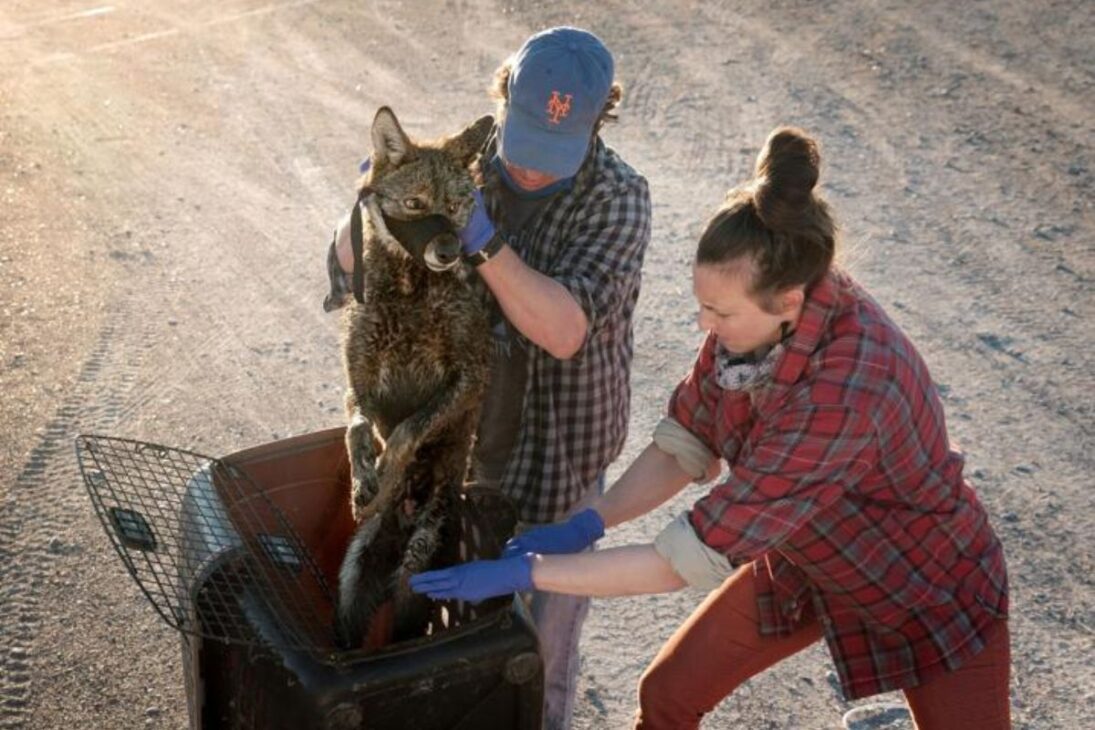
In 2026, a significant portion of red wolves Adults or subadults are monitored with color-coded GPS collars. vibrant orangeThis is precisely to reduce the risk of hunters confusing the animals with coyotes and to allow for tracking of their movements, territories, and pair formation.
The program also faces direct threats.
Run overs They remain among the leading causes of death and, in response, have been installed Electronic billboards on North Carolina highways to warn drivers about the presence of wolves in the recovery area.
Another key problem is the hybridization with coyotes.
To reduce this risk, the strategy includes capturing, sterilizing, and monitoring coyotes as “marker animals,” maintaining territories occupied by infertile coyotes that block the entry of other fertile coyotes.
It is a territorial control mechanism that functions as a biological safeguard to protect the genetic identity of the red wolf.
What happens now: critical growth and expansion dependent on private land.
The 2025-2026 plan prioritizes maximizing pup adoptions, forming new breeding pairs, and maintaining coyote management to control hybridization.
One operational approach involves capturing lone wild wolves and pairing them in acclimatization enclosures with individuals from the SAFE program, seeking to create new territories in vacant areas.
However, expansion does not depend solely on domestic refuges.
In 2026, the advance is described as strongly linked to partnerships with private landownersBecause new family groups have already been registered outside the official boundaries.
The long-term goal is to go beyond North Carolina and build at least two more independent colonies in the Southeast, creating real resilience for the species.
In the ecological landscape of the Southeast, the message is clear: Red wolves are not just a rare animal., are a living tool for forest reorganization, capable of rebalancing intermediate predatorsTo protect nests on the ground, to contain deer, and to give back to the seedlings that support the next generation of vegetation.
Are you in favor of expanding the red wolf range beyond North Carolina by 2026, even with the conflicts and risks involved?