
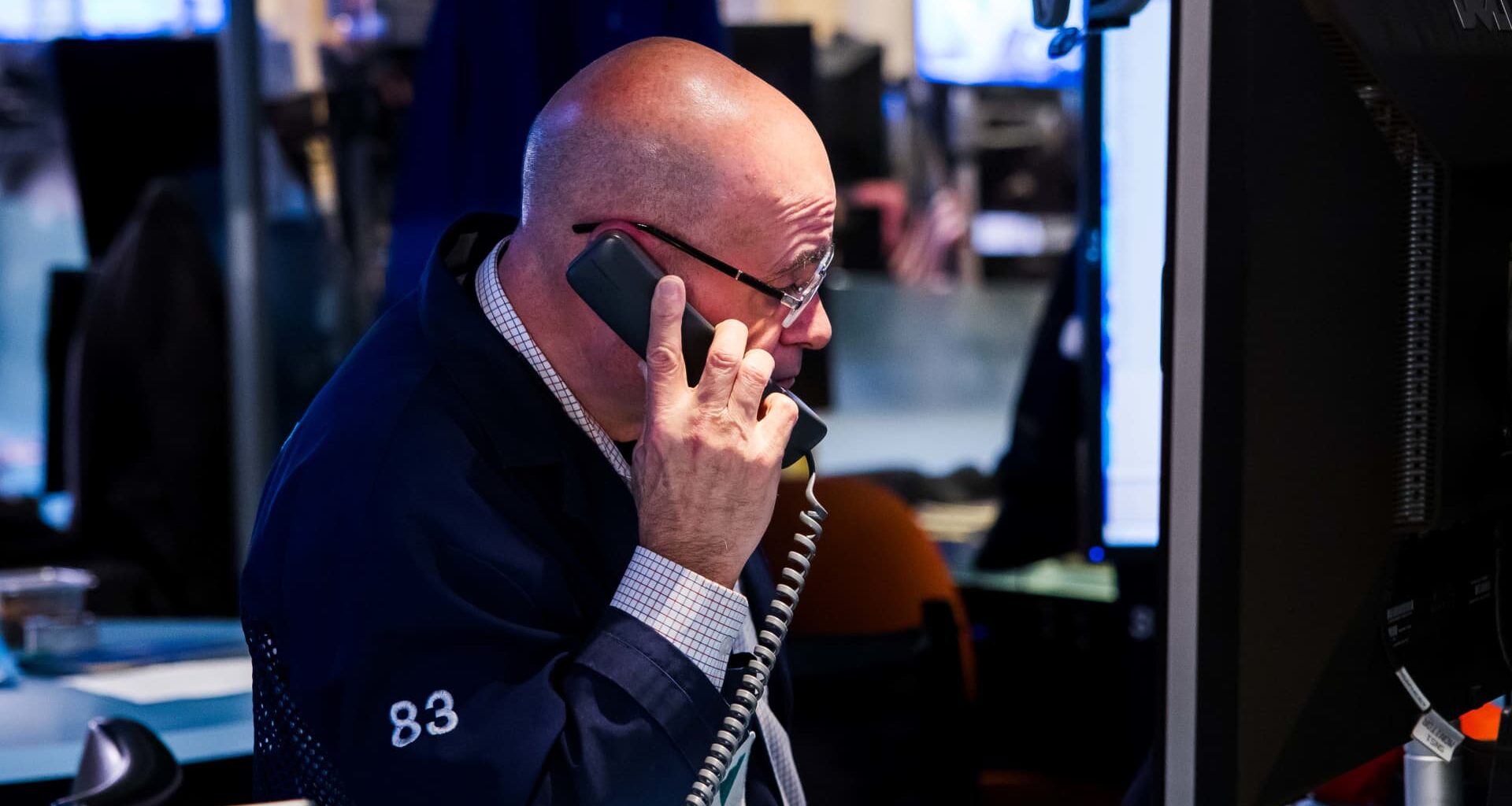
Trades work at the New York Stock Exchange on Jan. 16, 2026.
NYSE
Stock futures on Monday night pointed to a downbeat session on Wall Street as President Donald Trump intensifies his rhetoric on Greenland, threatening to impose new tariffs on countries opposing the sale of the Danish territory to the U.S.
Futures tied to the Dow Jones Industrial Average indicated a decline of 378 points at Tuesday’s open. S&P futures were set for a 0.9% drop, while Nasdaq 100 futures were poised to lose around 1.1%.
Trump announced in a Truth Social post on Saturday that eight NATO members’ U.S. imports will face escalating tariffs “until such time as a Deal is reached for the Complete and Total purchase of Greenland.” The tariffs will start at 10% on Feb. 1 and rise to 25% on June 1, Trump said. European leaders have described the penalties as “unacceptable.” Shares of European carmakers and luxury goods companies dropped on Monday, while some of the continent’s defense stocks rallied.
Monday night marks the first time U.S. investors are able to fully react to the trade escalation, as markets were closed for the Martin Luther King holiday.
Jeff Kilburg, CEO of KKM Financial, thinks a investors should buy the dip if equities fall due to tariff fears, however. “Markets initial reaction to potential tariffs [is] presenting a buying opportunity as focus will shift away from Davos and back to Q4 earnings season mid week.”
The administration’s levies are also under scrutiny as Wall Street awaits a major court decision.
The Supreme Court could rule as soon as next week on whether to strike down the Trump tariffs, which the president has imposed under the International Emergency Economic Powers Act. Treasury Secretary Scott Bessent said on Sunday that he believes it’s “very unlikely that the Supreme Court will overrule a president’s signature economic policy.”
“In general, we do expect that much policy uncertainty, particularly as related to tariffs, should be behind us. Still, we need to expect that policy related volatility, such as catching headlines over the weekend, will persist,” Scott Chronert, head of U.S. equity strategy at Citi, wrote to clients.
Civil unrest in Iran also has global investors on edge. An Iranian official in the region said on Sunday that at least 5,000 people have been killed in nationwide protests, which began on Dec. 28 over economic hardship and have since grown into widespread calls for the end of clerical rule.
Major U.S. averages are coming off of a losing week.
The S&P 500 shed 0.4%, while the 30-stock Dow Jones Industrial Average dropped 0.3% on the week. The Nasdaq Composite recorded a loss of 0.7%, even though chipmaking stocks tied to the artificial intelligence trade got a brief lift on Thursday after Taiwan Semiconductor’s blowout fourth-quarter report.
This week, quarterly financial results are expected from a range of companies, including Netflix, Charles Schwab, Johnson & Johnson and Intel. Guidance from companies this year is crucial to sustain bullish sentiment for U.S. stocks. The S&P 500 is already expected to post earnings growth of 12% to 15%.
— CNBC’s Fred Imbert contributed reporting.