

Listen to this article
Estimated 3 minutes
The audio version of this article is generated by AI-based technology. Mispronunciations can occur. We are working with our partners to continually review and improve the results.
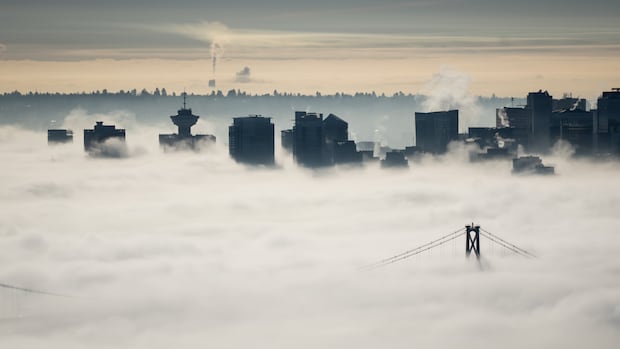
Environment Canada has warned that parts of Metro Vancouver and inland Vancouver Island will experience near-zero visibility amid thick fog in the region.
An advisory from the weather agency has been in place since Saturday, with fog expected to persist until Tuesday afternoon.
It says a ridge of high pressure over the province is trapping moisture and creating areas of dense fog in parts of the region.
“We have had this ridge of high pressure as early as last week. So because it’s been sitting there so much, a lot of the lower level moisture is being trapped and therefore leading to a lot of fog and low cloud,” says Derek Lee, a meteorologist with Environment Canada.
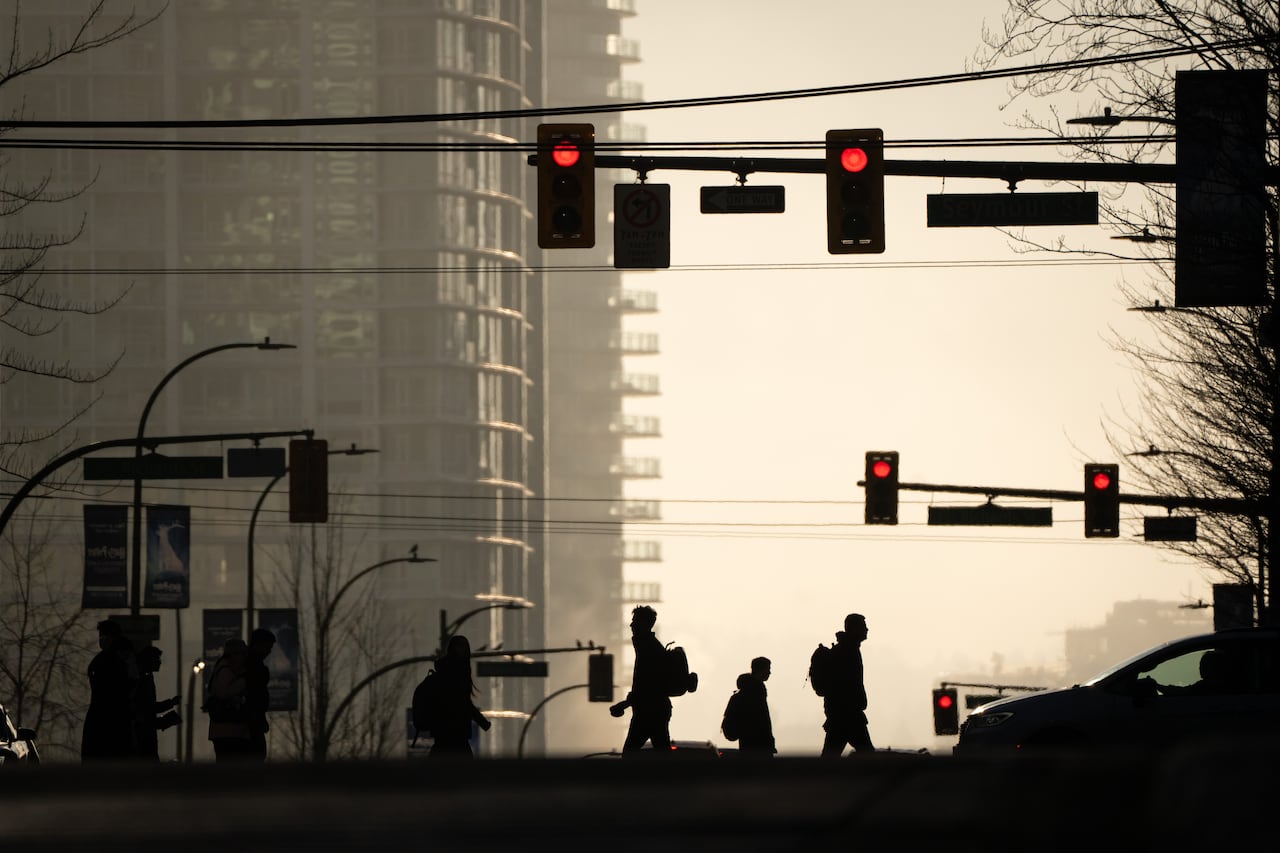 The fog advisory covers most of Metro Vancouver and inland Vancouver Island. (Ben Nelms/CBC)
He says the “prime source of moisture” is the Strait of Georgia.
“A lot of low cloud and fog has formed there … coastal areas, especially North and West Vancouver, downtown and even to Richmond, they have been extensively covered by this fog.”
Lee said inland areas such as Burnaby, Surrey and Langley have seen their fair share of fog and low cloud, but those areas tend to see improvements during the day once the sun burns it off.
Eastern parts of Vancouver Island are also seeing low cloud and fog, he said.
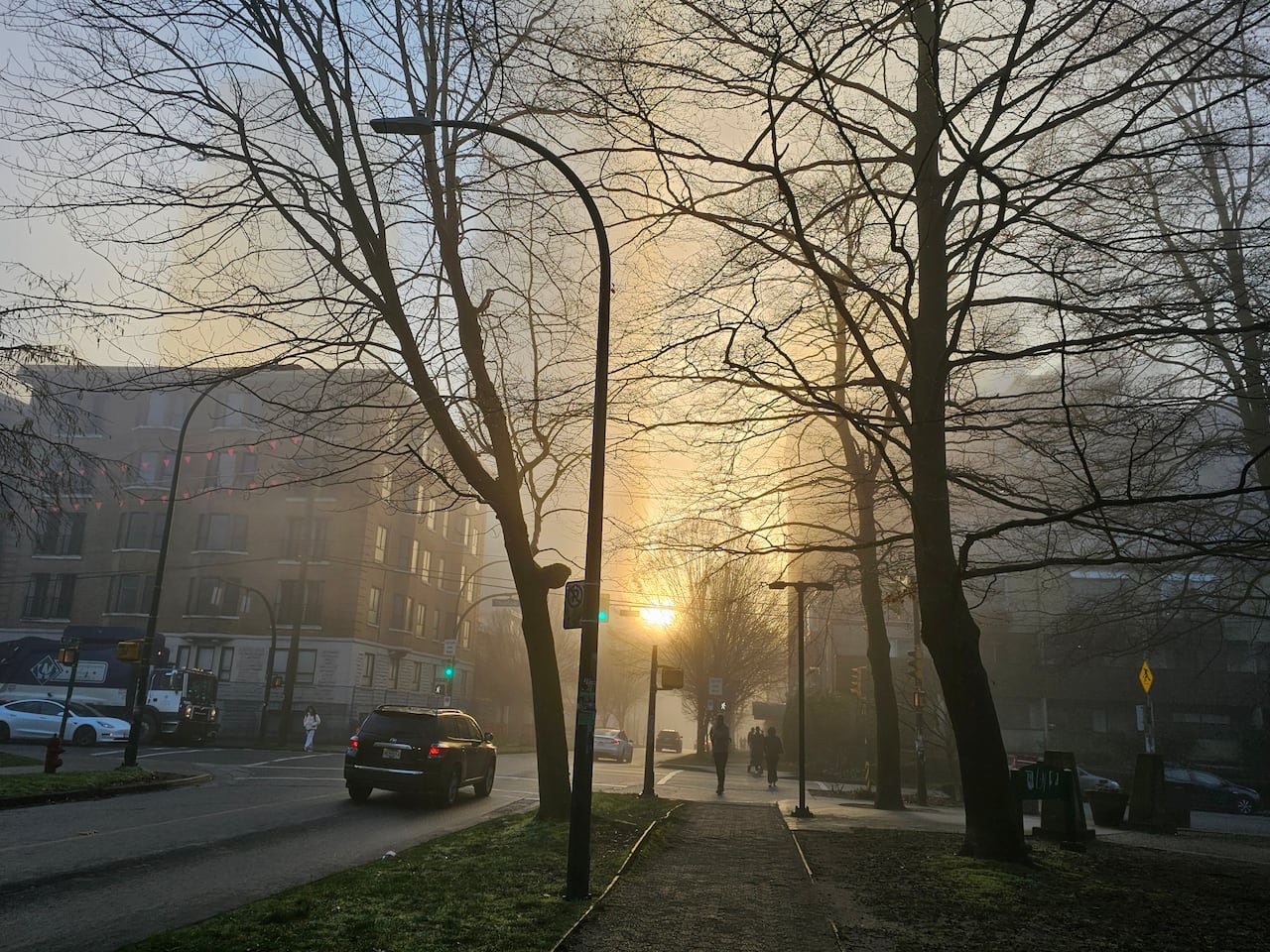 Cloudy conditions that also affected parts of the Lower Mainland over the weekend are expected to last into Tuesday afternoon. (David Horeman/CBC)
Environment Canada says motorists should allow for extra time when travelling and exercise caution in low-visibility conditions.
The Vancouver International Airport (YVR) issued a statement on social media over the weekend warning passengers of possible disruptions due to reduced-visibility operations that are needed when pilots cannot see the runway well.
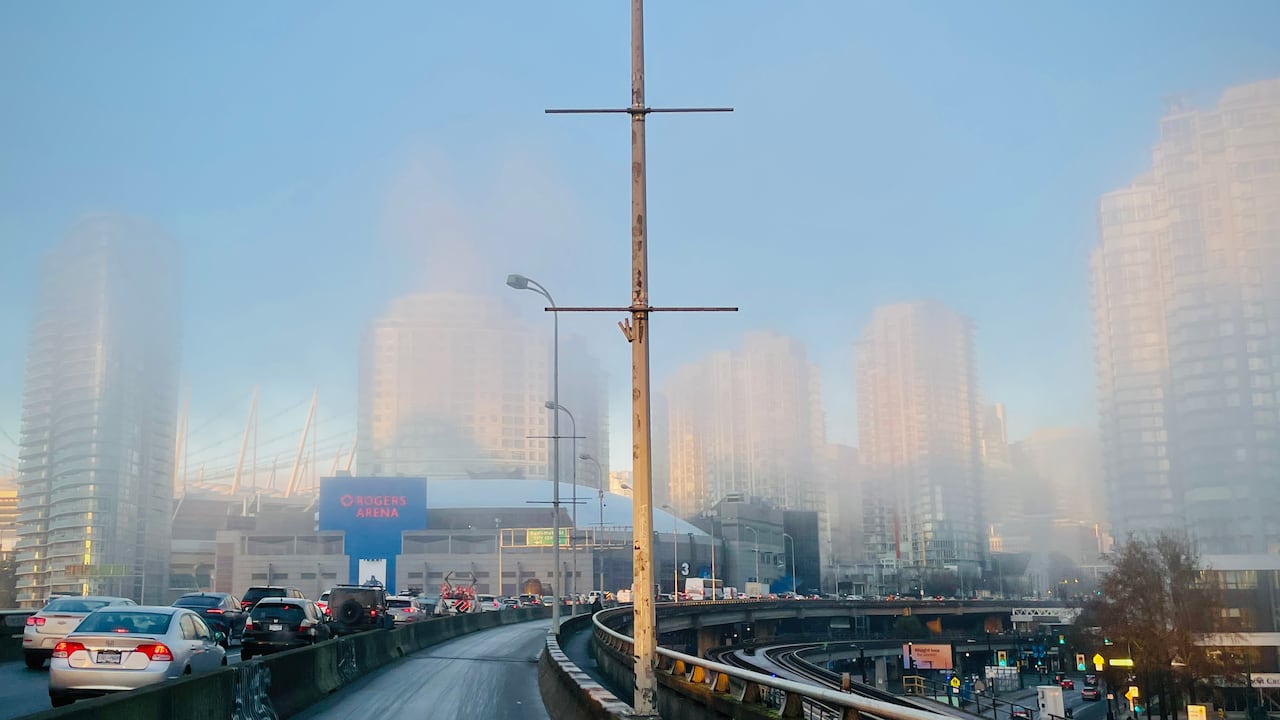 DriveBC is asking drivers to ensure their head and tail lights are on while driving in fog. (Rafferty Baker/CBC)
YVR says low-visibility operations (LVOP) are triggered when visibility drops to below 1,320 feet (400 metres) or the equivalent of about four Vancouver city blocks.
In rare cases when visibility drops below 600 feet (180 metres), it says, takeoffs and landings may be temporarily paused until conditions improve.
Passengers are encouraged to check their flight status with their airline or on YVR’s website before heading to the airport.
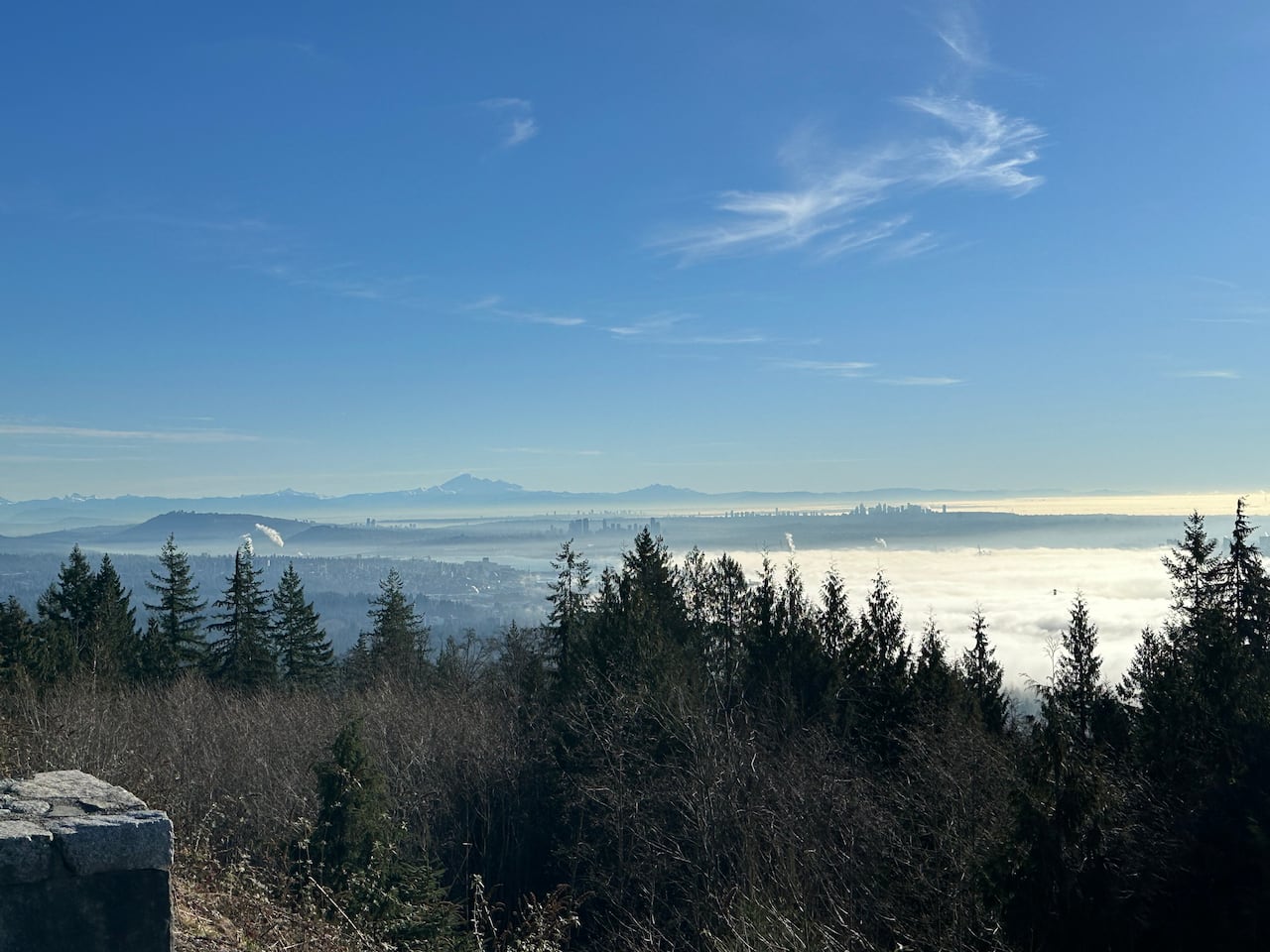 An Environment Canada meteorologist says higher elevations have seen warmer temperatures as a result of the low-lying fog. (Ethan Sawyer/CBC)
Lee says the ridge of high pressure has also brought warmer weather at higher elevations.
“The reason we’re seeing some warmer temperatures up there [is] because the fog and the low cloud is actually at a very low level, and therefore everything in the higher elevations is … warming up from the sun.”
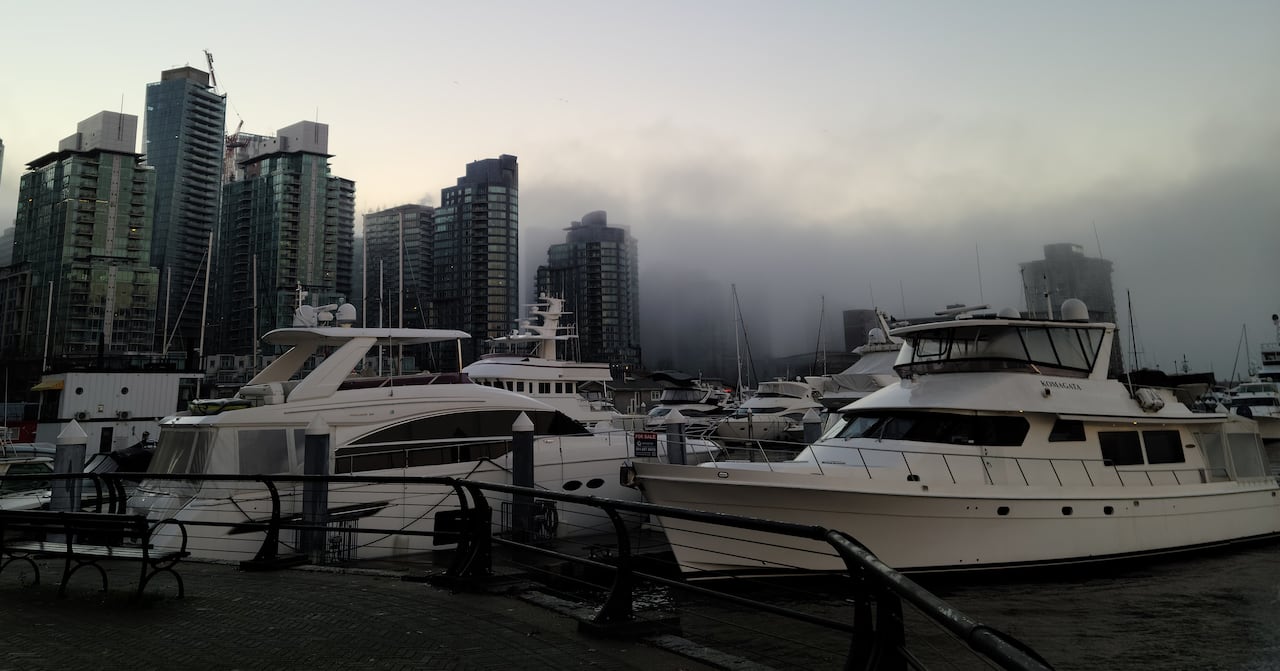 Photo of fog surrounding Vancouver on Jan. 19, 2026. (Jean-Baptiste Lasaygues/Radio-Canada)